Animated Celtic tattoo with AI
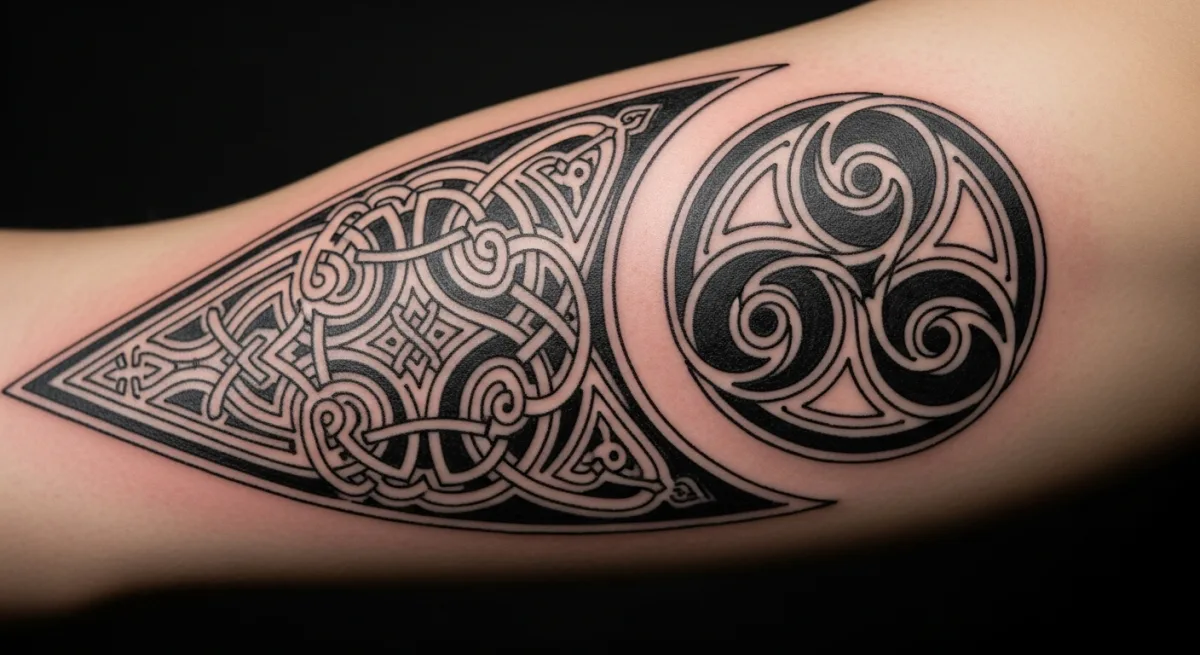
The Celtic style draws on the graphic heritage of the Gaelic peoples of Ireland, Scotland and Wales. Its signature: endless interlaces, woven knots, triskelions and crosses that condense an entire cosmology into a few looping lines. Every Celtic tattoo is a geometric riddle where each strand must alternate over and under the next without ever breaking. AI animation reveals what the eye already senses: a continuous flow circulating through the knots like sap, turning runic stone into perpetual motion.
Examples of AI-generated animations
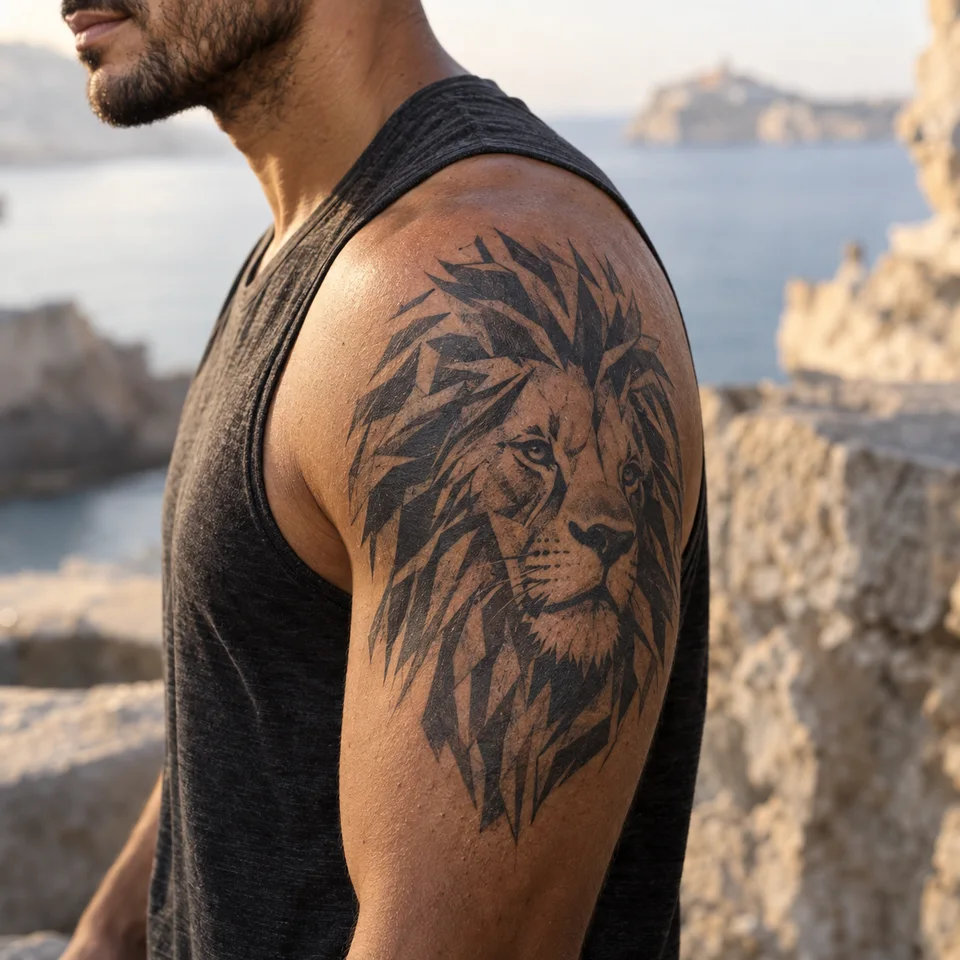
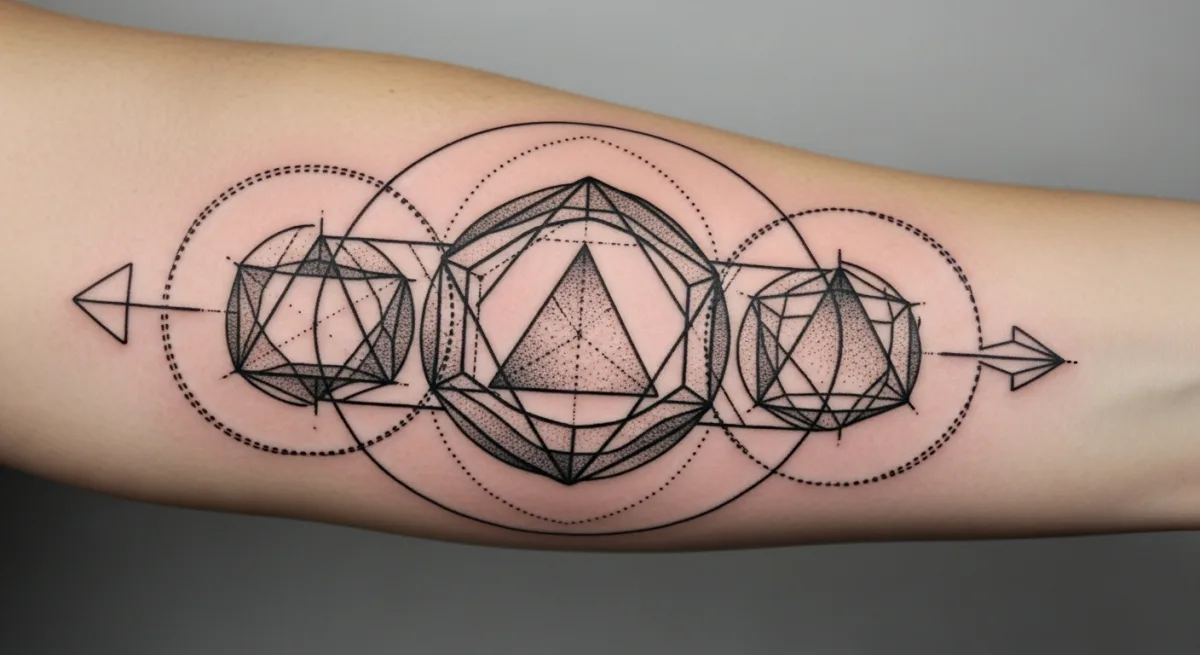
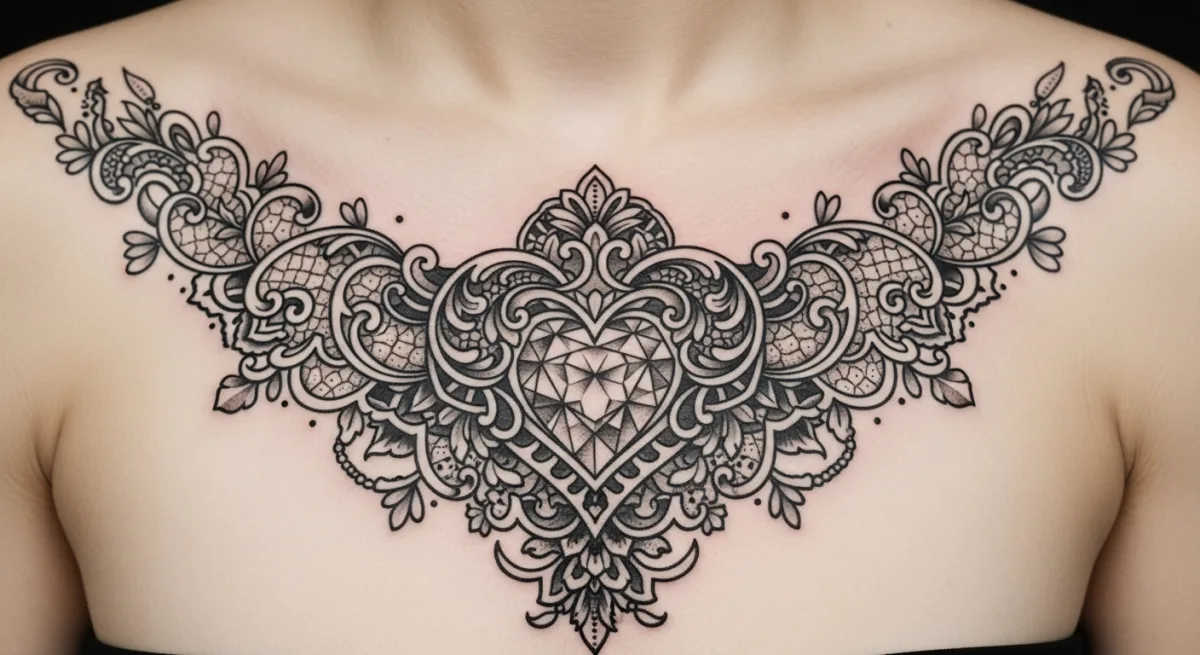
Demo animations generated with our tool — across all styles, to visualize the kind of motion that's possible.
Style characteristics
- Continuous interlaces with no visible break point
- Strict symmetry around an axis or a center
- Recurring motifs: triskelion, Trinity knot, Celtic cross, tree of life
- Uniform black outlines without internal gradients
- Strong symbolism: eternity, spiritual bond, natural cycles
- Highly structured circular or rectangular compositions
Tips for animating this style
- Run a light along the interlace rather than warping the design itself
- A slow rotation around the center works very well for triskelions
- Avoid asymmetrical motion that would break the balance of the motif
- A pulse radiating from the knot's core deepens the mystical feel
- Black on fair skin maximises legibility of the braid while it moves
Frequently asked questions
What is the difference between a Celtic tattoo and a tribal tattoo?
Celtic relies on continuous interlaces and a precise symbolism inherited from illuminated manuscripts (Book of Kells). Modern tribal borrows solid silhouettes, often inspired by Polynesian or Maori cultures, without the weaving logic. Visually, Celtic is recognised by strands that pass over/under without breaking, while tribal plays on massive black fills.
Does the Celtic style age well over time?
Very well, provided the gaps between strands are wide enough. A Celtic tattoo that is too dense ends up clogging over the years, with the fine white lines between braids closing up. Ask your artist to plan breathing room, especially on small pieces. Designs larger than 10 cm are the most durable.
Can a Celtic knot be animated without breaking its symbol of eternity?
Yes, and that is actually the ideal intention. A continuous circulating motion, with no beginning or end, reinforces the meaning rather than betraying it. Avoid animations that make segments appear/disappear: prefer a flowing light or slow rotation. The AI produces excellent results if you provide a clean vector image.
Go further
- All tattoo styles: the complete visual guide — see where this style sits among the major families.
- The guide to AI tattoo animation — understand the technology behind these animations.
Ready to animate your own Celtic tattoo?
Try it with no account (3 variations), then get 1 free generation of 3 images when you sign up, no credit card required.
Create my animation →