Animated Gothic tattoo with AI
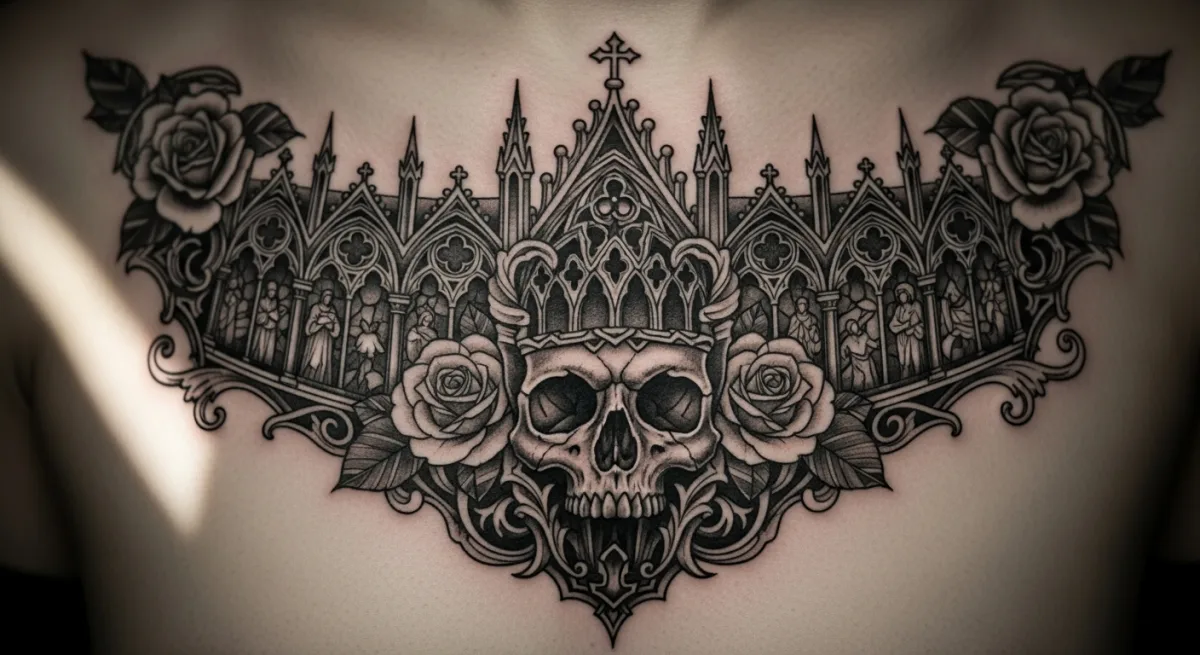
Gothic tattooing draws from the imagery of medieval cathedrals, romantic cemeteries, and 19th-century dark literature. Ornate crosses, shattered stained glass, fallen angels, crowned skulls: every piece carries a dramatic weight that converses with shadow. The style fully embraces deep blacks, harsh contrasts, and a heavy iconography of subverted religious symbols. Far from a simple dark aesthetic, it is a highly technical compositional craft, where light sculpts skin the way it would carve a marble face. Animated with AI, gothic reveals unsettling micro-movements: a veil trembling, a gaze slowly waking.
Examples of AI-generated animations
Demo animations generated with our tool — across all styles, to visualize the kind of motion that's possible.
Style characteristics
- Palette dominated by deep black, smoke grey, and accents of blood red
- Subverted religious iconography: crucifix, angels, gargoyles, stained glass
- Extreme contrast between saturated shadow and diffuse light
- Gothic architecture: ogives, rose windows, arches, ruins
- Near-systematic memento mori: skull, hourglass, tear
- Old English or Blackletter lettering woven into the composition
Tips for animating this style
- Work the light more than the displacement: a beam sweeping a face is enough
- Eyes slowly opening on a gothic portrait deliver the strongest impact
- A candle or taper benefits from a flickering flame on a short loop
- Avoid large bright red fills: they break the style's chromatic unity
- An animated veil, cape, or incense smoke adds motion without disturbing composition
Frequently asked questions
Does gothic tattooing have to be religious?
Not at all. Religious iconography is heavily present because it belongs to the medieval visual heritage, but it is often subverted, sometimes inverted, and used as aesthetic material rather than as a statement of faith. Many gothic pieces draw only on architectural, literary, or romantic codes with no assumed spiritual dimension.
What is the difference between gothic and horror tattooing?
Gothic cultivates tragic beauty: it seeks elegance within darkness, with a strong architectural and romantic dimension. Horror, on the other hand, aims for immediate discomfort through gore, decay, or the monstrous. A gothic skull will be crowned and serene; a horror skull will be cracked and oozing.
Does this style age well on skin?
Yes, provided the artist masters blacks and contrast. Like Old School, gothic relies on saturated fills and sharp outlines, which makes it very time-resistant. The most fragile zones are the fine details of stained glass or lace, which may need a touch-up after ten or fifteen years.
Go further
- All tattoo styles: the complete visual guide — see where this style sits among the major families.
- The guide to AI tattoo animation — understand the technology behind these animations.
Ready to animate your own Gothic tattoo?
Try it with no account (3 variations), then get 1 free generation of 3 images when you sign up, no credit card required.
Create my animation →