Maori tattoo: meaning, motifs and style guide
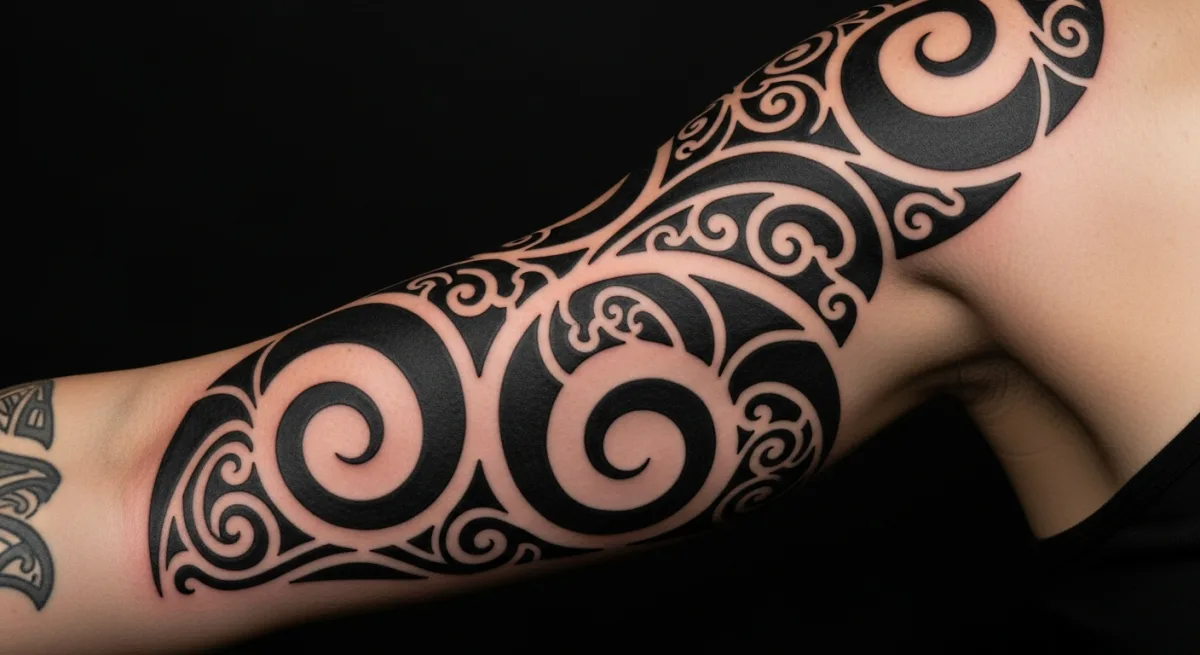
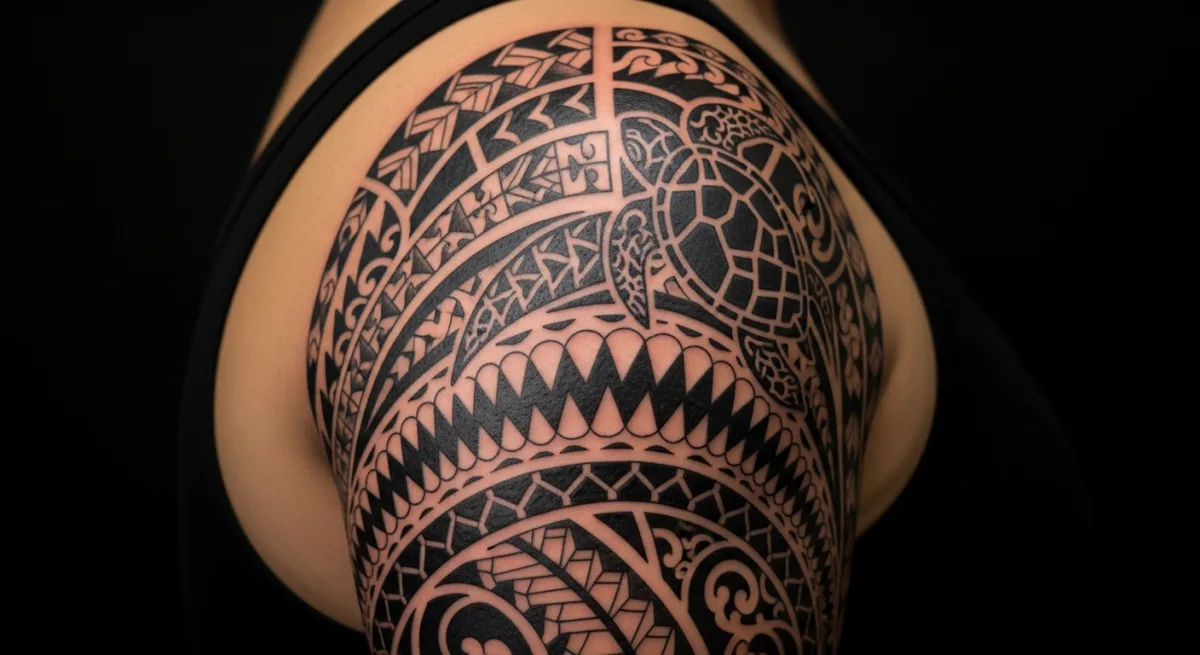
The Maori tattoo, or Tā moko, is one of the oldest graphic languages in the world. Born in New Zealand among the Maori people, it is not decoration but a true visual identity: each motif tells of lineage, rank, personal history. Koru spirals evoke the unfurling fern, unaunahi waves recall fish scales, niho taniwha triangles protect the wearer. Unlike Western interpretations often reduced to decorative tribal work, true Tā moko is transmitted and earned. Animated with AI, it reveals the power of its curves: the spiral begins to breathe, to turn slowly, like an ancestral breath.
Examples of AI-generated animations
Demo animations generated with our tool — across all styles, to visualize the kind of motion that's possible.
Style characteristics
- Codified motifs with precise meaning: koru, unaunahi, niho taniwha
- Composition based on curves and spirals rather than angles
- Deep solid black, no halftones or color
- Adaptation to face (moko) or body (kirituhi for non-Maori)
- Important cultural distinction: Tā moko (sacred) vs kirituhi (decorative)
- Respected symmetry but never mechanical: each piece stays unique
Tips for animating this style
- Koru spirals are made for slow rotation: exploit their natural geometry
- An unaunahi wave benefits from propagating along the piece like a current
- Avoid deformations that would break the motif's codified symmetry
- Solid black gives the AI a perfect reference to generate stable loops
- To respect the cultural dimension, keep animations sober: no spectacular effect that would trivialize the motif
Frequently asked questions
Can a non-Maori get a Tā moko?
Not exactly. Tā moko in its sacred sense is reserved for people of Maori descent who carry it as a sign of identity. For others, there is kirituhi, a decorative Maori-inspired tattoo that respects the tradition but is not sacred. A good artist trained in this tradition will make the distinction with you and will not use certain reserved motifs. Always research meaning before choosing.
Which Maori motifs animate best with AI?
Koru spirals and unaunahi waves are the most naturally animatable: their curved structure already suggests motion. Niho taniwha triangles, more geometric and static, benefit from very subtle animation (gentle pulse) rather than rotation. The rule is to respect the motif's reading and never deform it.
What's the difference with Polynesian tattoo?
Maori is a specific branch of Polynesian tattooing, native to New Zealand. Polynesian covers several traditions: Samoan, Marquesan, Tongan, Hawaiian, and Maori. Each island has its own motifs, rules and visual grammar. Confusing the two is common in the West but would make a traditional artist smile. Pick an artist specialized in the precise tradition you want to honor.
Go further
- All tattoo styles: the complete visual guide — see where this style sits among the major families.
- The guide to AI tattoo animation — understand the technology behind these animations.
Ready to animate your own Maori tattoo?
Try it with no account (3 variations), then get 1 free generation of 3 images when you sign up, no credit card required.
Create my animation →