EXPLORE A TATTOO STYLE
Realistic tattoo ideas: animals, portraits and shading
A lion’s gaze, wolf fur, a rose or a watch: compare realistic black and grey tattoo ideas. Look at light and dark values as closely as the details to choose your focal point.
A STARTING POINT FOR YOUR IDEA
Realism drawings to personalise
Open a drawing to inspect it, or use its description as the starting point for your own version.
Lion portrait, detailed shading, black and grey
Personalise this drawingA howling wolf in a pine forest, black and grey, vertical composition for the forearm
Personalise this drawingAn antique pocket watch with a rose and Roman numerals, black and grey, for the upper arm
Personalise this drawingSee how the composition follows the body
These AI simulations illustrate placement and proportions. Prepare the final drawing and dimensions with a tattoo artist.
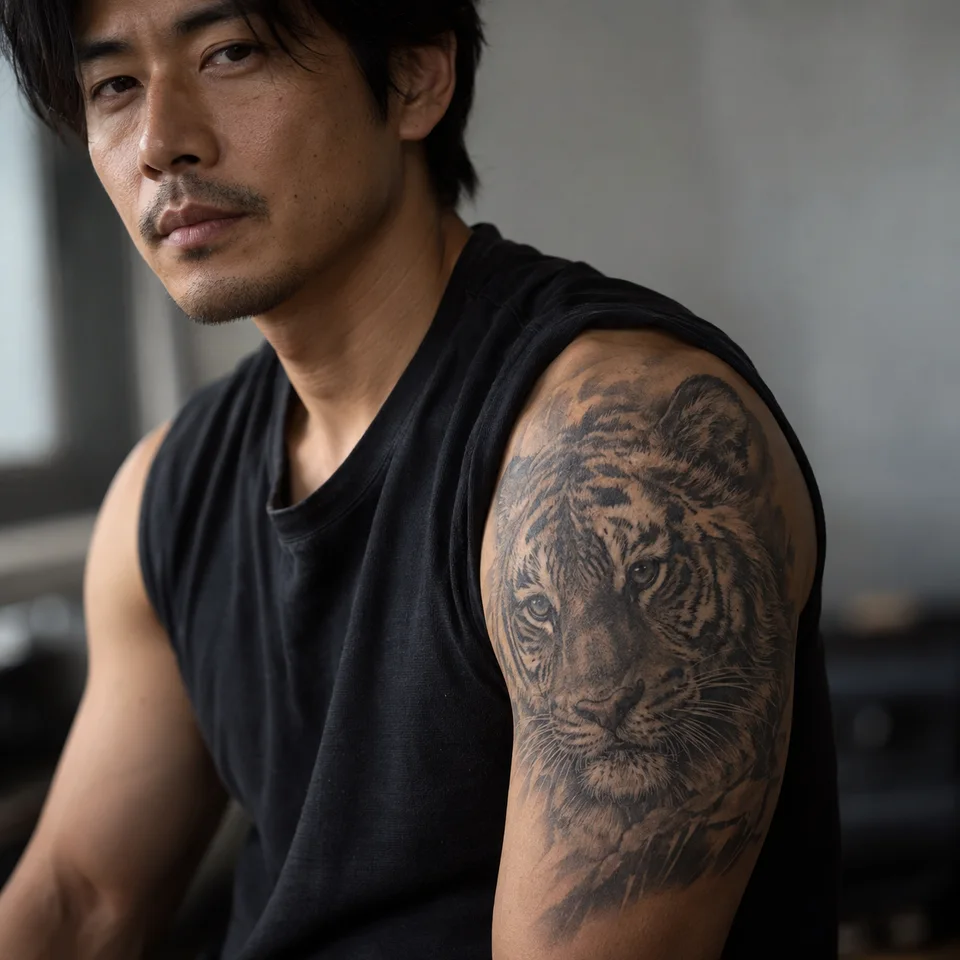
Black-and-grey tiger
The eyes anchor the composition, with room for stripes and gradual shading.
Black-and-grey rose
Shadows and lighter spaces define the petals: a reference to compare with a simpler floral outline.
Wolf and pine trees
The portrait and trees share an axis, using the calf’s height for a black-and-grey scene.
Build your own composition
Start with a usable reference
For a personal portrait, prepare a sharp photograph with an expression and lighting you like. For an animal, choose a specific angle and gaze. The gallery models are composition ideas, not portraits of real people.
Organise light and dark values
Strong shadows create contrast and light areas separate volumes. View the image from a distance: the face or object should read before its tiny textures. Ask the artist which details to retain at your intended scale.
Frame the subject
A portrait can end with a defined edge, open shading or floral elements. On an arm or calf, the sides turn around the body’s volume. Compare several views before adding a watch, text or a second subject.
Compare with other styles
Realism aims for a sense of volume and texture. Blackwork often translates a subject into solid black shapes; Japanese tattooing offers a different organisation of subject and background.
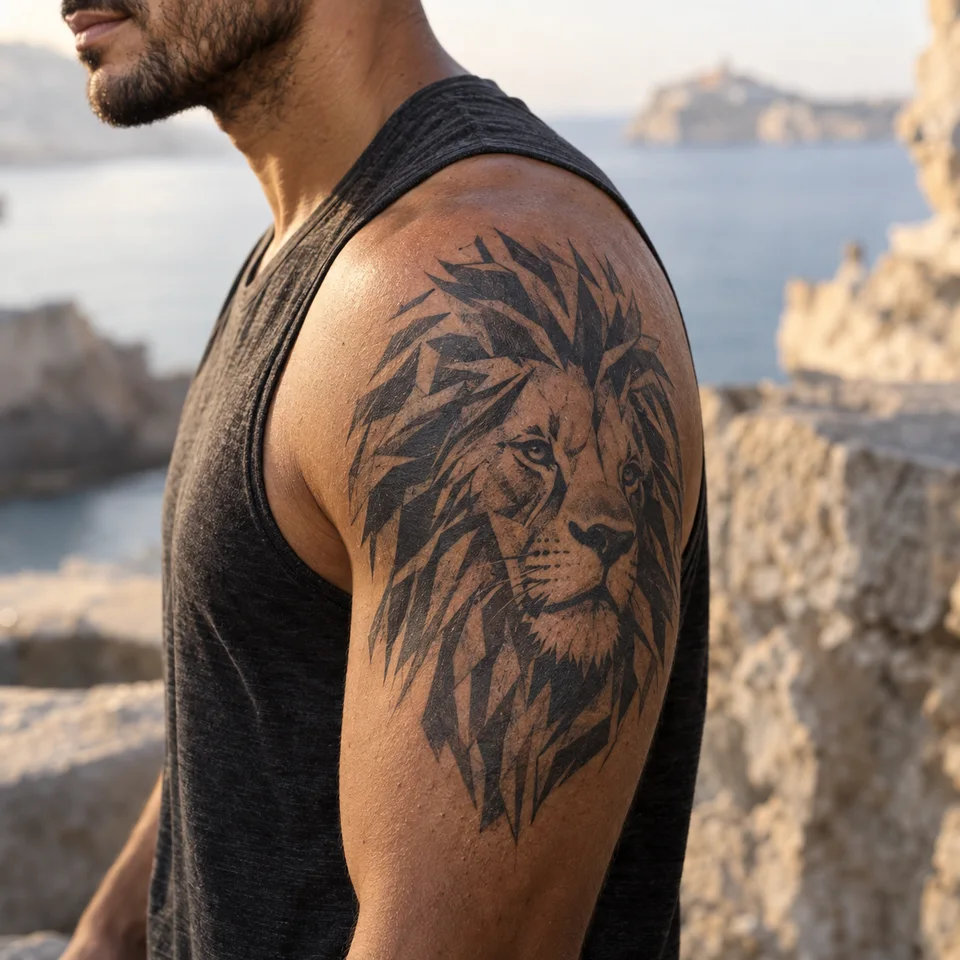
Blackwork
Solid black shapes and open skin structure the drawing.
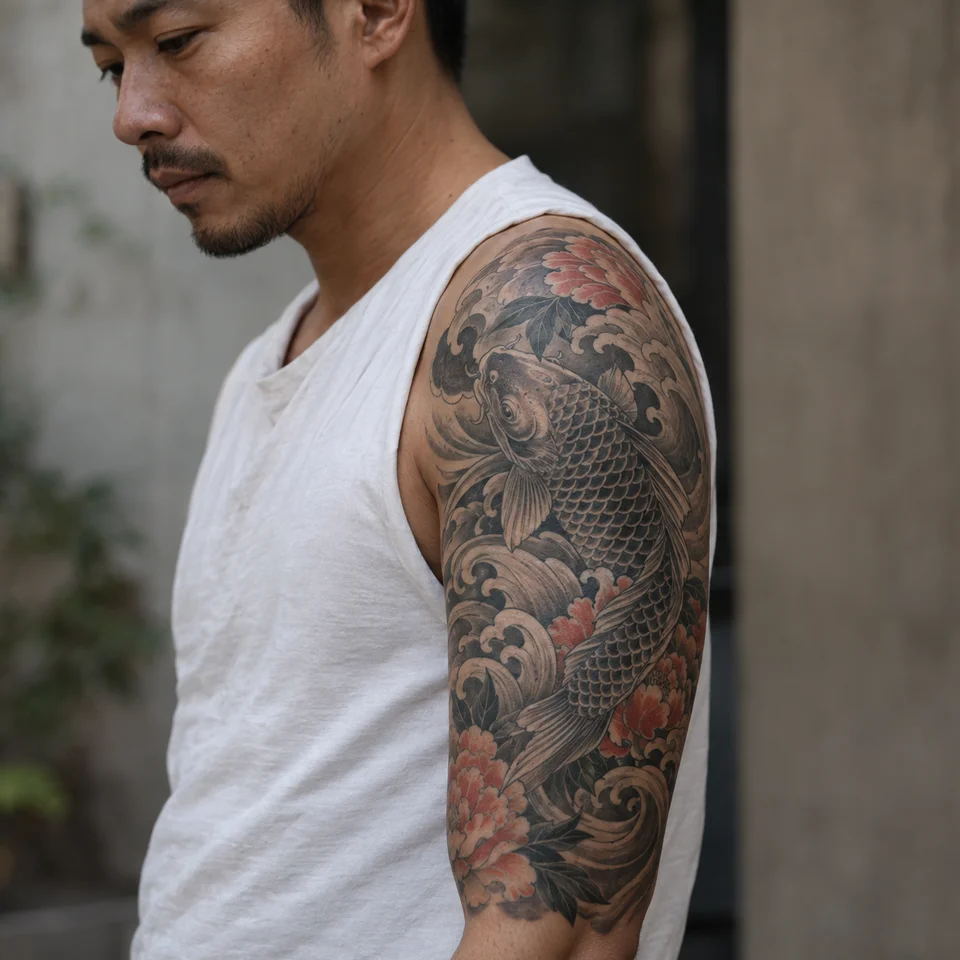
Japanese (Irezumi)
Koi, flowers and waves in a flowing composition.
Choose a motif or a placement
Questions about your project
Can I use a personal photograph?
Yes. Bring a sharp version and explain which features matter: the expression, angle or an object. Your artist can help decide what translates into a tattoo.
Can a realistic tattoo be small?
Size depends on the subject and its detail. Compare a simplified version with a larger composition instead of automatically shrinking the entire image.
Can I personalise the gallery animals?
Yes. The generator uses the model description. Specify the pose, direction and elements to remove before creating a new reference.
Keep the style. Make the idea yours.
Start from a drawing, change its subject and describe the details that matter to you.
Already have a tattoo image? Explore tattoo animation →