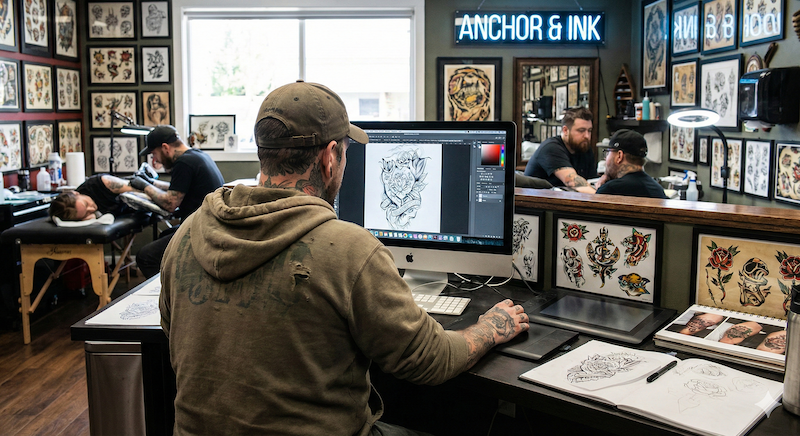
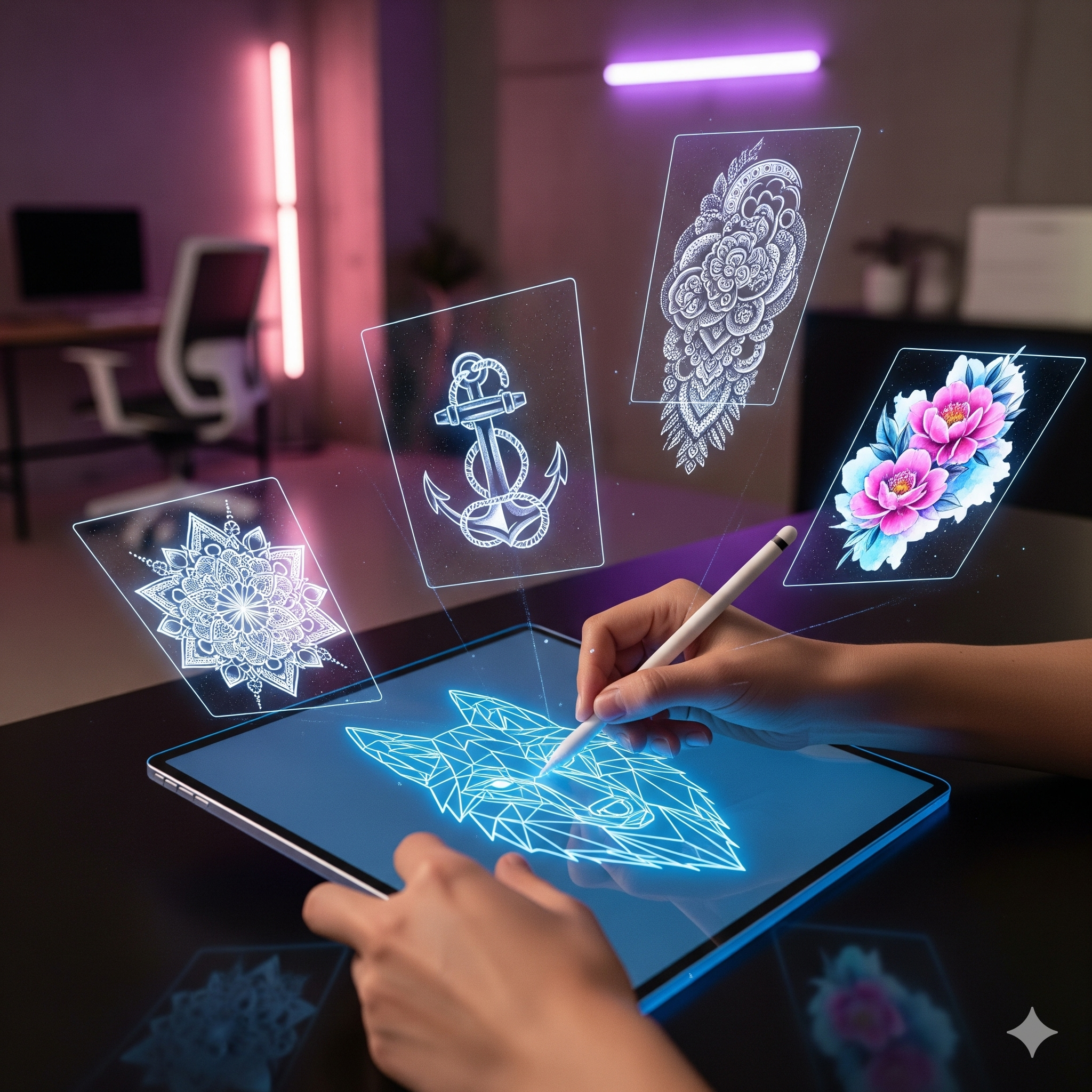
Imagine a tattoo that transforms into a holographic portal, reveals secret messages, or projects 3D animations beyond your skin. This isn't science fiction anymore: the fusion of animated tattoos and augmented reality (AR) is already a reality in 2025. This technological revolution is completely redefining body art, transforming every tattoo into a unique interactive experience that transcends the limits of the physical world.
Augmented Reality Revolutionizes Tattoo Art in 2025
Augmented reality applied to tattoos represents the biggest industry disruption since the invention of the electric tattoo machine. With over 500,000 AR-compatible tattoos created monthly and growing adoption by avant-garde studios, this technology opens unlimited creative possibilities.
What Is an Augmented Reality Tattoo?
An AR tattoo combines traditional ink with digital layers invisible to the naked eye. Using a smartphone or smart glasses, these layers activate to create stunning visual experiences that far exceed the limits of classic 2D animation.
Difference Between Simple Animation and AR
- Classic animation: 2D movement on the skin surface
- Augmented reality: 3D projections, spatial interactions, evolving content
- Visual depth: AR creates illusions literally coming out of the skin
- Interactivity: Response to gestures, voice, and environment
Cutting-Edge Technology: How AR for Tattoos Works
The magic happens through a sophisticated combination of image recognition and digital projection technologies.
The Detailed Technical Process
- Tattoo recognition: AI identifies unique visual markers
- Spatial calibration: Real-time position and orientation calculation
- Digital overlay: 3D element projection with precise tracking
- Adaptive rendering: Adjustment based on lighting and movements
Required Equipment in 2025
For Users
- Compatible smartphone: iPhone 12+ or Android with ARCore (98% of market)
- AR glasses (optional): Apple Vision Pro, Meta Quest 3, or Magic Leap 2
- Dedicated app: Free or premium depending on features
For Creators
- Creation software: Unity AR, Spark AR Studio, or Adobe Aero
- Graphics tablets: For designing digital layers
- Specialized SDK kits: APIs for custom integration
Revolutionary Applications Transforming the Experience
AR's creative possibilities exceed imagination, transforming each tattoo into a living, interactive artwork.
Immersive Visual Experiences
Evolving Narrative Tattoos
Your tattoo tells a different story based on time, location, or mood. A dragon that sleeps by day and awakens at night, or a forest that changes with real seasons.
Advanced Musical Synchronization
Animations react in real-time to ambient music. Imagine visible sound waves emanating from your tattoo or particles dancing to the rhythm.
Hidden Messages and Easter Eggs
Reveal secret content only visible in AR: GPS coordinates of a special place, hidden love messages, or visual access codes.
Augmented Social Interactions
- Connected tattoos: Synchronized animations between close friends
- Integrated AR games: Mini-games playable directly on skin
- Content exchange: Sharing custom animations between users
- 3D social media: Instagram Stories in hologram from your tattoo
Transformative Impact on the Tattoo Industry
This technological revolution fundamentally redefines the tattoo profession and client experience.
New Skills for Tattoo Artists
- Multi-dimensional design: Simultaneous physical and digital conception
- Tech collaboration: Partnerships with developers and 3D animators
- Continuous training: Mastery of AR creation tools
- Augmented consulting: Guidance on interactive possibilities
Emerging Business Models
- Tattoos as a Service: Subscriptions for evolving AR content
- Animation marketplace: Sale of custom digital layers
- Premium experiences: Exclusive and limited edition animations
- Physical NFTs: Blockchain certification of augmented works
Practical Guide: Preparing Your Tattoo for AR
Optimal Design Criteria
- High contrast: Facilitates AI recognition
- Clear anchor points: Distinctive geometric elements
- Strategic negative space: Areas for 3D projections
- Minimum size: 3x3 inches for optimal experience
Ideal Tattoo Styles for AR
Sacred Geometry
Mandalas, fractals, and symmetrical patterns offer perfect reference points for complex holographic projections.
Biomechanical
Mechanical designs allow for spectacular gear animations, circuits, and cyberpunk transformations.
Stylized Nature
Animals, plants, and natural elements lend themselves to seasonal metamorphoses and accelerated life cycles.
Technical Challenges and Innovative Solutions
Current Obstacles
- Skin deformation: Real-time adaptation to movements
- Lighting variations: Automatic projection calibration
- Battery life: Energy consumption optimization
- Network latency: Edge computing for fluidity
Innovations in Development
- Conductive inks: Tattoos directly interacting with AR
- Subcutaneous micro-projectors: AR without external device (2027)
- Predictive AI: Movement anticipation for zero latency
- Tactile holograms: Haptic feedback from projections
The Future of AR Tattoos: 2026-2030 Perspectives
Experts predict massive adoption and revolutionary innovations in the coming years.
Emerging Trends
- 2026: AR contact lenses for permanent vision
- 2027: Biomedical tattoos with health data in AR
- 2028: Direct neural integration (prototypes)
- 2030: Autonomous holographic tattoos
Predicted Societal Impact
AR tattoos will become personal interfaces, potentially replacing smartphones and wearables. This evolution raises questions about privacy, digital identity, and the boundaries between real and virtual.
In conclusion, the fusion of animated tattoos and augmented reality represents not just a technological evolution, but a true cultural and artistic revolution. Start by animating your tattoo with AI or explore the latest 2025 trends. The future of personal expression is literally under your skin, waiting to be revealed by the magic of augmented reality. Don't wait any longer to transform your artistic vision into a revolutionary immersive experience.