EXPLORE A TATTOO STYLE
Geometric tattoo ideas: animals, lines and compositions
Explore geometric tattoos through faceted animals, framed landscapes and symmetrical patterns. Compare drawings and skin previews to choose an axis, contrast and composition to personalise.
A STARTING POINT FOR YOUR IDEA
Geometric drawings to personalise
Open a drawing to inspect it, or use its description as the starting point for your own version.
A polygonal deer with dotwork accents in a circular frame
Personalise this drawingA mountain range in thin lines inside a triangle, with a moon, for the inner arm
Personalise this drawingA tree with branching roots inside an open diamond, black branches and geometric lines
Personalise this drawingA symmetrical butterfly with geometric faceted wings, black linework and a few subtle dots
Personalise this drawingVertical black ink compass rose above angular mountain silhouette, refined geometric tattoo for upper arm or forearm, medium complexity and readable open spaces, no letters or numbers.
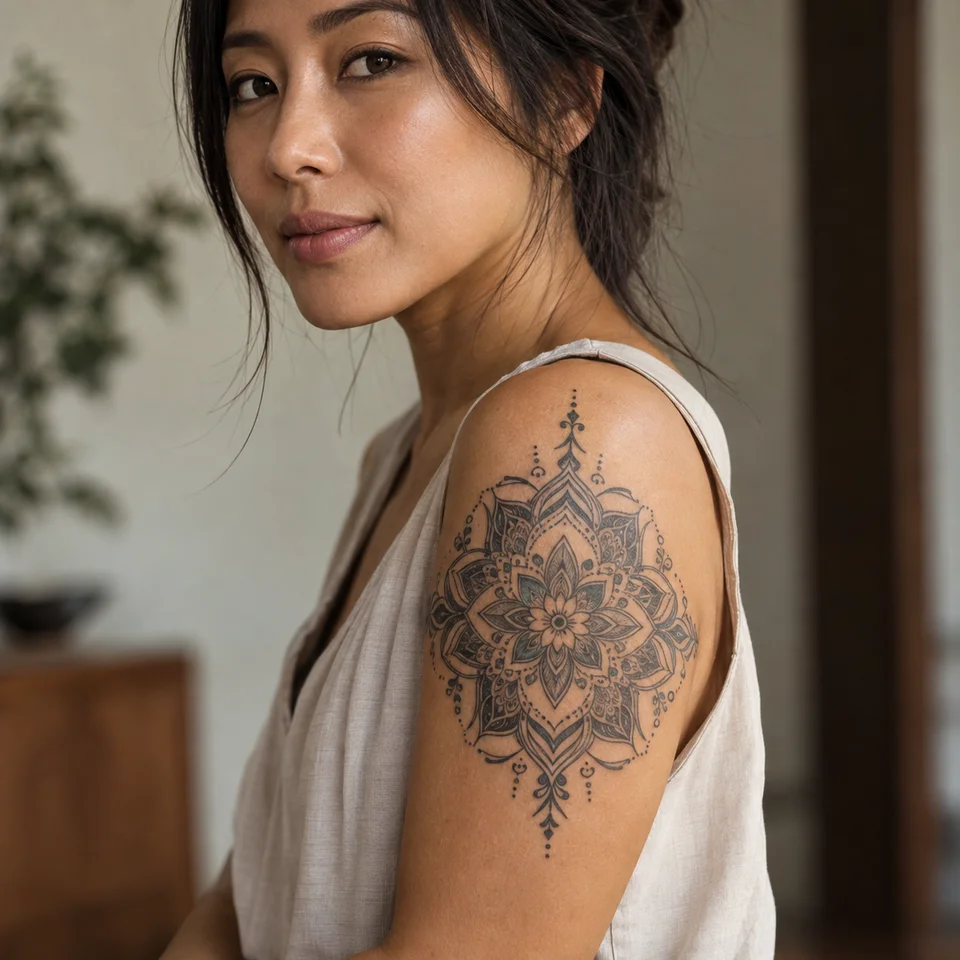
Personalise this drawingA symmetric mandala with a dotwork gradient, for the back of the shoulder
Personalise this drawingSee how the composition follows the body
These AI simulations illustrate placement and proportions. Prepare the final drawing and dimensions with a tattoo artist.
Geometric ornament
An ornament built around a clear centre, with spaces that follow the curve of the arm.
Compass and lines
An open compass and fine arcs form a geometric composition to assess with the arm relaxed.
Ornamental mandala
Repetition builds a centred pattern. Contrast and the gaps between petals matter as much as detail.
Build your own composition
Choose what the geometry does
A faceted deer transforms the subject itself; a triangle around mountains acts as a frame. A compass organises a drawing around a centre. Compare these directions before adding shapes: each should help the subject read clearly rather than simply fill a gap.
Separate symmetry from repetition
A mandala develops around a centre, while repeated lines can follow the length of an arm. Shoulder contours change how its axes appear. Show your artist front and side references to discuss connections and open spaces.
Balance outlines, dots and open areas
Stippled shading can create depth without filling every facet. Start with a simple outline and compare it with a shaded version. To personalise a model, specify the subject, frame shape and areas you want to keep open.
Compare with other styles
Geometry describes the arrangement of shapes. Dotwork describes a texture built with dots; minimalism reduces the number of elements. A design can combine these approaches without becoming more complicated.
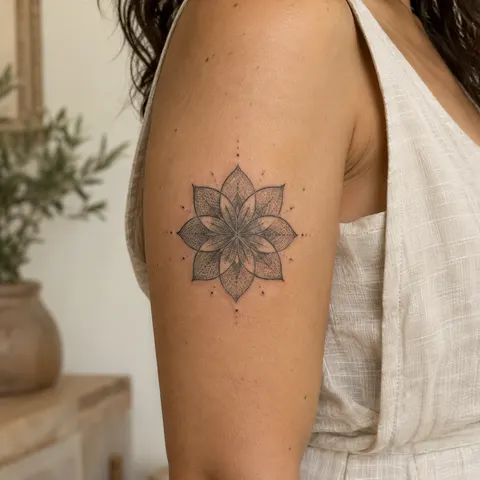
Dotwork
Closely and loosely spaced dots create the shading.
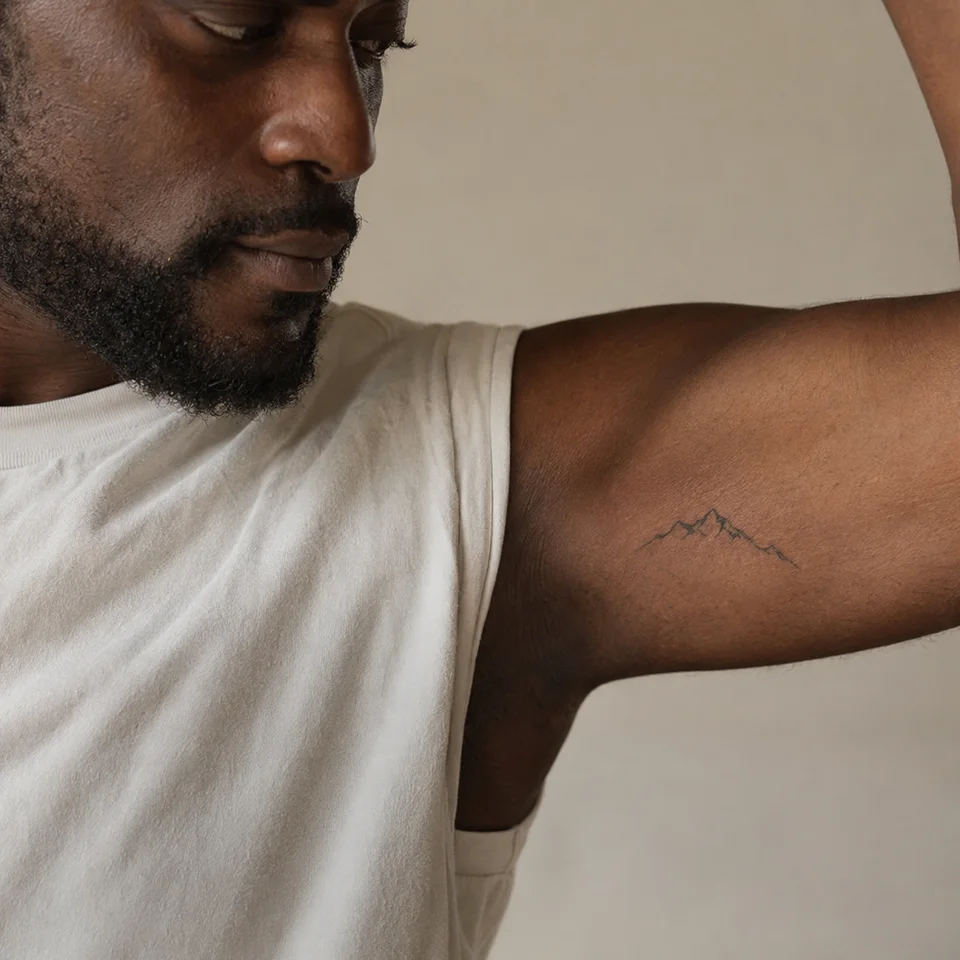
Minimalist
Few lines and a clear, simple outline.
Choose a motif or a placement
Questions about your project
How does a geometric tattoo differ from a mandala?
Geometric tattoos include frames, faceted animals and repeated shapes. A mandala is a centred composition arranged around a motif. It is one geometric direction, not the only option.
Where should I place a symmetrical design?
Compare the shoulder, forearm or back according to its direction. Symmetry in a flat image does not predict how it will sit on the body: plan dimensions and axes with your artist.
Can I replace the animal or landscape in a model?
Yes. Open the drawing in the generator and describe a new subject while retaining the geometric elements you want: facets, a circle, a triangle or construction lines.
Keep the style. Make the idea yours.
Start from a reference, change its subject and describe the details that matter to you.
Already have a tattoo image? Explore tattoo animation →