Animated Surrealist tattoo with AI
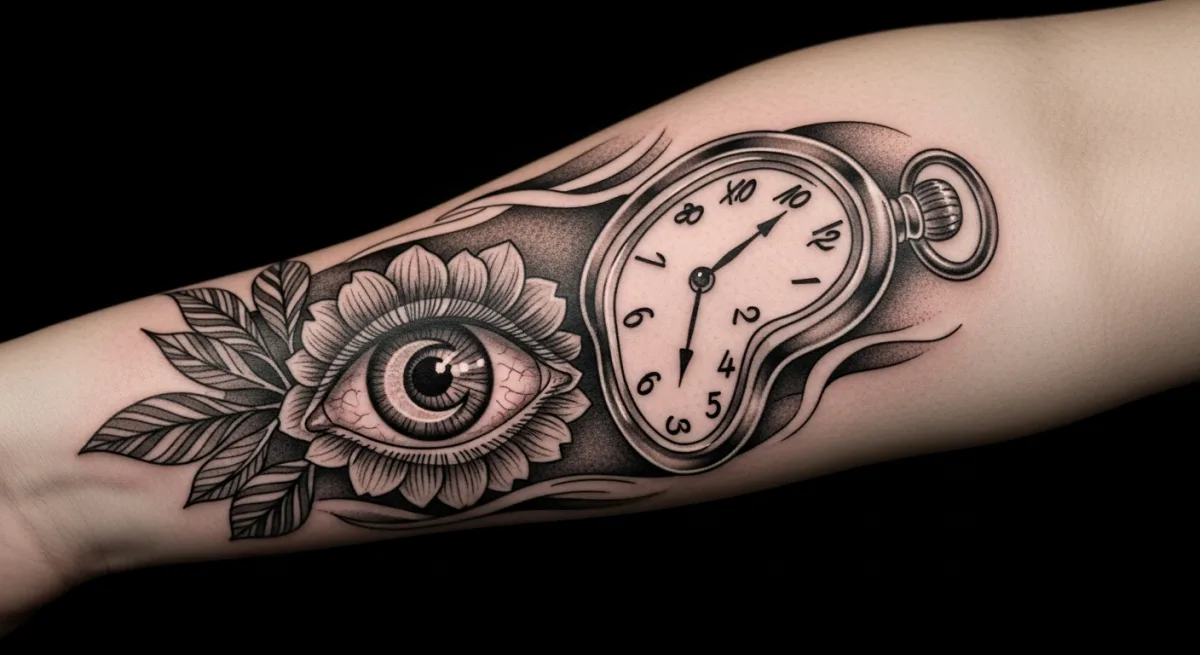
Surrealist tattooing extends the pictorial legacy of Dalí, Magritte, and Max Ernst onto the skin: impossible associations, melting objects, mental landscapes, broken scales between humans and things. A razor becomes a fish, a watch drips from a branch, an eye opens inside a cloud. Everything rests on colliding images usually kept apart. The style demands strong technical command from the artist, since it often blends realism, soft gradients, and complex perspective. Animated with AI, it reaches a rare level of expressiveness: motion amplifies the dreamlike shift and turns the still image into an actual sequence of dream.
Examples of AI-generated animations
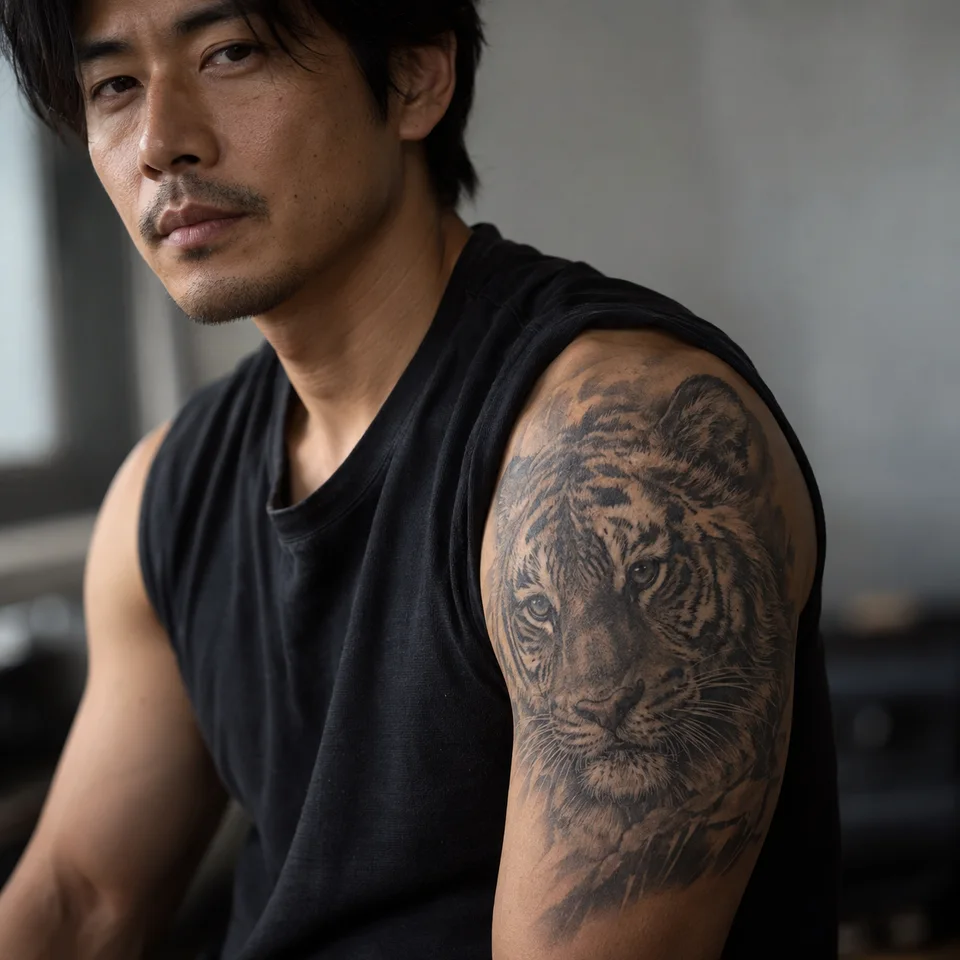
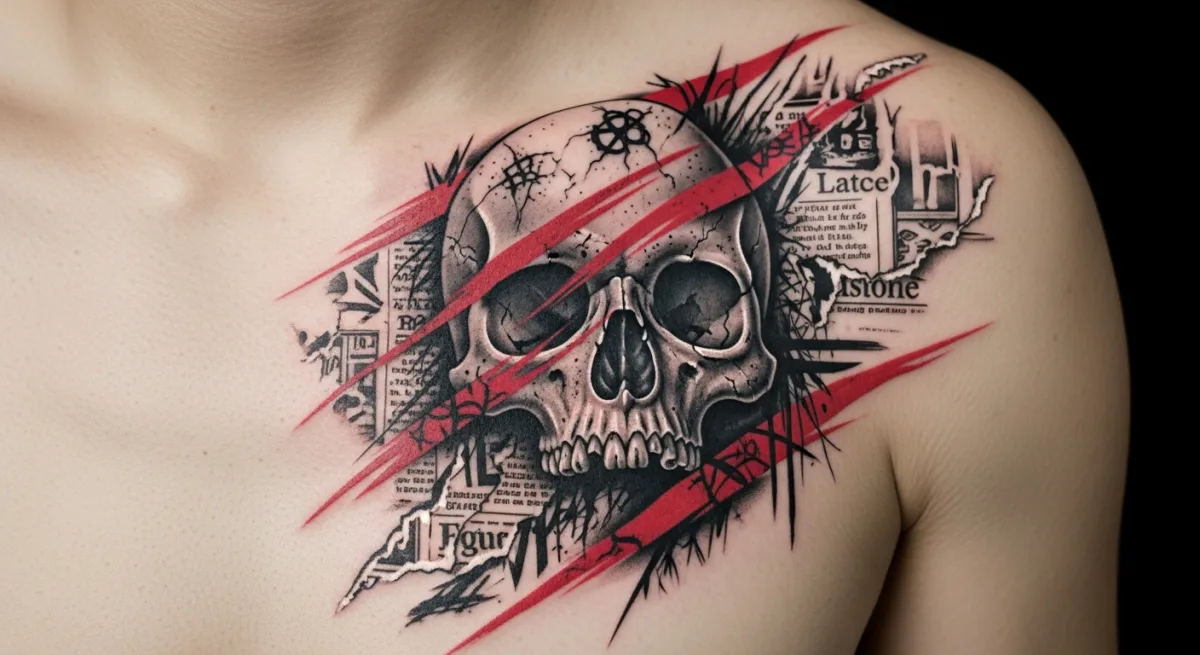
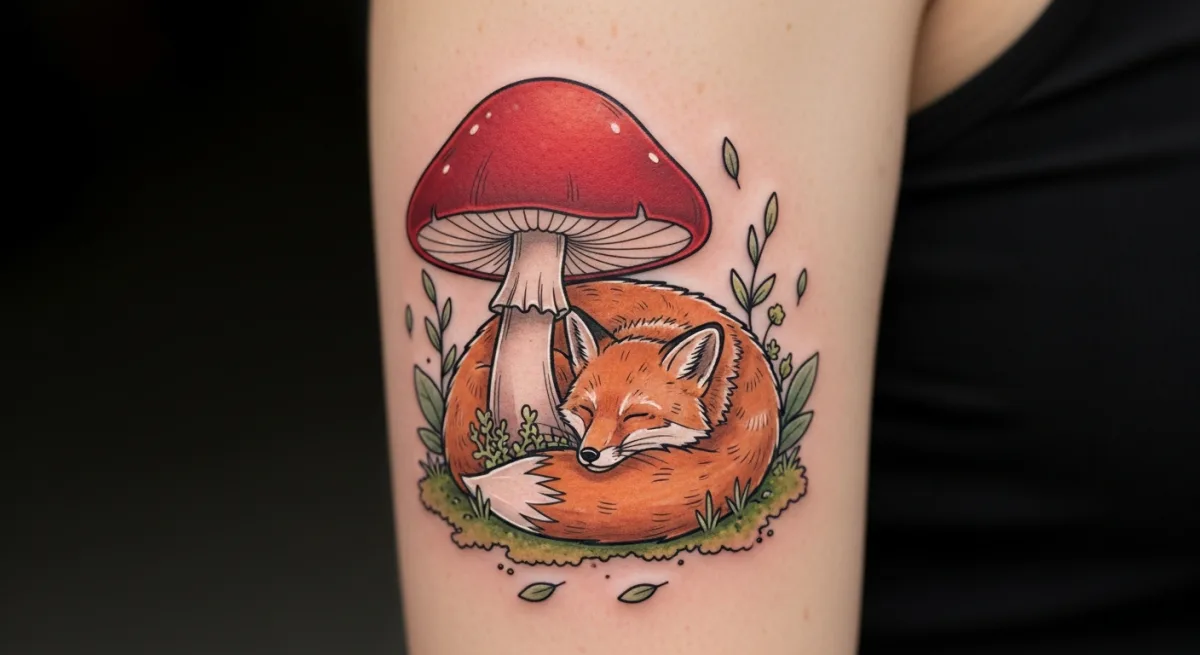
Demo animations generated with our tool — across all styles, to visualize the kind of motion that's possible.
Style characteristics
- Combination of incongruous elements within a single composition
- Realistic technique applied to impossible subjects
- Deliberately disorienting scale shifts
- Soft gradients and seamless transitions between objects
- Strong symbolism: eye, clock, mirror, anatomical fragments
- Often muted palette, sometimes punctuated by vivid red or blue
Tips for animating this style
- Animate transitions between elements first: that is where the dreamlike effect emerges
- Slow morphing from one object to another reads stronger than rotation
- Play with pupil dilation for an eye, swaying for a melting clock
- Avoid animating everything at once: a single moving element draws the eye better
- Ideal pacing sits between 8 and 12 seconds, long enough to settle the strangeness
Frequently asked questions
Should I only book a specialist for a surrealist project?
Strongly recommended. Surrealism demands mastery of realism, soft gradients, and complex composition. A generalist tattooer can produce a legible result, but often a frozen one. A specialist knows how to manage impossible transitions between materials, forced perspective, and the anatomical volumes that compose the style's visual vocabulary.
Does a surrealist tattoo animate better than a classic realistic one?
Frequently, yes. Surrealism already embeds the idea of mutation and impossible motion. AI naturally builds on that vocabulary to create coherent morphings. A pure realism tattoo stays descriptive; a surrealist tattoo invites transformation, which opens a much wider animation playing field.
What minimum size do you recommend for this style?
Plan at least fifteen centimeters along the largest dimension. Surrealism depends on multiple elements coexisting, which requires enough surface for each detail to stay legible. Below that size, the composition loses its narrative impact and becomes unreadable as the ink ages.
Go further
- All tattoo styles: the complete visual guide — see where this style sits among the major families.
- The guide to AI tattoo animation — understand the technology behind these animations.
Ready to animate your own Surrealist tattoo?
Try it with no account (3 variations), then get 1 free generation of 3 images when you sign up, no credit card required.
Create my animation →