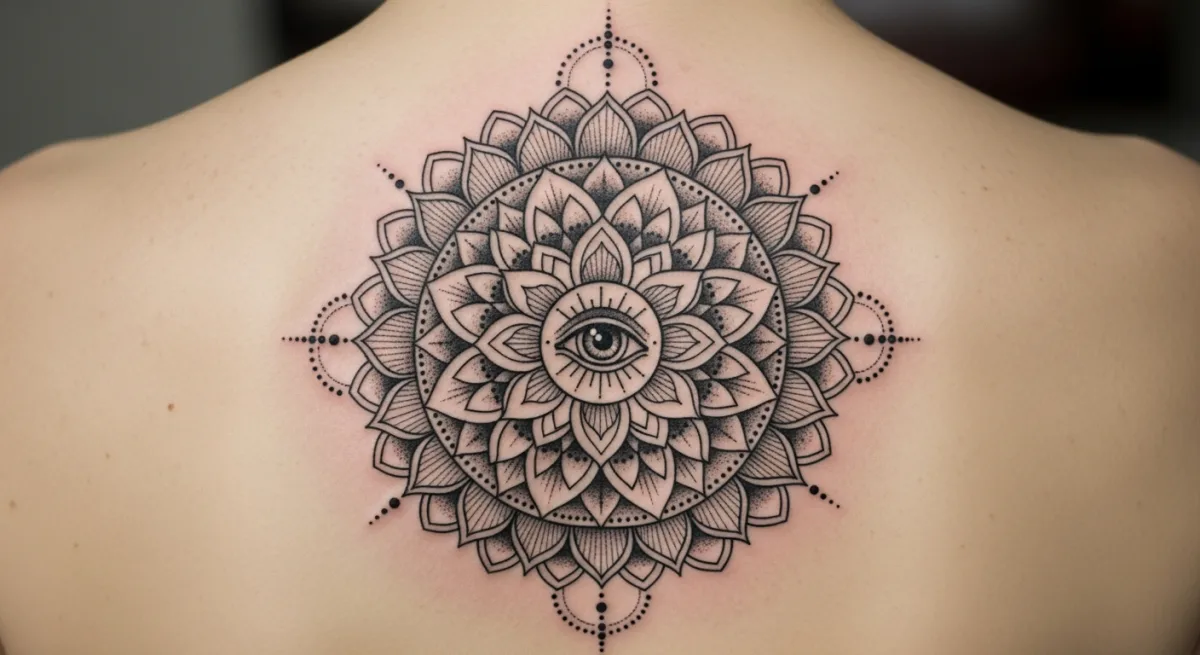
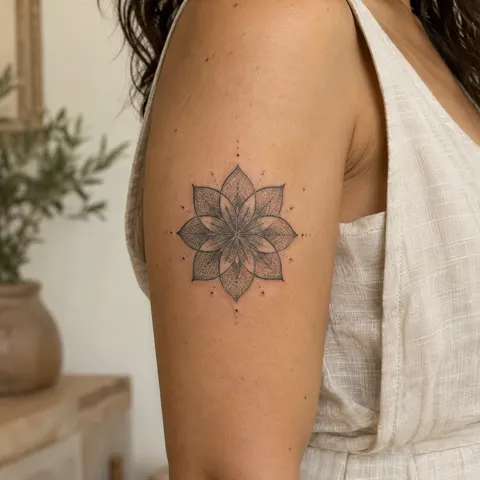
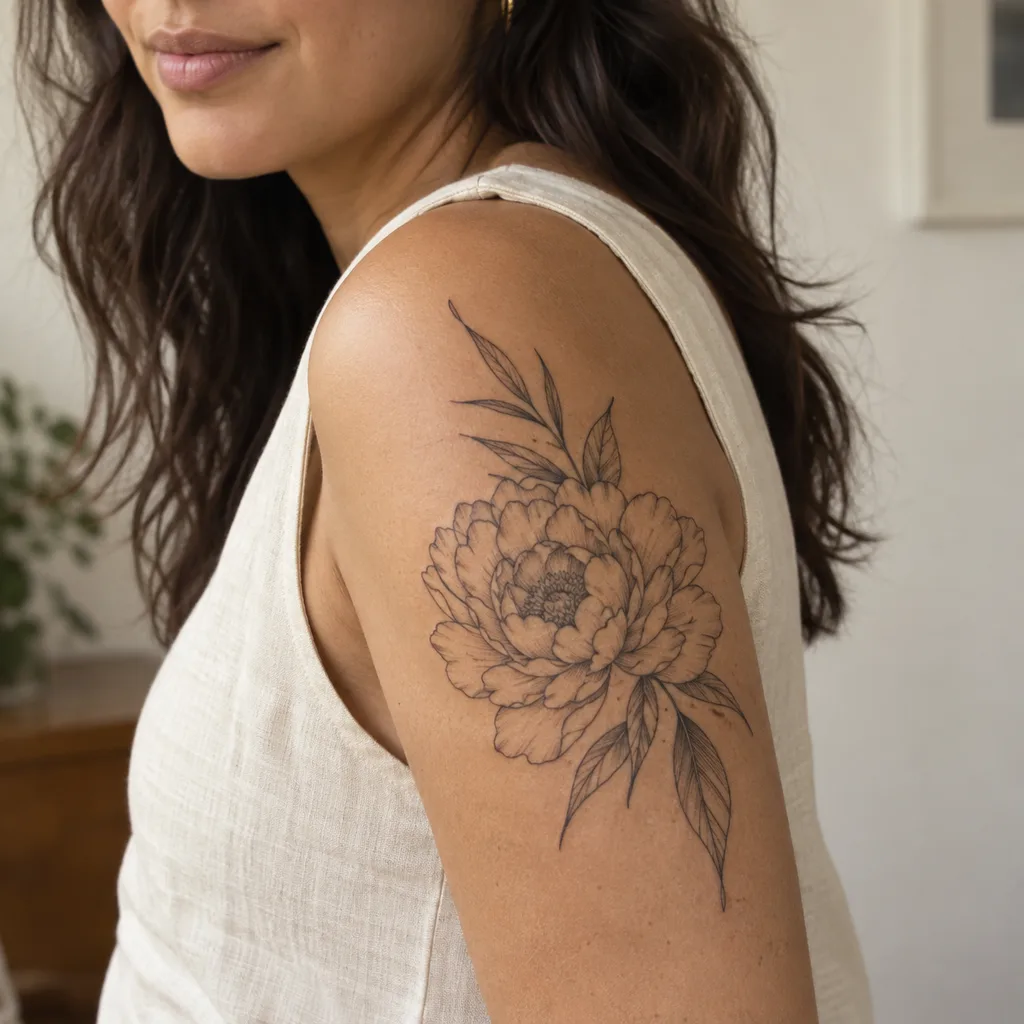
Animated Ornamental tattoo with AI
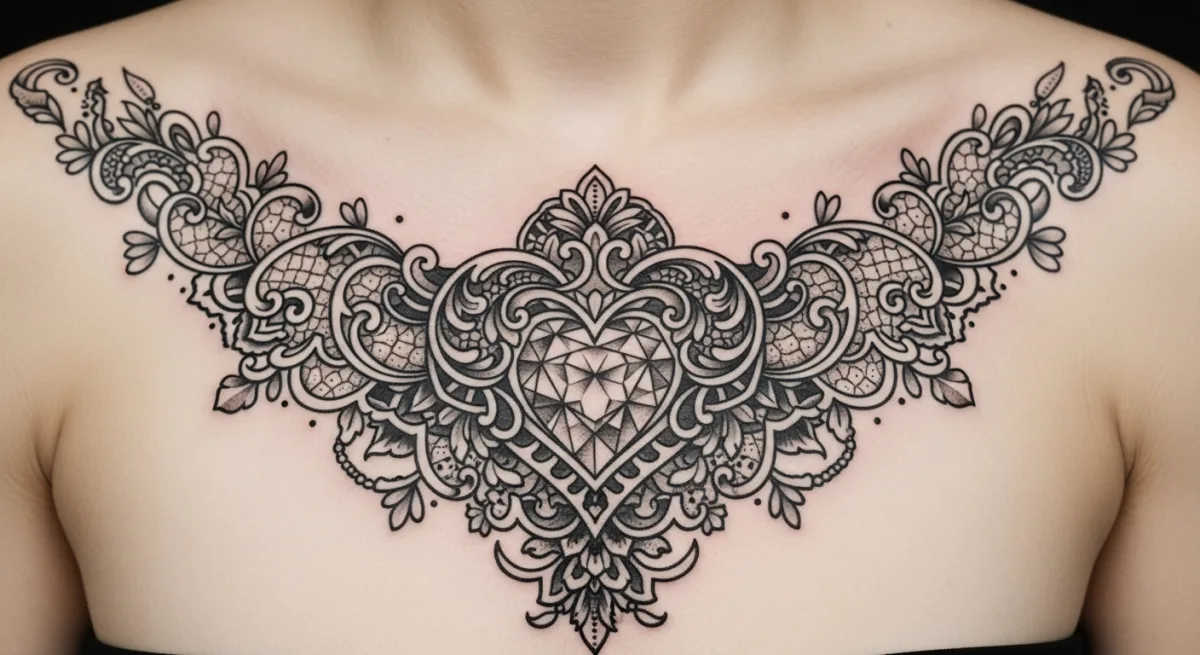
The ornamental style draws from jewelry, Moorish architecture, medieval illumination and Persian textile patterns. It is a tattoo that imitates adornment: lace wristlets, chiseled chest plates under the collarbone, arabesque anklets. Unlike the strictly geometric mandala, ornamental plays with asymmetry, tassels and pendants, as if the motif were flowing from an anatomical anchor point. Animated by AI, ornamental becomes living jewelry: tassels sway, arabesques unfurl, the piece truly feels worn rather than tattooed.
Examples of AI-generated animations
Demo animations generated with our tool — across all styles, to visualize the kind of motion that's possible.
Style characteristics
- Direct inspiration from jewelry and ornate architecture
- Very thin lines combined with punctual black fills
- Composition that follows anatomy: chest plate, bracelet, lace, medallion
- Partial symmetry, often broken by pendants or tassels
- Dotwork details to simulate metal or fabric texture
- Signature placements: sternum, upper back, wrist, ankle, nape
Tips for animating this style
- Make tassels and pendants sway as if subject to gravity
- Filigrees animate beautifully through progressive unfurling from a central point
- A faint shimmer on the simulated jewel zones reinforces the metallic illusion
- Avoid global motion: the micro-animation's delicacy is what makes the beauty
- Portrait format centered on the anatomical placement works better than wide shots
Frequently asked questions
Ornamental or mandala, how to choose?
Mandala is strictly circular and symmetrical, based on repetitive geometric constructions. Ornamental is freer, asymmetrical, and imitates worn jewelry. If you want something meditative and centered, choose mandala. If you want the effect of tattooed jewelry following your anatomy, ornamental fits better.
Does this style require a specialized artist?
Yes, absolutely. The millimetric line precision, anatomical placement and dotwork mastery cannot be improvised. Look for an artist whose portfolio shows at least ten accomplished ornamental pieces, with particular attention to arabesque fluidity and clean black fills.
Can ornamental be combined with other styles?
Yes, this has actually become a strong 2026 trend. Ornamental works beautifully as a frame around a black and grey portrait, or as a complement to a fine line flower. The golden rule: one main style only, with ornamental as a frame or connector.
Go further
- All tattoo styles: the complete visual guide — see where this style sits among the major families.
- The guide to AI tattoo animation — understand the technology behind these animations.
Ready to animate your own Ornamental tattoo?
Try it with no account (3 variations), then get 1 free generation of 3 images when you sign up, no credit card required.
Create my animation →