Shoulder tattoo ideasA design shaped around a curve.
Compare floral, geometric and colourful shoulder tattoos. The outer shoulder cap, rear shoulder and start of a sleeve each change the silhouette and direction of the same subject.
More about this selection
A rear shoulder piece has a different composition from one centred on the deltoid. The shoulder-blade examples help compare those viewpoints. Review the stencil with your arm relaxed and raised, and explain any plans to extend onto the arm or back.
Shoulder tattoo ideas on skin
Light, medium and dark skin tones, different proportions and placements: compare how each motif sits on the body. These images are simulations created with our AI.
Chrysanthemum shoulder cap
Rounded petals and leaves follow the shoulder. Muted red and black contours create a focal point while leaving the upper arm open.
PersonaliseShoulder-blade garden
A peony and ferns sit on the shoulder blade. A localised piece leaves room for other motifs.
PersonaliseNeo-traditional butterfly
Clear symmetry with small variations in the wings. Colour separates the areas of the drawing.
PersonaliseMore designs to explore
Try another direction: start with a line, a silhouette or a colour, then adapt the design in the studio.
A symmetric mandala with a dotwork gradient
PersonaliseOne large elegant peony bloom with flowing botanical leaves
PersonaliseA roaring black panther head
PersonaliseA koi fish surrounded by waves and cherry blossoms
PersonaliseA death's-head hawkmoth
PersonaliseA butterfly with spread wings
PersonaliseLet the design follow the shoulder
The shoulder connects the upper arm, back and front of the torso. An open flower can create a centre on the rounded cap, while a branch can link two surfaces. Choose the main viewpoint before placing smaller details.
A rear shoulder piece has a different composition from one centred on the deltoid. The shoulder-blade examples help compare those viewpoints. Review the stencil with your arm relaxed and raised, and explain any plans to extend onto the arm or back.
Explore tattoo meanings →Three directions to compare
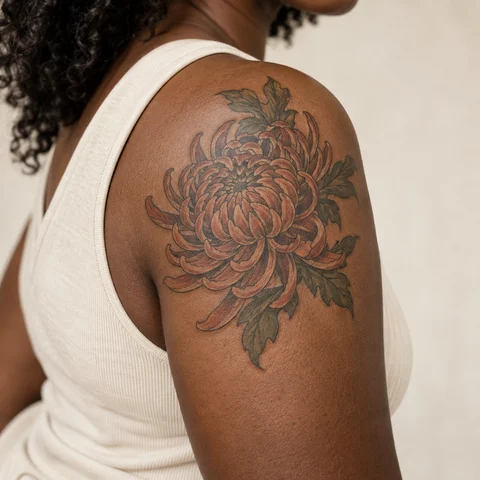
Curves and colour
A shared movement links petals and leaves. Keep one focal point and distinct outlines.
Explore this direction →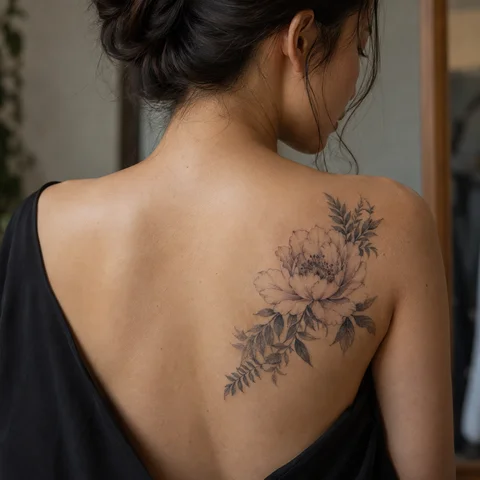
Fine lines and open space
Compare the main outline and the gaps between lines at the intended size.
Explore this direction →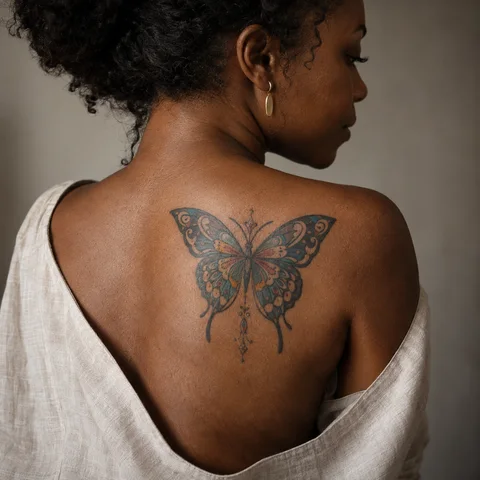
Outlines and illustration
A clear outline organises the colours. Separate the main subject from secondary details.
Explore this direction →Where should your tattoo go?
Outer shoulder cap
A flower or rounded ornament can follow the deltoid. Check the side view and details that wrap towards the front or back.
Rear shoulder and shoulder blade
A botanical composition or butterfly can face the back. Distinguish this area from a tattoo on the top of the shoulder.
Towards the upper arm
To begin a sleeve, choose a downward movement and reserve space for later connections. The edges of the first piece matter.
Three ways to occupy the shoulder
An open flower
The bloom establishes a centre and the leaves guide the movement. Chrysanthemums, peonies and irises have different proportions; compare outlines before textures.
A geometric rosette
The centre and regular spacing need to read on a curved surface. Check where the side elements move when the arm rotates.
An illustrated subject
A panther, butterfly or koi needs a clear focal point. Place the head or face in the most readable area, with secondary elements around it.
Plan an extension onto the arm or back
Bring a photo of the whole area, including nearby tattoos. Define a shared direction and contrast before adding background. Open skin between shapes helps separate the subjects.
Also review the edge with a sleeveless top and a T-shirt. Clothing can reveal only part of the motif: decide whether you like that partial view before fixing the dimensions.
More directions for your project
From the first design to your appointment
Clarify your reference
Keep a few images and explain what you like about each: the subject, linework, scale or placement. A reference starts a conversation; it is not a finished stencil.
Choose an artist for the style
Look at the artist’s own work, including healed examples where available. Discuss the intended dimensions, placement and any text before requesting a quote.
Check the final drawing
Review the stencil at its actual size and in several natural positions. Read names and dates character by character before approving them.
Prepare the appointment and aftercare
Ask your tattoo artist for preparation and aftercare instructions tailored to the session. The images here cannot determine what is suitable for your individual skin.
What if your next tattoo
started with your words?
Choose a direction, change a detail and create your own reference with Encre Vive.
Create my tattooView plans and creditsYour questions answered
01Does a shoulder tattoo need to be round?
No. Branches, animals and diagonal compositions can also follow the shoulder. The outline depends on your subject and the area you want to occupy.
02How do the shoulder cap and shoulder blade differ?
The rounded cap reads mainly from the side and connects the arm to the torso. The shoulder blade sits further onto the back. Compare front, side and rear views.
03Can I begin a sleeve at the shoulder?
Yes. Tell your artist from the start so the direction, open spaces and transitions can support a future sleeve.
04How much should I budget?
The artist’s work, dimensions, detail and exact placement determine the quote. Bring your references and intended size, and ask what the proposal includes.
05How can I personalise a design?
Choose a reference to open the studio with its subject and style. Adapt the motif and ask your artist to prepare the final dimensions and placement.
06Are these real tattoo photographs?
These are original AI-generated simulations. They illustrate composition and placement; they do not predict the result on your skin.