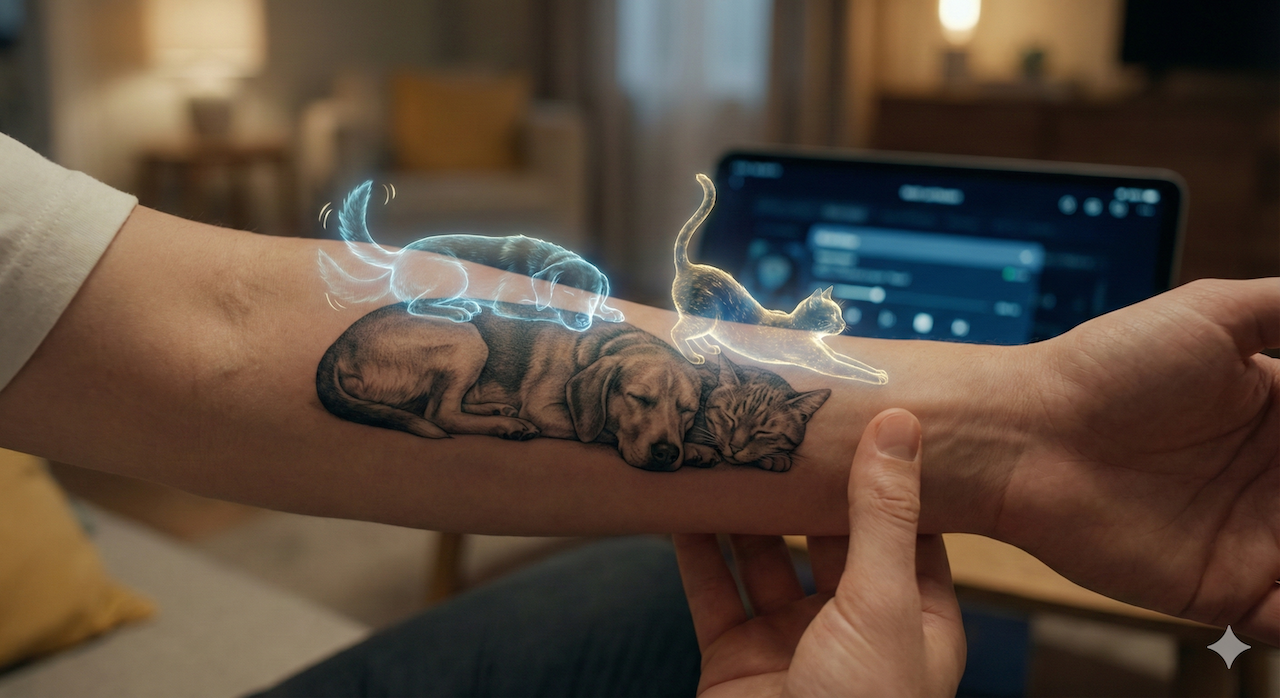
A memorial tattoo lets you carry a memory, a relationship or a meaningful detail on your skin. It can honour someone who has died or a beloved pet; a tribute tattoo can also celebrate someone who is still in your life. Familiar handwriting, a dog's ears, a flower from the garden: sometimes a very simple image is all you need to begin.
How do you turn that wish into a design you want to keep? This guide brings together 25 tattoo ideas, examples for different relationships and the questions to consider before meeting a tattoo artist.
Already have a memory in mind? Try Encre Vive to turn it into an initial tattoo idea: describe the design and style you have in mind, then explore a visual starting point to develop with your tattoo artist.
A few starting points
- Choose a specific memory before looking for a tattoo style.
- Decide whether you want to see the design every day or keep it more private.
- Bring personal references: a photograph, letter, drawing or saved print.
- Discuss size and readability with an artist whose healed work you like.
- Give yourself permission to change the project, postpone it or decide against it.
Six visual starting points for a tribute
These are original AI-generated drawings, not photographs of completed tattoos. Personalise the subject, check any lettering and have the final design adapted by your tattoo artist.
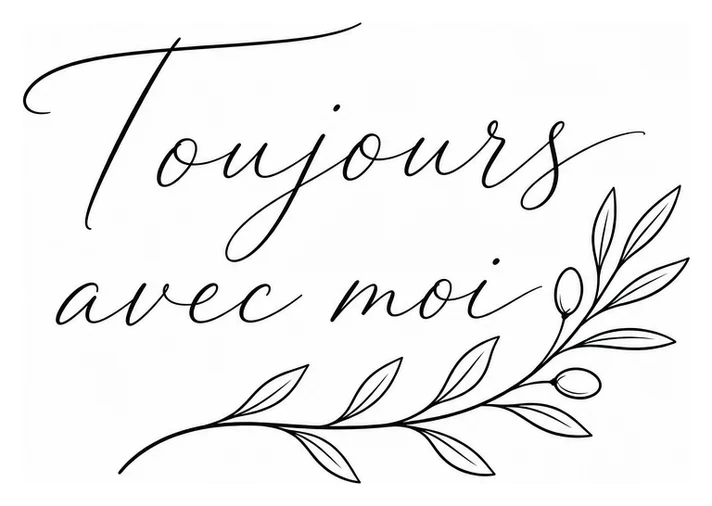
A word to keep
A personal phrase or saved handwriting can become the focus of the design.
Personalise this drawingExplore related ideas →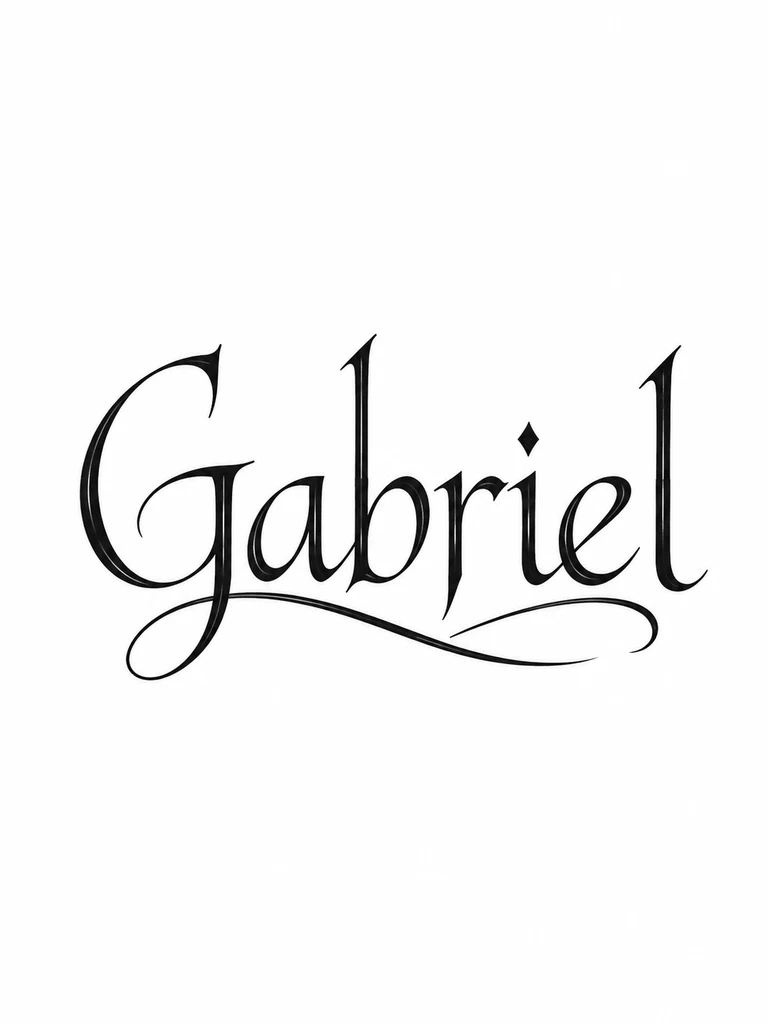
A name
Compare lettering alone with a composition that includes a small symbol.
Personalise this drawingExplore related ideas →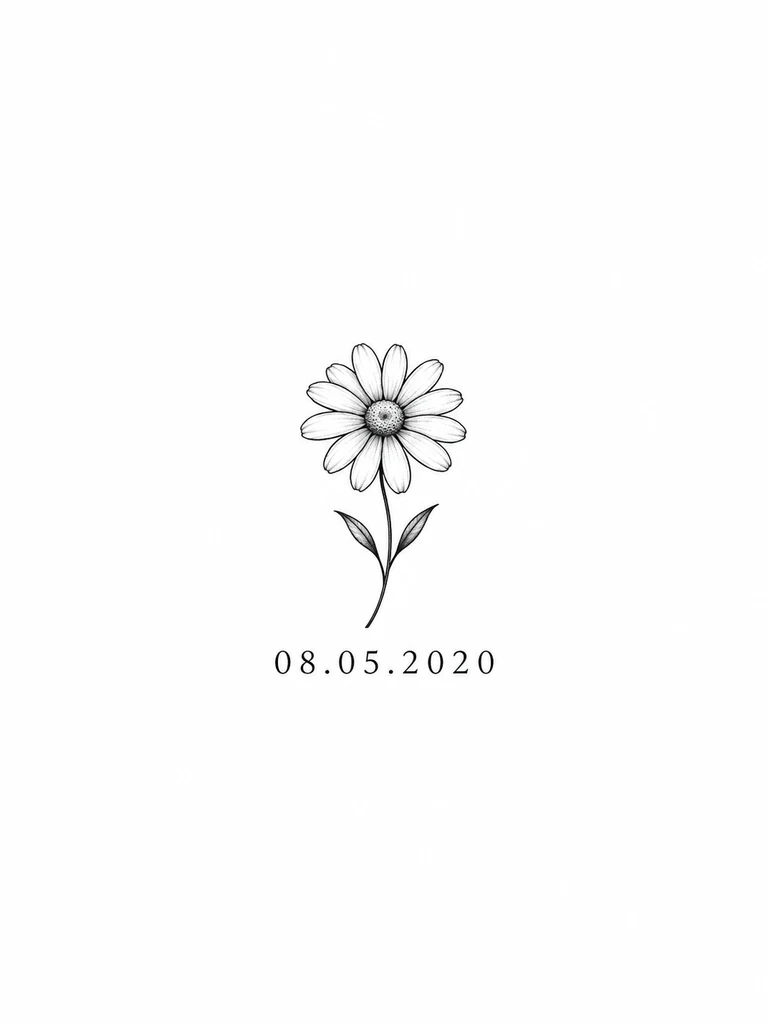
A date and a flower
Choose the exact date and a flower connected to your own memory.
Personalise this drawingExplore related ideas →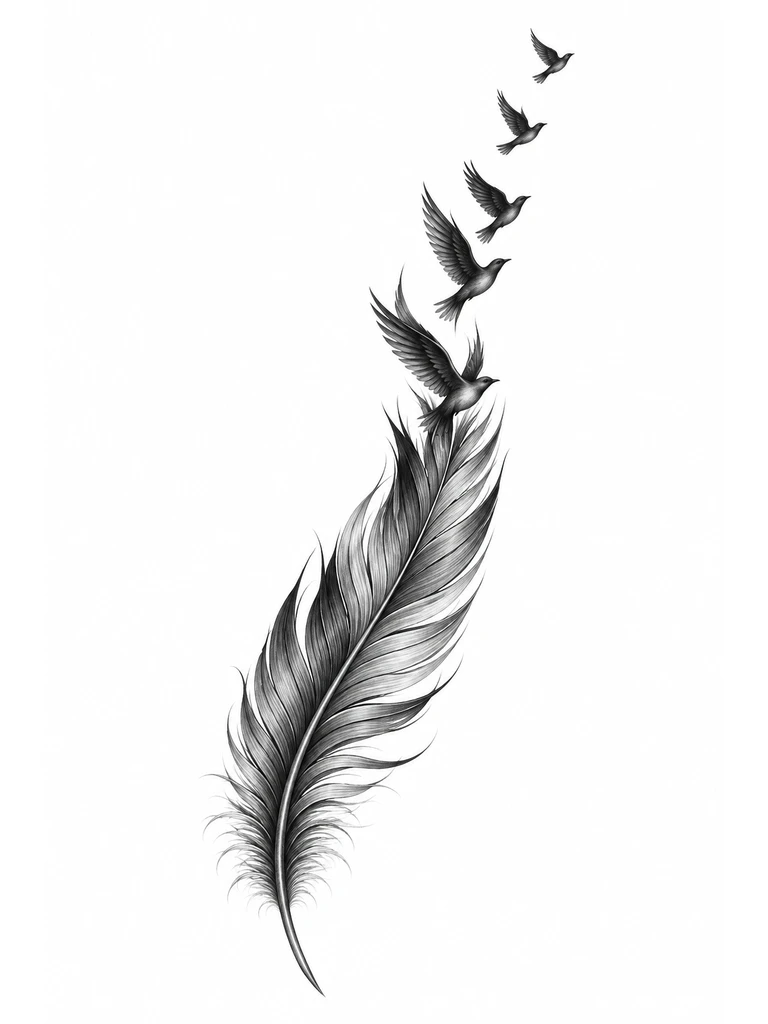
A feather and birds
An elongated outline can evoke a transition or a presence, according to the meaning you give it.
Personalise this drawingExplore related ideas →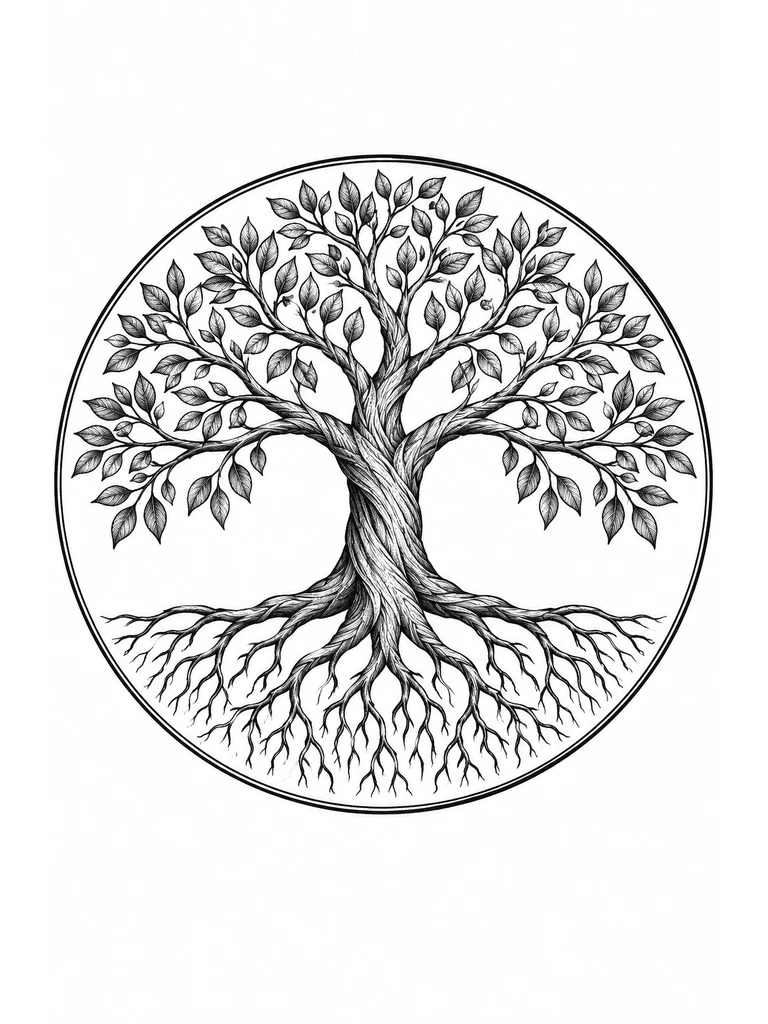
A tree and its roots
The outline can recall the connections and places that bring you together.
Personalise this drawingExplore related ideas →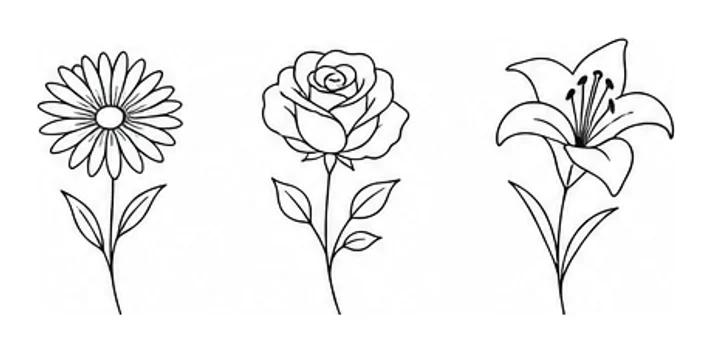
A personal bouquet
Bring together flowers associated with loved ones, leaving space around each shape.
Personalise this drawingExplore related ideas →What is a memorial or tribute tattoo?
A tribute tattoo is defined by its intention, rather than a particular look. It might be a portrait, a word or a symbol only you understand. Memorial tattoos, commemorative tattoos and remembrance tattoos generally honour someone who has died. They can also remember a pet who has passed away.
The design does not have to describe the circumstances of the loss. You can choose what you want it to bring to mind: a caring gesture, a habit, a close bond or a family story. It does not have to be cheerful, either. A memory can hold several emotions, and you do not have to justify which one you want to express.
When should you get a tattoo after losing someone?
You might have an idea straight away and still need time to act on it. There is no timetable that makes your tribute more or less valid. Keep two or three possible designs and revisit them later: does the subject still feel right? Do you still want it in that position? Would you prefer the same level of visibility?
You can also print the design at its intended size or try a preview on a photograph. This helps you picture it in everyday life without committing to it. Wanting a tattoo does not mean you need to book a session before an anniversary or ceremony.
25 memorial tattoo ideas and their meanings
These ideas are starting points for a conversation with your artist. The meanings suggested here are possible interpretations, not rules about belief or how to remember someone.
Handwriting and personal connections
Recall a gesture, a voice or a place through a few very personal details.
A word in their handwriting
A message from an old card preserves the way they formed their letters. Choose a short passage and bring a clear copy of the original.
Their signature
Keep its slant or a recognisable loop. Your artist can suggest adjustments that prevent the lines from becoming too tightly packed.
A phrase in their language
An affectionate nickname or family saying can bring a voice to mind. Have the spelling and any accents checked before your appointment.
A meaningful date
A birth, a first meeting or a trip: the date can celebrate a beginning. Check every number, particularly if you choose Roman numerals.
The coordinates of a place
A home, beach or village can become a discreet reference. Check that the coordinates point to the exact place you remember.
A musical memory
A few notes or a small object connected to a song can recall listening together. A short song title may be enough, too.
Birds and symbols of passage
Express connection and change through a design you can interpret in your own way.
A swallow
You might see a return, movement or a familiar presence. Its pose changes the feeling of the design: flying, perched or turning towards you.
A red cardinal
An option if this bird already has a place in your memories or imagination. Its colour can be the only bright accent in a quiet composition.
A dove
It might express a wish for peace or a shared faith. A branch, an initial or the position of a wing can make it personal.
A butterfly
It can represent transformation or a gentle memory. The shape of the wings leaves room for a personal detail without adding lettering.
A feather becoming birds
The flight can suggest departure. Keep the number of tiny silhouettes limited if you want a smaller design.
A phoenix
An option for a tribute that also reflects your own journey after loss. Ask for a composition with enough room to keep the wings readable.
Flowers, trees and roots
Make room for a garden memory, a favourite colour or a family story.
A birth flower
Choose an association that means something to you, or simply their favourite flower. A stem can hold a discreet initial.
A forget-me-not
A small flower to express remembrance. It can stand alone or accompany a handwritten word without taking over the composition.
A tree with visible roots
The roots can represent something passed down through your family. Consider the actual tree where you used to spend time together.
A sunflower
Remember a garden, a bouquet or a warm personality. It works as a colourful interpretation or a black-and-grey drawing.
An olive or laurel branch
It can recall a landscape or family history. Its curve can frame a small date or silhouette.
Portraits and familiar presences
Keep an expression, a pose or a detail you recognise at a glance.
A realistic portrait
Choose a sharp photograph with an expression you already love. Ask a portrait specialist what size will preserve the features that matter.
A silhouette from a photo
Two people seen from behind, a walk or an outstretched hand can tell the story of your connection without reproducing a face.
A continuous-line profile
A pared-back version that keeps just a few contours. Check that the detail you love remains recognisable after simplification.
A beloved pet
Their muzzle, sleeping position or ear shape can feel more personal than a generic animal symbol.
Objects and everyday rituals
Tell the story of time spent together through an everyday detail.
A handwritten recipe detail
The name of a cake or a note in the margin can recall time in the kitchen. There is no need to fit the whole page onto your skin.
Their favourite object
A camera, thimble or tool can tell the story of a shared activity. A small quirk in the object makes the drawing more personal.
A cup or an armchair
An ordinary object can evoke a very particular presence. Describe the ritual that gives it meaning to your artist.
A ticket stub
Keep a detail from a concert, journey or match you experienced together. A date and recognisable outline can replace the tiny print.
Choosing a tribute for the person you want to honour
For a dad, mum or grandparent
Start with a scene: what did you do together? A memorial tattoo for your dad might show the handlebars of the bike he taught you to ride. For your mum, perhaps a note she left in your bag. For a grandparent, it might be a window, a game or a plant from their home.
These examples are not tied to a family role: adapt them freely to your own story. If you want to honour several people, a shared motif with a few differences can be clearer than a collection of names.
For a partner, friend, brother or sister
A shape from a landscape you saw together, the outline of a path or a private symbol can be a starting point. If several people want matching tributes, agree on a shared detail; each person can then interpret it in their own way with their own artist.
For a child
A saved drawing, a nickname or the outline of a toy can become a reference. If you have a handprint or footprint, ask what can be reproduced at your preferred size. You can keep the project very private and share only what the artist needs to create it.
For a dog, cat or another pet
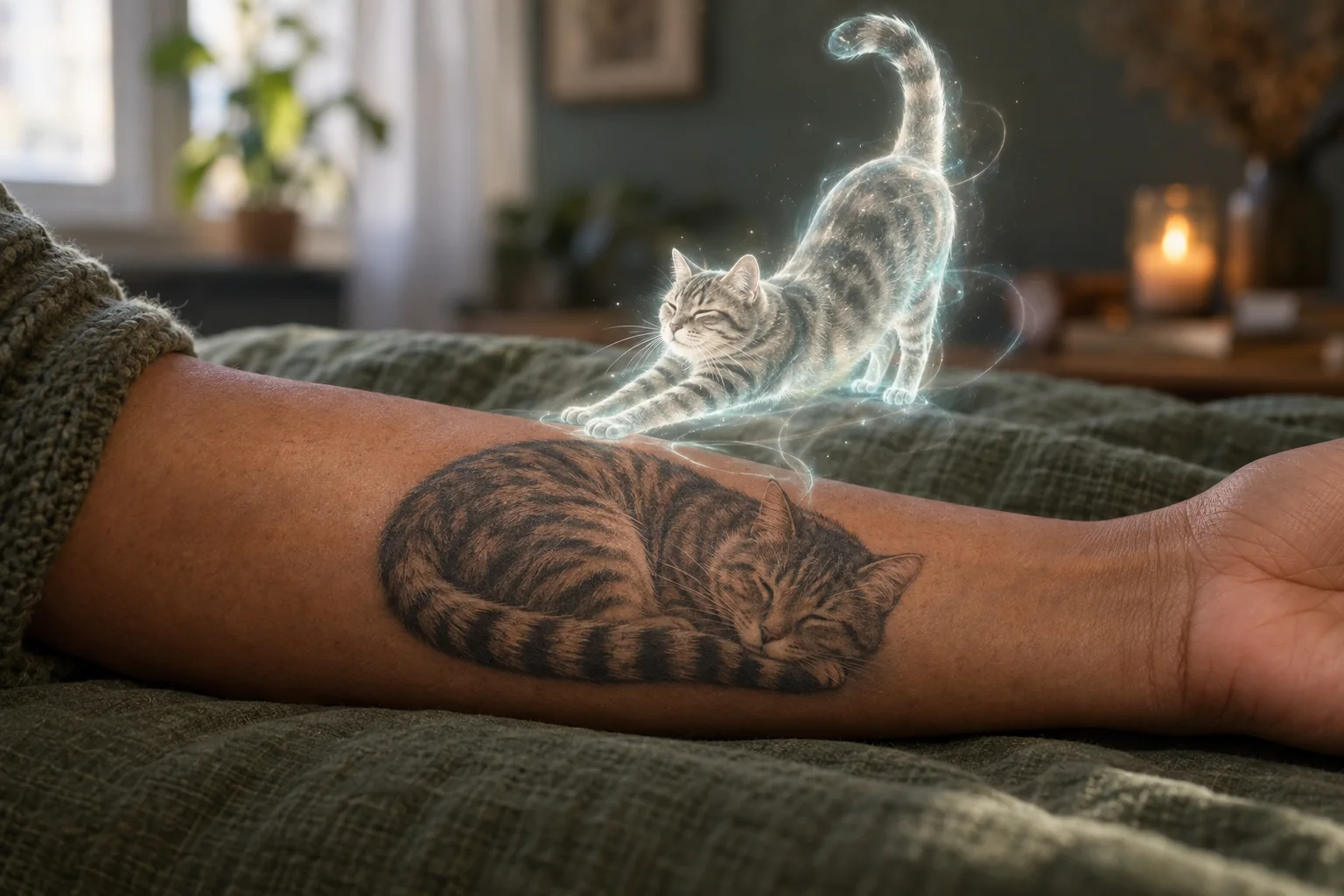
Gather one photograph of their face and another showing a recognisable pose. A dog's floppy ears, a cat's curled tail or a patch of fur can guide the design. A saved paw print is another personal starting point; if you do not have one, a silhouette based on photographs works well, too.
A sleeping portrait, a moving silhouette or a paw print can each capture something different about your companion. Explore the theme further in our guide to pet memorial tattoos.
How to turn a memory into a personal design
Rather than sending twenty pictures of different tattoos, put together a small set of references from your own story. Three things are enough to start a focused conversation:
- A main reference: the photograph, word or object you want to recognise.
- An essential detail: a loop in the handwriting, a folded ear, a pose or a particular shape.
- An intention: a discreet drawing, an expressive portrait or a memory you want to see easily.
An example brief for your tattoo artist
“I'd like to remember my grandfather with his chipped cup and a word in his handwriting. I've attached a photo and a card. I'd like a black ink design on my upper arm that stays readable without being very large. What size and simplifications would you suggest?”
Part of the artist's job is to adapt the reference for skin. Give them room to space out the letters, simplify a background or remove a detail that is too small. A preview can help you compare options, but the final drawing should be agreed with the professional who will tattoo it.
Which style and placement suit a memorial tattoo?
Choose the look before adding more details
Minimalism suits a silhouette, a simple object or a small flower. Lettering puts the words at the centre of the design. Black and grey can give shape and depth to a face or animal, while colour can highlight a specific detail, such as a bouquet. For a portrait, look for an artist whose expressions and likenesses you appreciate.
Ask to see healed examples and discuss the space between lines. A long sentence or a detailed face cannot simply be reduced to the size of a small initial. Adjusting the composition makes more sense than keeping every element in a format that is difficult to read.
Visible every day or kept more private?
- Forearm: easy to look at, provided you are comfortable with it being visible in short sleeves.
- Upper arm or shoulder: space for a composition that clothing can cover.
- Chest or ribs: a more private position, to discuss in terms of your comfort and the shape of the design.
- Shoulder blade or back: room for a larger piece, knowing that you will not see it as directly.
Try the stencil while standing with your arm relaxed, then move around. Say whether you want lettering to face you or other people. Our first tattoo placement guide can help you think through the options.
Preparing for your appointment: artist, budget and aftercare
Choose an artist for their work in your preferred style and how well you communicate. You should feel comfortable asking for a change or explaining that a face does not yet capture the person you remember. Our complete first tattoo guide covers the steps in planning your project.
What should you budget? There is no special price for a memorial tattoo. Size, detail, placement, design work and the number of sessions all affect a quote. Send the same brief to the artists you contact so you can understand their proposals. Ask about the deposit, any touch-ups and what the price includes.
In France, artists must meet requirements including training, declaring their activity to the regional health agency (ARS) and providing written information on risks and aftercare. These requirements are explained by Service Public. If you are getting tattooed elsewhere, check the requirements that apply locally.
Plan to follow the aftercare instructions your artist provides. Seek medical advice if you notice an unusual or worsening reaction. France's health insurance service explains that allergies and infections can occur after tattooing (source in French), including when equipment or ink is contaminated.
Tattoos with ashes: separating the tribute from the ink
A memorial tattoo can use conventional tattoo ink. Some providers offer to incorporate cremation ashes: that is a separate choice, and it is not necessary to give your design meaning.
A seller's promises do not establish the safety or compliance of a mixture. In the EU, tattoo inks are subject to restrictions on certain chemicals, explained by the European Chemicals Agency (ECHA). That general framework does not amount to specific approval of inks containing ashes.
Do not add ashes to ink yourself. If you are considering this practice, speak to your tattoo artist and a healthcare professional beforehand. Handwriting, a portrait or a print can already make a personal tribute using conventional ink.
Bringing the memory to life with tattoo animation
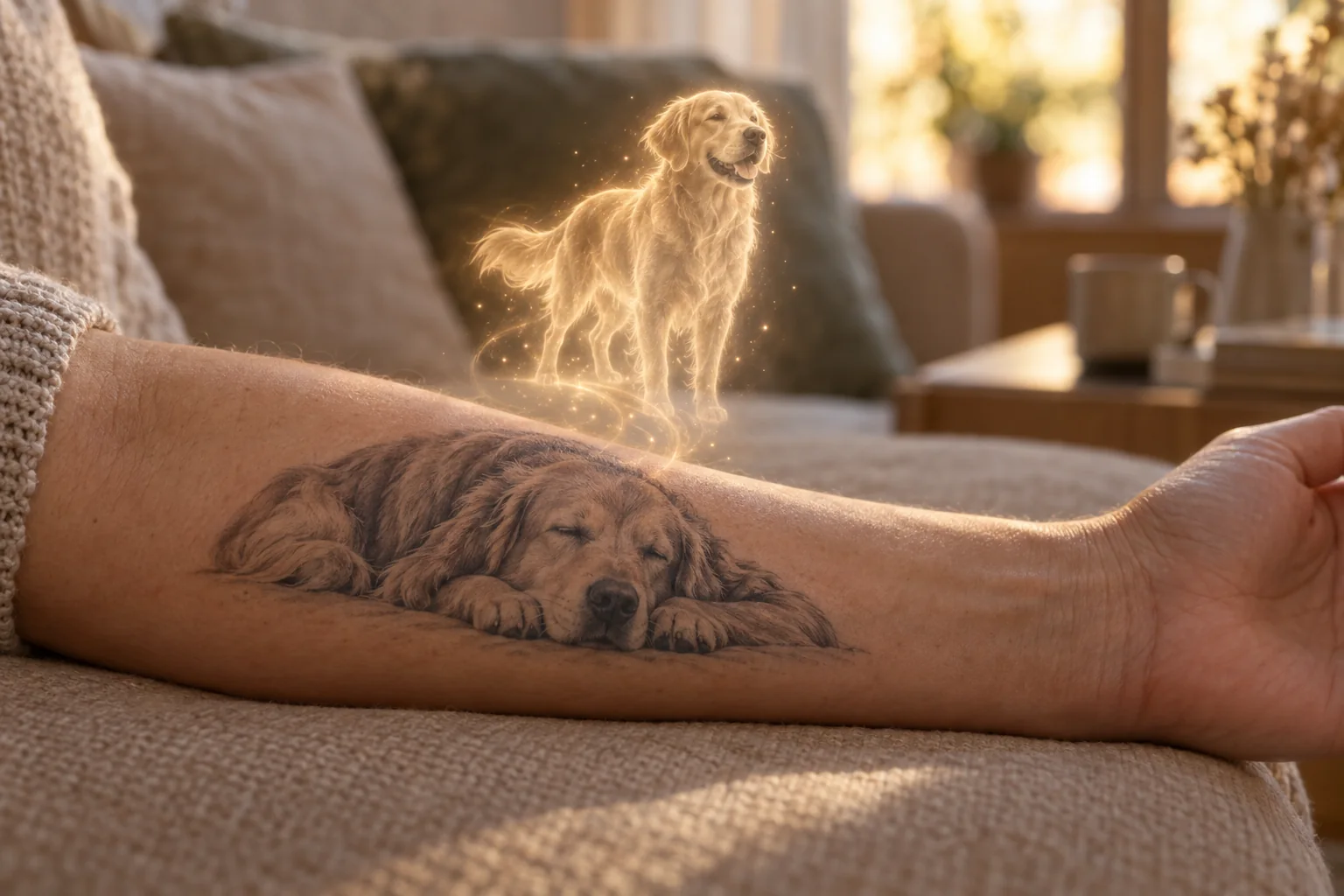
Once your tattoo is finished and healed, you can create an animated interpretation from a photo. In the Encre Vive studio, the design can become the starting point for a short video: a dog gently lifts its head, a cat stretches or a flower opens.
For a pet tribute, let a familiar movement guide your request: a stretch after waking, a turn of the ears or a wagging tail. The glowing spirit effect illustrated above adds a poetic touch; the movement and light are generated within the image or video, while the ink on your skin stays the same.
You can ask for a very subtle movement and keep the result to yourself. This is an artistic interpretation, not a recording of the animal's real behaviour. If you would like to share it, choose a version that feels right to you.
Create an animation of my tattoo
Frequently asked questions about memorial tattoos
How long should I wait after a loss before getting a memorial tattoo?
There is no timeline that suits everyone. You can collect ideas now and decide later. Give the design some time, look at it on different days and check that you still want to wear it. An anniversary does not oblige you to book an appointment.
Which symbol should I choose for a tattoo in memory of a loved one?
Start with a specific memory: their handwriting, a tree in the garden, a silhouette or a shared object. A bird might suggest departure, a flower remembrance and roots a family connection, but no symbol is compulsory. Your personal interpretation matters more than a meaning found in a catalogue.
What is the best placement for a memorial tattoo?
The forearm makes it easy to see your design; the upper arm, chest or shoulder blade can stay covered depending on your clothing. Consider the space the design needs, too. Try the stencil in your chosen position before approving the placement.
Can I get a memorial tattoo without a name or date?
Yes. A cup, a flower, a landscape or a few lines inspired by a photograph can be enough. You do not have to make the meaning obvious to other people, or include the date of someone's death if you would rather remember a moment from their life.
Can I get a tribute tattoo for someone who is still alive?
Yes. A tribute tattoo can celebrate a parent, child, partner or friendship. Memorial and remembrance tattoos usually refer more specifically to a tribute after a loss. If several people share a design, each person can choose their own size and placement.
Can ashes be mixed into tattoo ink?
Some providers sell inks containing cremation ashes, but a sales claim is not enough to establish the safety of a mixture. Do not add ashes to ink yourself. Speak to a healthcare professional and your tattoo artist before considering this practice. A symbolic tribute does not require any ashes.
Can a pet memorial tattoo be animated?
Yes. Using a photograph, the Encre Vive studio can generate a short video in which a dog lifts its head or a cat stretches. The movement is created by AI in the video; the tattoo on your skin stays the same. The images in this article illustrate that creative interpretation of a memory.