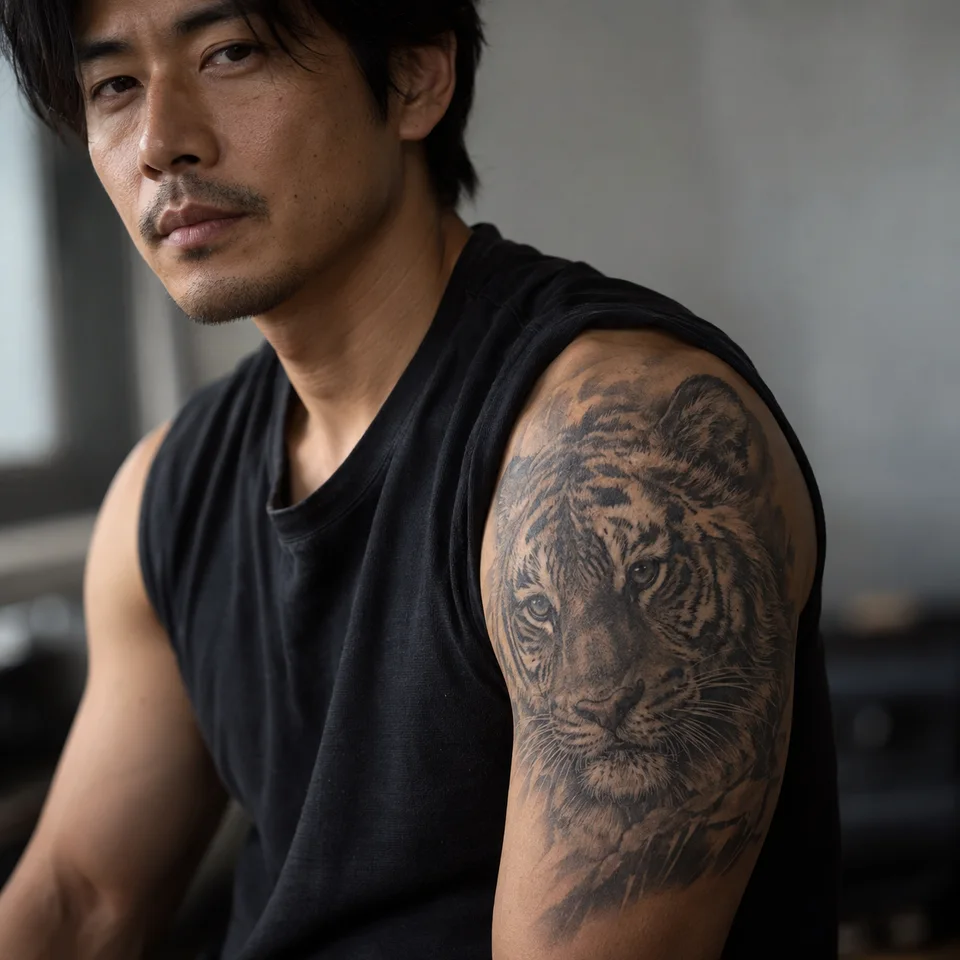
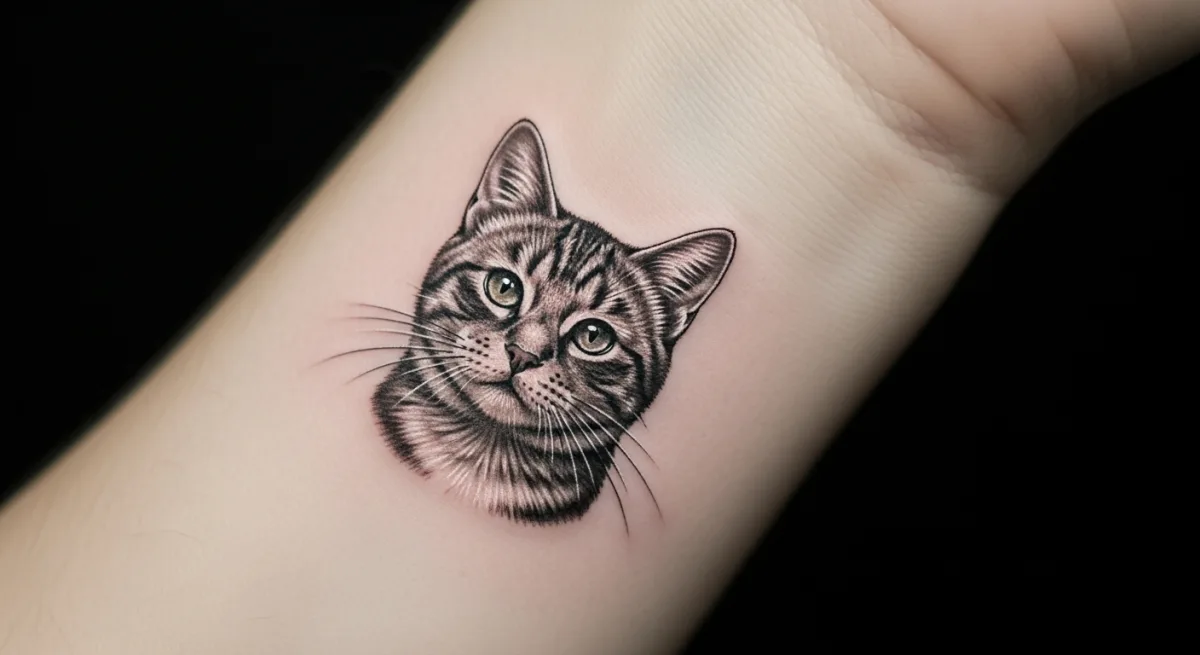
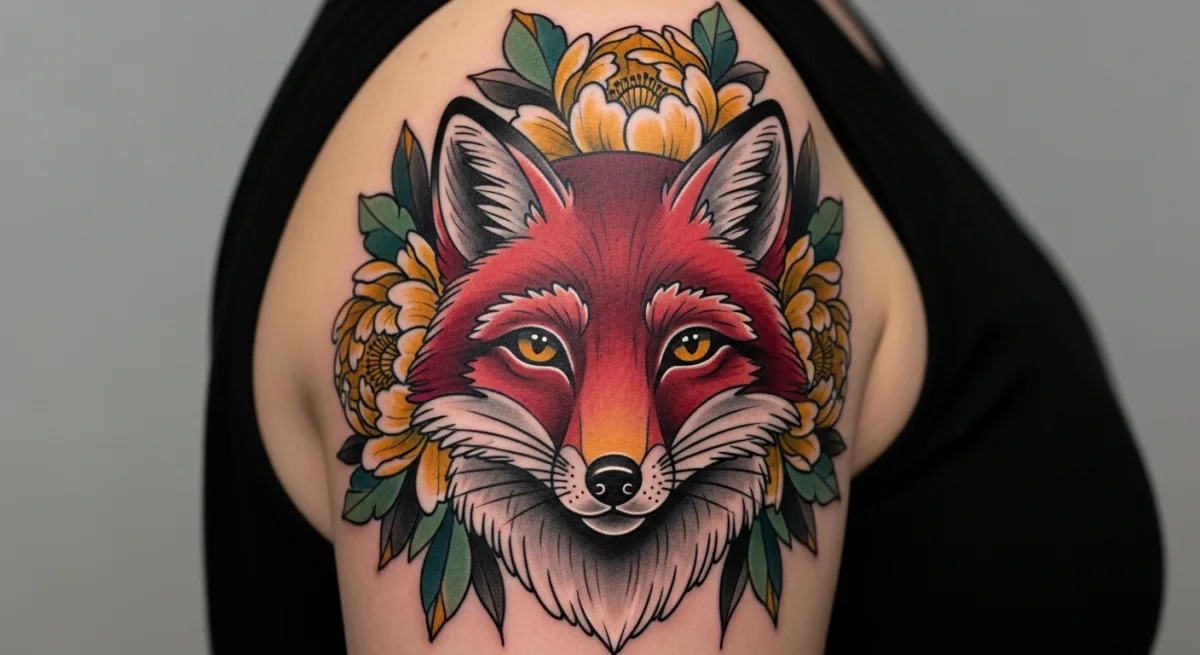
Animated Color Realism tattoo with AI
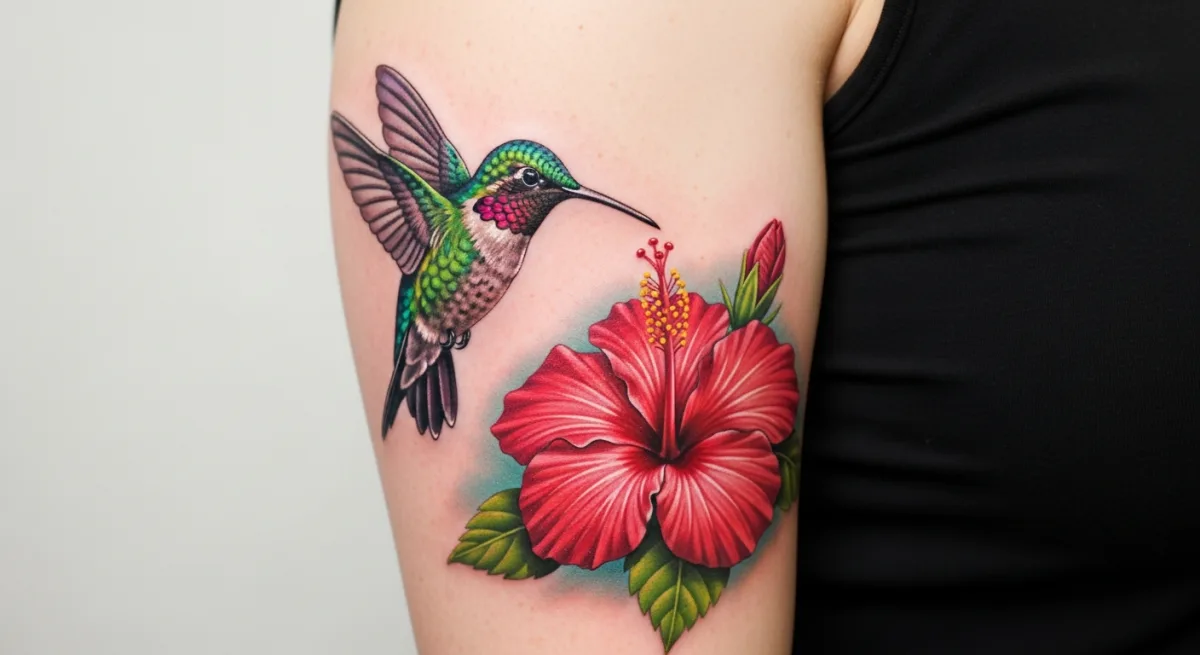
Color Realism pushes tattoo art to the edge of photography. Portraits, animals, fruits, landscapes: every piece aims for near-perfect optical fidelity, with controlled saturation, sophisticated light play and three-dimensional depth. Emerged in the 1990s under artists like Nikko Hurtado, the style demands precise machines, an extended pigment palette and a fine understanding of skin colorimetry. Animated with AI, a color realism tattoo becomes an open window: an eye blinks, hair stirs, a flame flickers — the illusion almost comes alive.
Examples of AI-generated animations
Demo animations generated with our tool — across all styles, to visualize the kind of motion that's possible.
Style characteristics
- Photographic rendering with ultra-fine color gradients
- Extended palette: 40 to 80 shades per piece on average
- Advanced mastery of highlights, drop shadows and directional light
- No visible outlines: forms are defined by color alone
- Generally medium or large scale: arm, calf, back
- More delicate aging than black-and-grey, touch-ups recommended
Tips for animating this style
- First identify the tattoo's light source: the animation must respect it
- A portrait animates best through eyes and mouth rather than overall motion
- For a fruit or flower, simulate a water droplet sliding rather than a rotation
- Avoid effects that shift the tones: they would shatter the realism
- A neutral background (wall, smooth skin) better showcases color realism depth
Frequently asked questions
How much does color realism cost compared to black-and-grey?
Expect 30% to 60% more on average, for two reasons: sittings are longer (a color portrait demands 8 to 15 hours versus 5 to 10 in black-and-grey) and quality color pigments cost significantly more. A realistic color forearm typically runs from €1,200 to €2,500 with a renowned artist, excluding touch-ups.
Does color realism hold up against time and sun?
Less well than pure black, which is its main weakness. Reds and yellows fade first under UV, usually between 8 and 15 years. Systematic sun protection (SPF 50) and a touch-up every 10 to 15 years keep the original vibrancy. Avoid intensive tanning and chlorinated water during healing.
Which subjects work best in animated color realism?
Subjects that intrinsically contain variable light: a human or animal eye, a fire, a sunset, a falling drop, feathers in the wind. The AI knows how to magnify these subjects because it can credibly simulate light propagation. Static landscapes are harder to animate without falling into kitsch.
Go further
- All tattoo styles: the complete visual guide — see where this style sits among the major families.
- The guide to AI tattoo animation — understand the technology behind these animations.
Ready to animate your own Color Realism tattoo?
Try it with no account (3 variations), then get 1 free generation of 3 images when you sign up, no credit card required.
Create my animation →