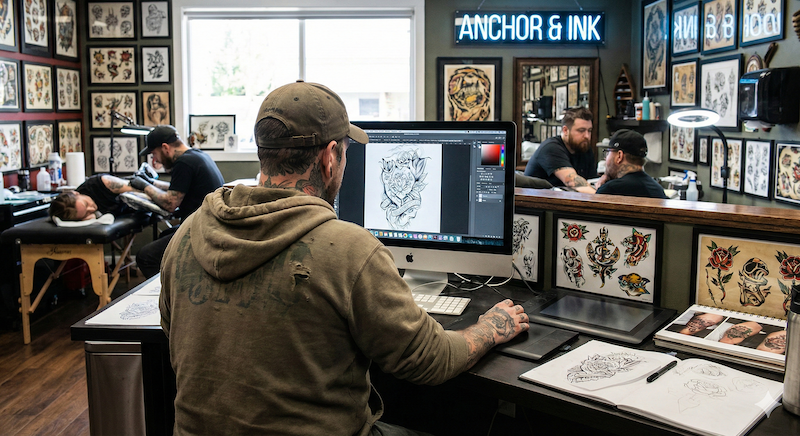
The design matters, but the truth of the craft fits in one sentence: you don't choose a tattoo, you choose a tattoo artist. The same drawing, in two different hands, gives two results that have nothing in common, and even less so ten years on. And since no country issues an official "artistic talent" diploma for tattooing, the sorting is on you. Here are the 10 criteria that actually matter, in the order to check them, and the red flags that should send you elsewhere.
The Non-Negotiable Checks
1. Health Registration and Licensing
Depending on your country or state, tattoo studios must be registered with or licensed by a health authority (in France, a declaration to the regional health agency; in most US states, a state or county licence). It is the legal floor, and a serious studio has no problem talking about it. No registration, no appointment: this point is not up for debate.
2. Hygiene Training and Certification
Most jurisdictions require hygiene training, such as bloodborne pathogen certification in the US or the mandatory "hygiène et salubrité" course in France. It says nothing about artistic talent, and everything about sanitary seriousness. Asking for the certificate is normal; the full picture of studio obligations is in our hygiene and regulations guide.
3. Visible Cleanliness of the Workstation
What your own eyes can verify on site: single-use needles opened from sterile packaging in front of you, gloves changed, surfaces wrapped in protective film, tattooing area separated from the front desk, dedicated sharps container. A clean studio shows, and a studio that lets you look has nothing to hide.
Talent, Judged on Evidence
4. The Portfolio, on Healed Tattoos
The king criterion. Two demands: photos of healed pieces (a fresh tattoo always flatters; the line is judged at six months) and pieces comparable to your project in style and size. Steady lines, even blacks, straight lettering: fundamentals you can read even without being an expert.
5. Specialisation in Your Style
Tattooing is a craft of specialities: a master of realism is not necessarily at home in old school, and vice versa. Look for the artist whose portfolio breathes your style, even if it means waiting or travelling; our tattoo styles guide helps you name precisely what you are after.
6. Consistency Between Social Media and Reality
Social feeds show the best work, at the best angle, sometimes edited. Google reviews and client photos show the everyday. Read reviews with smart diagonal vision: ignore the extremes, look for recurring themes ("great listener", "spotless studio" or, on the contrary, "rushed", "always late").
The Relationship, Where Everything Is Decided
7. The Consultation: a Professional Listens AND Advises
A good artist does both: hears your idea, then challenges it professionally. Too small to age sharply? A placement that will warp? They say so. The one who nods along to everything is not friendlier, they are less competent or less invested. Arriving with a clear brief helps the dialogue enormously: visual references, size, intended placement, budget.
8. A Detailed Quote and a Written Deposit Policy
Estimated hours, number of sessions, drawing and touch-up included or not, deposit and cancellation terms in writing: administrative transparency predicts the rigour of everything else remarkably well. How pricing actually works is decoded in our guide to tattoo prices.
9. Saying No, the Paradoxical Good Sign
A professional who declines a risky area, a design that will age badly, an underage client or a rushed project is demonstrating exactly the ethics you want. Beware the opposite: whoever says yes to everything will also say yes to what they cannot deliver.
10. The Feeling, Not to Be Underestimated
You will spend hours under their needles, sometimes across several sessions. Trust, calm, the way your questions are answered: if something feels off during the consultation, listen to it. There are other good artists.
The Red Flags That Should Make You Walk
- Impossible to get proof of registration or hygiene certification.
- No healed work in the portfolio, only fresh, heavily edited photos.
- Rock-bottom prices with no explanation and a strangely empty calendar.
- No questions about your health (allergies, medication) before the session.
- Willing to tattoo a minor without written parental consent where required.
- Pressure to sign or pay fast, "offer valid today only".
These signals echo the risks detailed in the 10 hidden dangers of tattooing: a bad studio choice always costs more than the quote you turned down.
Frequently Asked Questions
How Do I Check Whether a Tattoo Artist Is Licensed?
Ask directly: registration or licence, plus hygiene certification. A professional in good standing answers without taking offence, and often displays the documents in the studio. In many places you can also verify a licence with the local health department. No clear answer IS an answer.
Should I Pick a Tattoo Artist Close to Home?
Proximity is a comfort, not a criterion. For an important piece, experienced collectors routinely travel hours or wait months for the artist whose portfolio matches exactly. The only proximity that matters: between their style and your project.
Is a Good Tattoo Artist Necessarily Expensive?
A compliant studio carries incompressible costs, so "cheap" below a certain floor is structurally suspicious. But the reverse does not hold: expensive guarantees nothing. Price is judged together with the portfolio, never alone: a detailed quote and convincing healed work beat any rate card.
How Do I Prepare for a First Consultation?
Bring a clear brief: visual references, approximate size, intended placement, budget. If your design already exists (a drawing, an AI-generated piece, a flash you spotted), show it as is: it makes an excellent starting point that the artist will rework with a professional eye. The rest of the journey is covered in our complete first tattoo guide.
The Short Version
Choosing a tattoo artist comes down to three legal and sanitary checks, a healed portfolio in the right style, and a consultation where you feel both heard and advised. Take the time to compare several studios with the same brief: our directory of professional tattoo artists exists for exactly that.