Japanese lettering tattoos: ideas and lettering guide
A single kanji, a name in katakana and a Japanese sentence need different layouts. This collection focuses on Japanese writing: choosing readable text, arranging it and preparing a lettering reference.
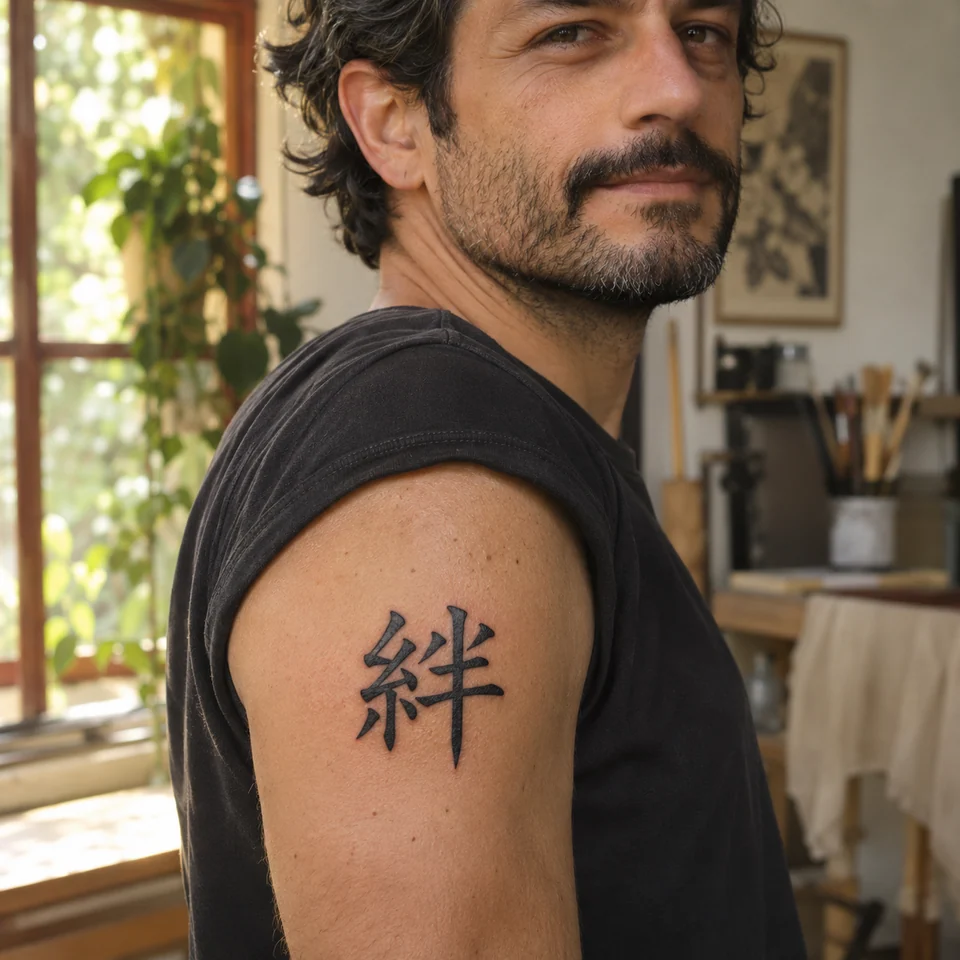
Three tattooed proverbs, with their translations
See how a complete phrase fits on skin. Each proverb or maxim is shown on a model, followed by its original text, a translation of its meaning and a short explanation.
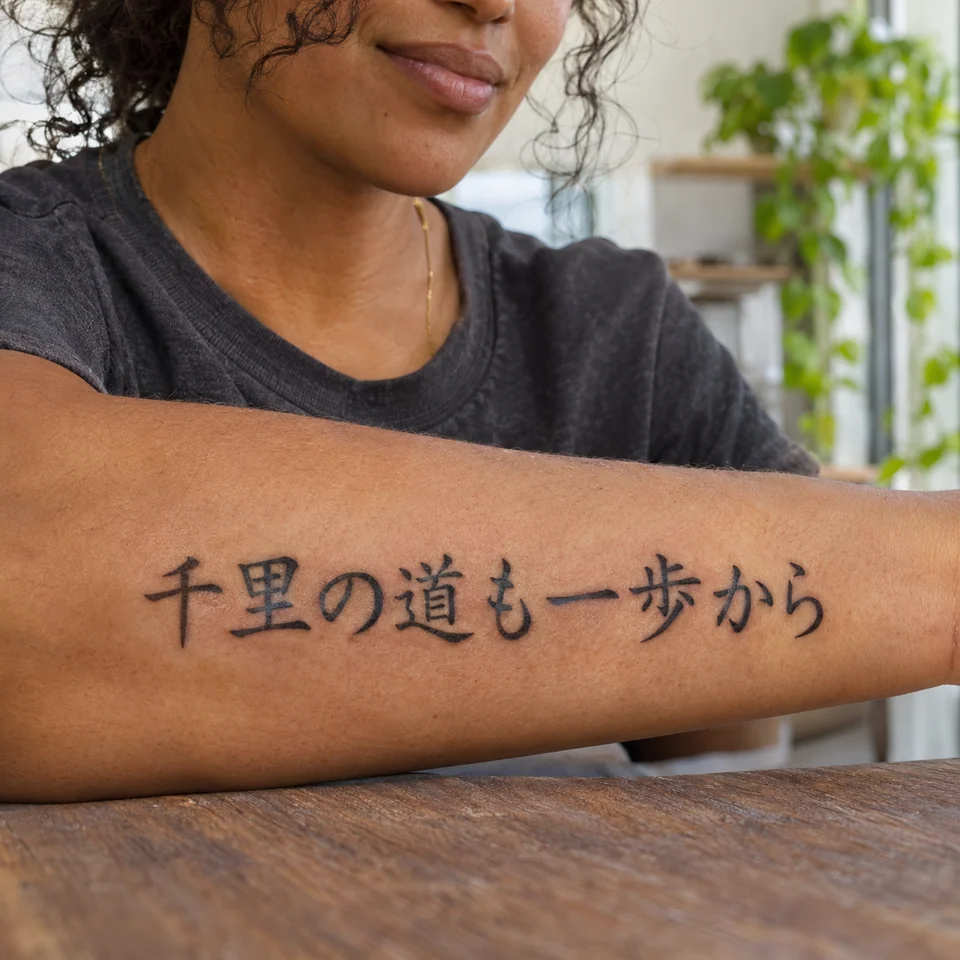
Begin the journey
千里の道も一歩から
Meaning in English« Even a journey of a thousand leagues starts with one step. »
This saying focuses on beginning, even when the destination feels far away.
Text and meaning: Jitenon — 千里の道も一歩から ↗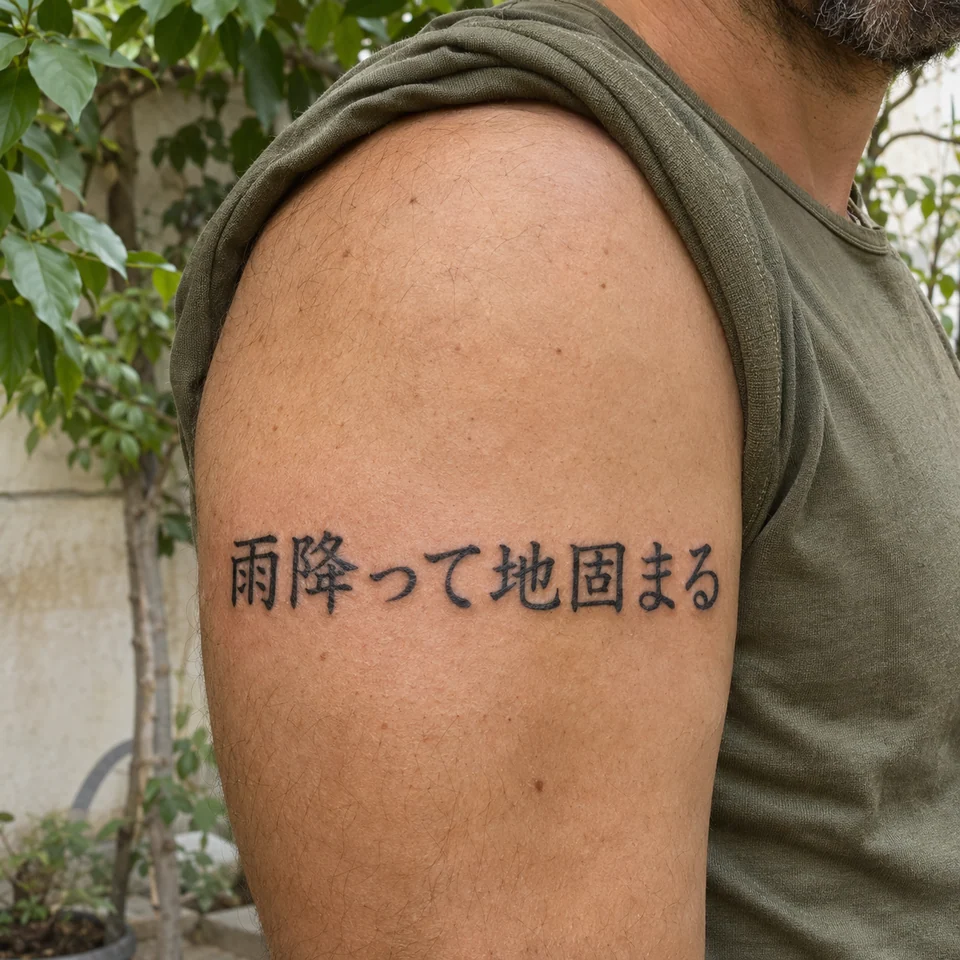
After the rain
雨降って地固まる
Meaning in English« After the rain, the ground becomes firmer. »
Figuratively, a difficulty or conflict can leave a situation stronger than before.
Text and meaning: Shōgakukan / Kotobank — 雨降って地固まる ↗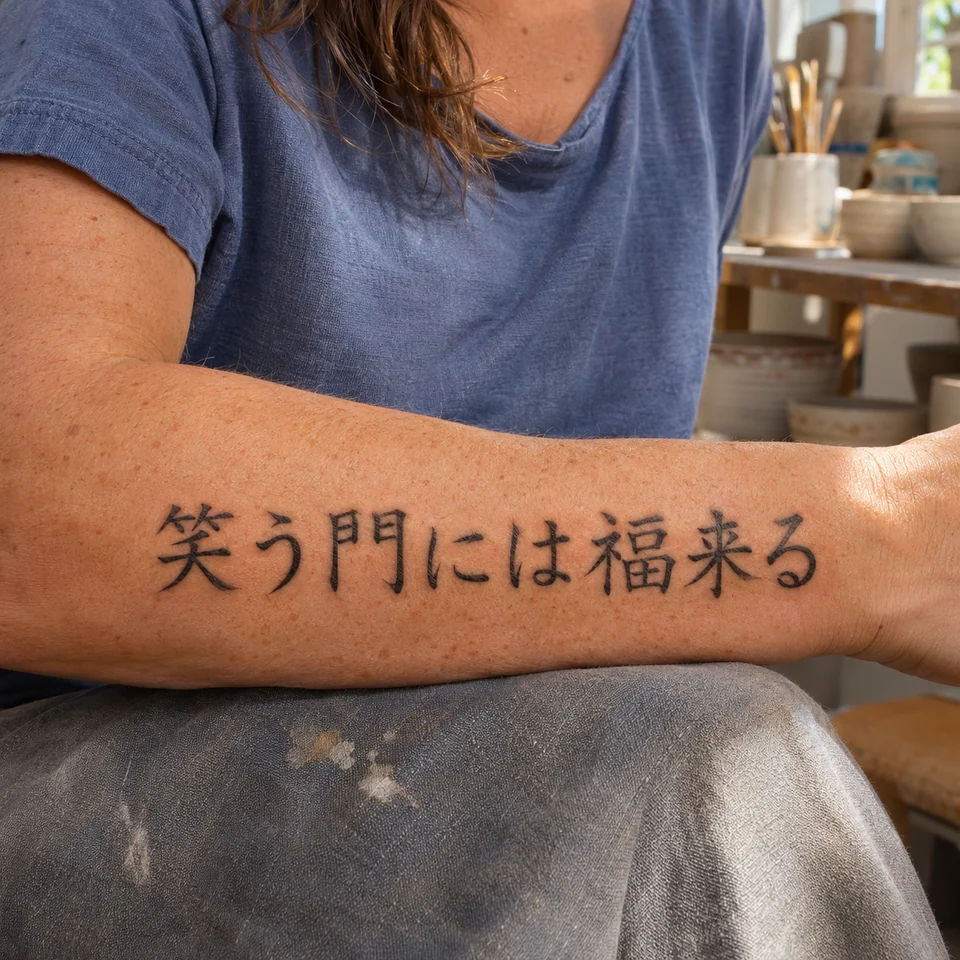
A home filled with laughter
笑う門には福来る
Meaning in English« Good fortune comes to a home filled with laughter. »
The “gate” stands for a home or family; the saying evokes a cheerful atmosphere.
Text and meaning: Jitenon — 笑う門には福来る ↗These photos are AI-generated simulations. Before tattooing, have both the phrase and the drawn characters reviewed by someone fluent in the language.
Understand how this writing is constructed
These examples show character forms and combinations. Choose your own message with someone who knows the language.
Kanji, hiragana or katakana?
Japanese combines several writing systems. Kanji carry elements of meaning, hiragana participate in words and grammar, and katakana are used, among other purposes, for foreign words and names. The choice follows the actual text, not just the outline you prefer.
One character or a short sentence
One character offers a compact composition, but its meaning depends on use. A sentence requires checks of vocabulary, particles and intended tone. For a foreign name, start with pronunciation; choosing kanji only for their sounds can introduce unintended meanings.
Shodō calligraphy and orientation
A brush reference helps compare thick strokes, thin strokes and space around the text. For a vertical column, verify character order and punctuation with someone qualified. Your tattoo artist then adapts detail and spacing to the intended dimensions; shrinking an image does not by itself produce a suitable stencil.
Prepare a personal reference
Enter text that has already been reviewed. The generator may alter characters: keep your exact reference to check the result.
This button replaces your description draft. No generation starts on this page.
View and copy the description
Tattoo reference using japanese lettering. Exact approved text: "". Preserve character order and every stroke. Do not mirror the text. Black lettering on white, readable composition.
Frequently asked questions
Does a Japanese tattoo have to use kanji?
No. The text may contain hiragana, katakana and kanji depending on what you want to write. Have the entire message reviewed.
How does this differ from Japanese tattoo style?
This page concerns written characters and lettering. Dragons, koi, waves and larger Japanese-style compositions address a different design interest, covered in the style collections.
Are these examples translations ready to tattoo?
The examples demonstrate the writing system’s structure. They do not validate your message. Have the exact text, context and layout reviewed before giving it to your tattoo artist.
Does AI preserve every character?
Generation can change or invent strokes. Keep a reference of the approved text and compare it with every proposal. A generated result remains a visual direction to refine.
How should I choose lettering size?
Compare the reference at actual size, including internal spaces and margins. Your artist should adapt it to their technique and the placement; a screen font does not establish a universal tattoo size.
References and sources
W3C resources document writing systems and layout. They do not validate a personal translation or tattoo design.
Content updated on 15 November 2026.