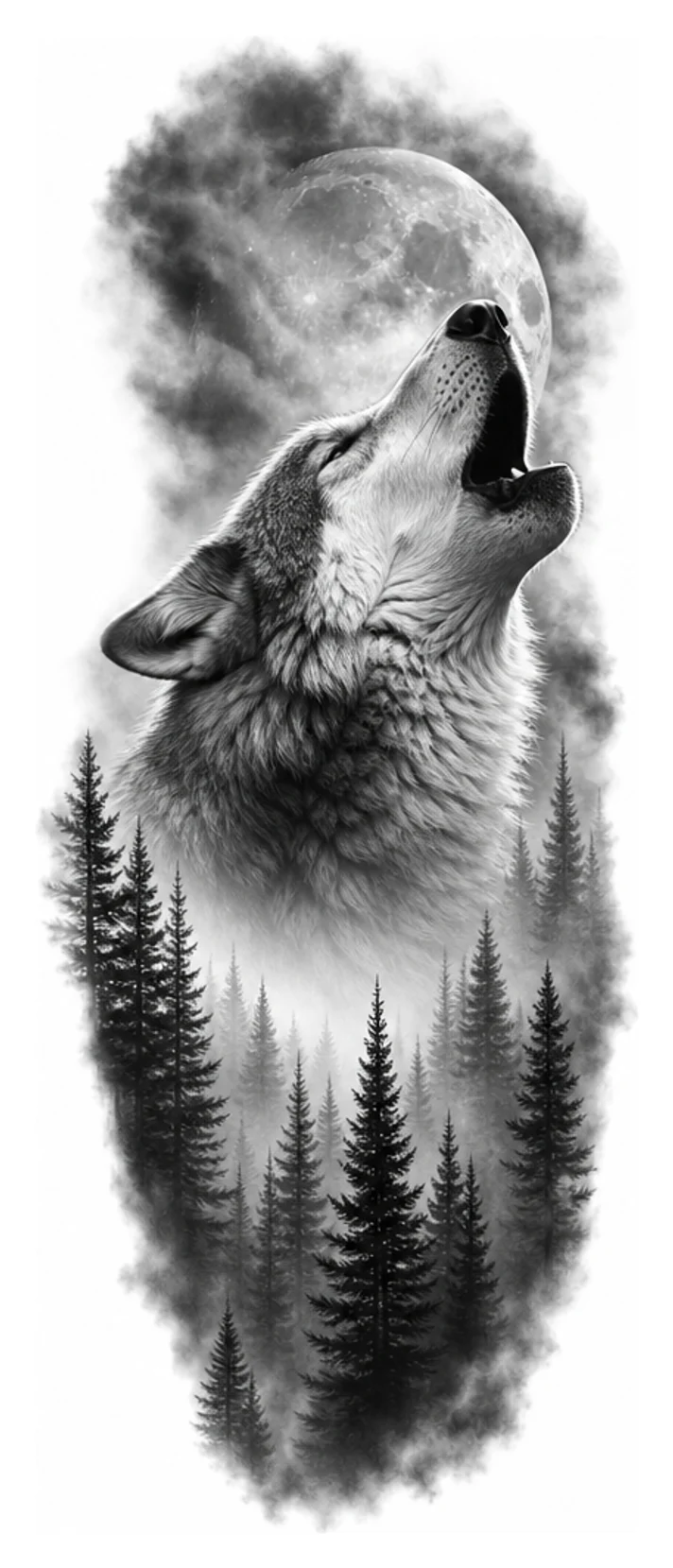
You can choose a wolf tattoo to express a family bond, independence or your attachment to a landscape. These intentions are not a universal definition of the animal. A wolf on its own does not prove that its wearer is solitary; a pack does not tell you about their family.
For poses and drawing choices, the wolf tattoo ideas complement this guide. The image on this page is an AI-generated creative reference, not a completed tattoo or a scientific illustration.
Packs and family: separating the animal from your story
The Smithsonian National Zoo describes grey wolf packs as family groups, typically an adult pair and their offspring. This observation concerns animals; it does not automatically assign loyalty or courage to a tattoo.
If you choose a pack to represent people close to you, explain the connection to your artist. The number of animals, their direction or the proximity of two silhouettes can support your story. You can also represent family with one wolf and a shared landscape: there is no need to draw a head for every person.
Lone wolves, freedom and protection: make the intention specific
“Freedom” might mean moving away, a life decision or enjoying the outdoors. “Protection” might relate to one particular person. Before choosing bared teeth, a calm gaze or an animal in motion, complete the sentence: “This wolf will remind me of…” A concrete answer helps more than a list of qualities.
- Independence: an animal alone in an open space can be your way of marking a life stage. It does not necessarily suggest rejecting connections with other people.
- Family: several silhouettes can form a group, but their number needs to work with the drawing you want.
- Protection: decide what you are protecting in your story and which pose feels right. An aggressive expression is not compulsory.
- A place you remember: a mountain outline or recognisable forest may be enough. Avoid adding symbols whose role you do not understand.
A wolf and moon: a night scene, not an explanation of behaviour
The same Smithsonian article about howling explains that wolves do not howl at the moon: their calls serve purposes including communication with one another. You can still use the moon as scenery or a personal reference. The composition then expresses a visual choice, rather than behaviour caused by the moon.
In our reference, the raised muzzle, moon and pine trees create a scene. Choose what matters to you: the call, the night or the forest. If only the wolf interests you, removing the scenery may make your intention easier to explain.
One specific cultural reference: the she-wolf of Rome
The Capitoline Museums present the Capitoline She-wolf as a symbol of Rome. Using this figure invokes a particular reference to the city and its imagery. That context cannot be extended to every wolf depicted across all cultures.
If you start from a story, an artwork or an emblem, name it in your brief and check how it is represented. Liking the animal does not require assigning it a spiritual tradition. Avoid combining different cultures under a single definition.
Turning your intention into a brief
A shared memory
“A wolf with a calm gaze, with the mountain outline from our family trip. I want to recall that moment, without a moon or writing.” The landscape identifies the memory; your artist can propose a realistic version or a simpler silhouette.
A new independence
“One wolf walking, to remind me of moving to a new city. I prefer an open composition, without bared teeth or forest scenery.” The link with your story remains personal; the drawing does not need to act as a code for other people to decipher.
Compare wolf references and their compositions, then explore a variation with the tattoo reference generator. Generation requires sign-in. Develop the drawing, proportions and placement with your artist afterwards. The styles below help you compare visual directions.
To begin with an intention before choosing an animal, see the general guide to tattoo meanings.
Questions about wolf tattoo meanings
Does a wolf tattoo represent family or solitude?
It can express either in your story. A group of wolves could support a family theme; an animal on its own could express independence. These are storytelling choices, not two compulsory definitions of the motif.
What does a wolf and moon tattoo mean?
The moon can create a night-time setting or recall a personal memory. This composition does not establish a particular spiritual connection, nor does it describe a wolf howling because of the moon.
How can I personalise a wolf without adding lots of symbols?
Start with one specific detail: a meaningful landscape, a pose or a connection between two animals. Choose one secondary element and explain the memory to your artist before settling on style and size.

Realism
Recognisable portraits and subjects shaped through shading.
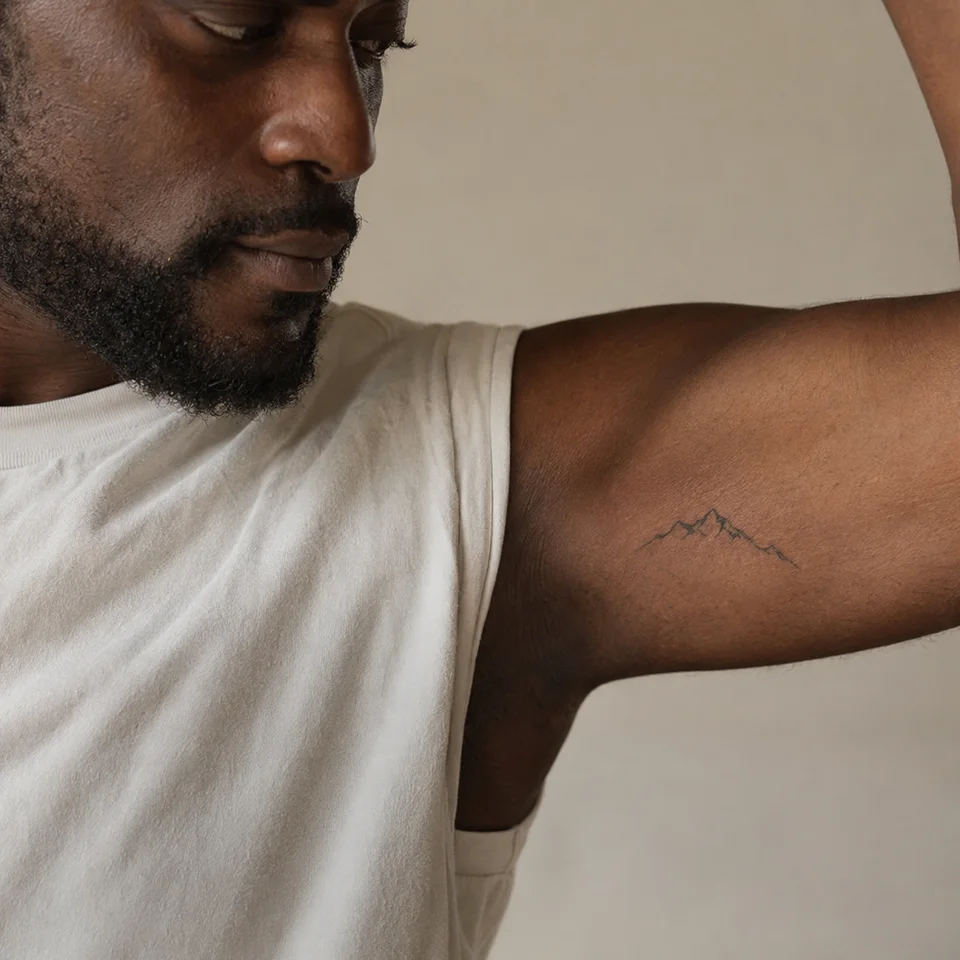
Minimalist
Few lines and a clear, simple outline.