Tattoos after mastectomy: options and precautions
Having a tattoo after mastectomy is a personal choice. You may want decorative artwork, information about micropigmentation, more time or no tattoo at all. None of these decisions needs to meet someone else’s expectations.
Read the guidance
Choosing a tattoo after mastectomy, at your own pace
Your design does not need an assigned meaning. It can evoke a memory, simply look beautiful to you or follow your chest’s shape. There is no obligation to conceal a scar or turn your experience into a symbol.
Start with what you would like to see: a motif on one side, a composition across the chest, a discreet detail or space left as it is. Exploring an idea does not commit you to getting tattooed.
Decorative tattoos and nipple-areola micropigmentation
| Project | What it aims to do |
|---|---|
| Decorative tattoo | A composition chosen for its artwork: flowers, lines, a landscape or an ornament. It may suit a reconstructed or unreconstructed chest, following assessment. |
| Nipple-areola tattoo | Pigments and shading create the appearance of an areola and nipple. A “3D” effect is visual; it does not create anatomical projection. |
| Nipple reconstruction | A surgical procedure distinct from tattooing. Micropigmentation may complement reconstruction; your care team can explain suitable options. |
Nipple-areola tattooing requires specialist skills. Depending on the service, trained healthcare staff or specialist tattoo professionals provide it. Ask your care team about an appropriate referral.
Sources: Leeds Teaching Hospitals — Medical tattooingUniversity Hospital Southampton — Nipple and areola micropigmentation (PDF)
After surgery and radiotherapy: when can you consider a tattoo?
For decorative tattooing, Breast Cancer Now advises completely healed scars, around a year after surgery and ideally longer, and having finished and recovered from chemotherapy or radiotherapy. This reference point does not replace clearance from your care team.
Micropigmentation follows specific protocols: Southampton’s service states at least three months after nipple reconstruction, or six months after certain breast operations or radiotherapy. These are that service’s intervals, not clearance for a decorative tattoo.
Sources: Breast Cancer Now — Decorative tattoos after breast cancer surgeryUniversity Hospital Southampton — Nipple and areola micropigmentation (PDF)
What to confirm with your medical team
A photograph or AI tool cannot confirm these points. Speak with the professionals who know your medical history before confirming a tattoo appointment.
- Healing and the condition of the area, taking surgery, reconstruction and any radiotherapy into account.
- Current treatment, any further operations planned and appropriate timing.
- Precautions specific to you, particularly if you have lymphoedema or concerns about it.
- Areas that need to remain accessible for follow-up, and symptoms that would need medical attention after tattooing.
Sources: Breast Cancer Now — Decorative tattoos after breast cancer surgery
Choosing a specialist and preparing your consultation
Look for experience in your intended procedure: a decorative portfolio does not establish expertise in areola micropigmentation, or the reverse. Ask how the professional works with operated or irradiated skin and when they would postpone.
Consider your comfort: a private room, a companion, breaks and agreement at each stage. Ask to review the design before starting and discuss aftercare. You can decline photographs or permission to publish them.
For micropigmentation, also discuss colour, healed results and touch-ups. An exact colour match is not guaranteed; pigment may be uneven and change over time.
Two starting points to develop with your artist
These original Encre Vive drawings are AI-generated. They help you discuss composition; they cannot establish whether an area can be tattooed.
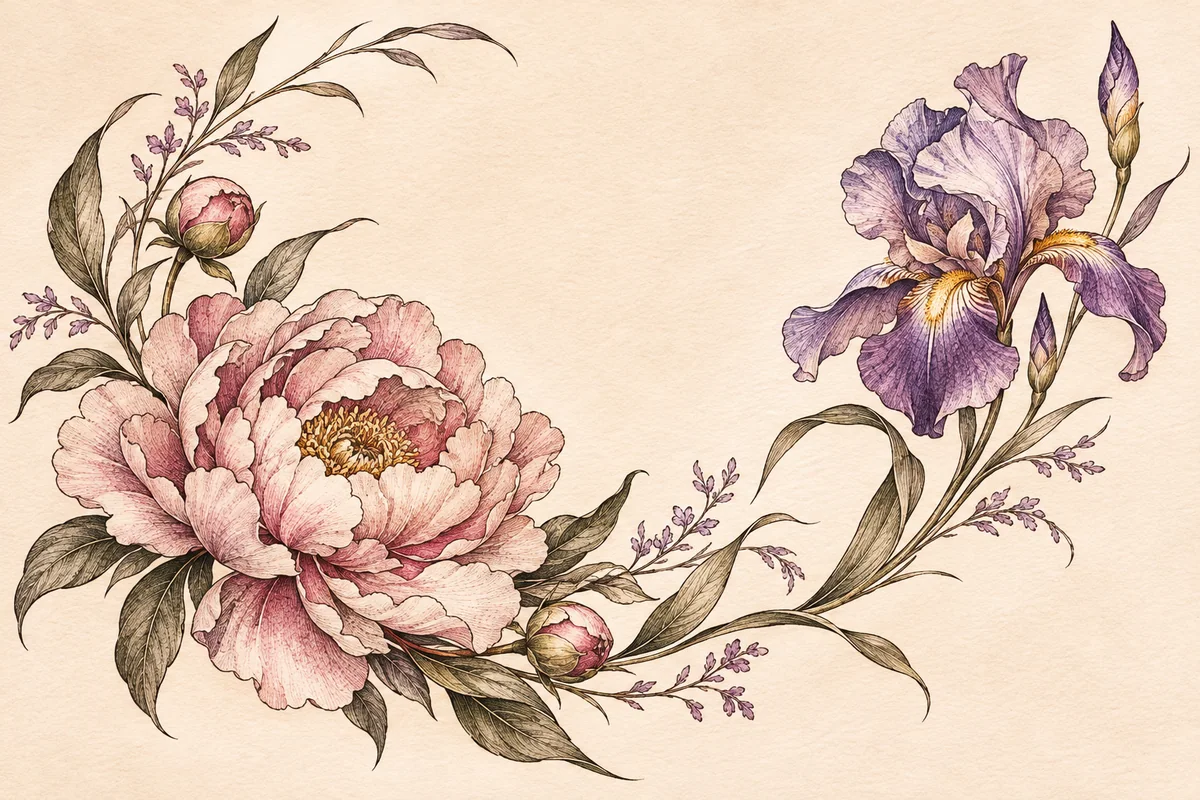
An open floral composition
Peony, iris and asymmetry: you choose what the artwork means, with no imposed symbolism.
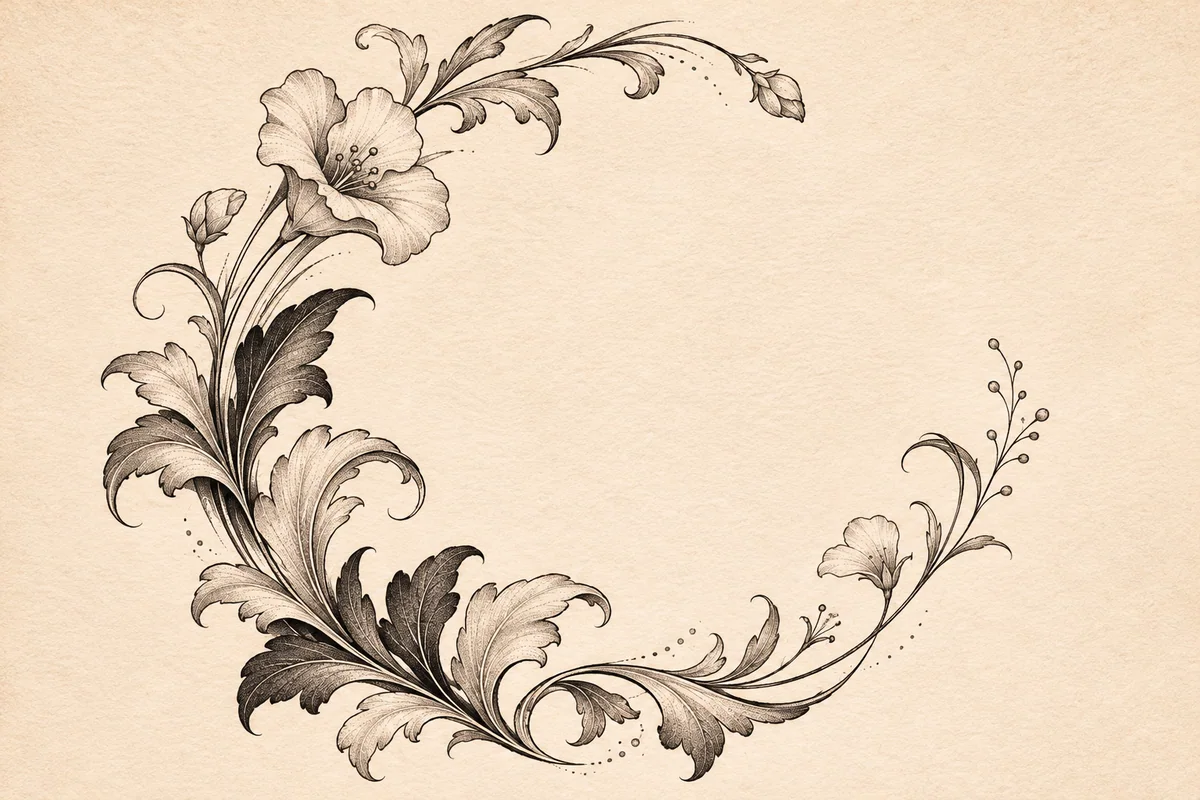
An open ornament
Black and grey lines form a flowing frame. This is a decorative idea, not a micropigmentation template.
Exploring a decorative design with or without reconstruction
Before generating, note what you like, what you do not want depicted and which elements you are willing to change. This page’s images are isolated drawings; they do not document results on someone who has had surgery.
A motif on one side
An iris or branch can create a focal point without requiring symmetry. Compare an upright silhouette with a more open curve, then decide how much surrounding space to preserve.
A composition following the chest
Separate flowers, landscape lines or a discontinuous ornament can connect several areas. Keep the design adaptable to any skin the professional recommends leaving uninked.
A personal detail
A leaf, colour or object may be enough. The design need not be large, tell a story about illness or fit an idea of femininity.
Frequently asked questions
Can I consider a tattoo without breast reconstruction?
Yes, a decorative project can be designed for an unreconstructed chest. It still depends on healing, skin assessment and your medical team’s clearance. The artwork adapts to your chosen silhouette.
Sources: Breast Cancer Now — Decorative tattoos after breast cancer surgery
How long should I wait after radiotherapy?
Ask your care team for timing suited to you. It depends on the skin’s condition and the intended procedure. Intervals used by a micropigmentation service should not automatically be applied to decorative tattooing.
Sources: Breast Cancer Now — Decorative tattoos after breast cancer surgeryUniversity Hospital Southampton — Nipple and areola micropigmentation (PDF)
Does a nipple tattoo create physical projection?
A “3D” effect uses shading and colour to suggest volume. It does not physically reconstruct a nipple. Surgical reconstruction and pigmentation are distinct procedures.
Sources: Leeds Teaching Hospitals — Medical tattooingUniversity Hospital Southampton — Nipple and areola micropigmentation (PDF)
Explore my decorative tattoo design
Start with a decorative drawing on white. Add your artistic preferences, then adapt the proposal with your artist.
Only describe the motif, colours and composition you want; no medical details are needed.
View and copy the prompt
Personal decorative tattoo study: a violet and blue iris, airy asymmetric composition, readable outlines and watercolour touches with open spaces. Isolated motif on white, no body, no chest, no scar, no medical symbol or text. Artistic reference to adapt with a specialist professional, not a depiction of micropigmentation.
Continuing replaces your draft with this description, which you can edit in the generator. No generation starts here.
Create my design in the generator