Tattoos over scars: cover, incorporate or work around
You may want a scar to be less prominent, give it a place within a design or leave it visible. Before choosing a motif, separate what the composition can express from what your skin can safely accommodate.
Read the guidance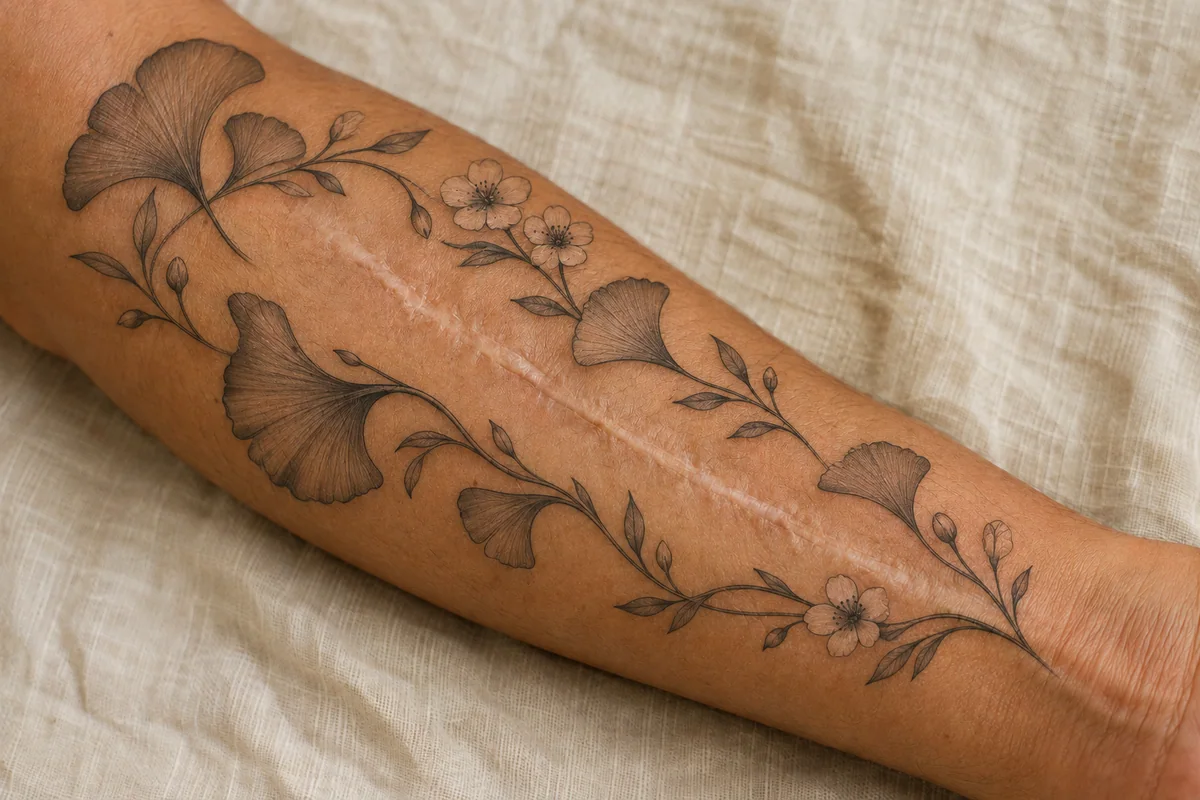
What can a tattoo change about a scar?
A design can redirect attention through outlines and contrast. It does not remove scar tissue: a raised area, hollow or change in texture may remain noticeable. Covering a scar describes a visual intention, not erasing it.
Prepare two versions of your idea: one that includes the line within the image, and another that leaves a gap around it. This gives your artist room to adapt the composition without making it depend on tattooing directly into the scar.
Sources: NHS — Scars
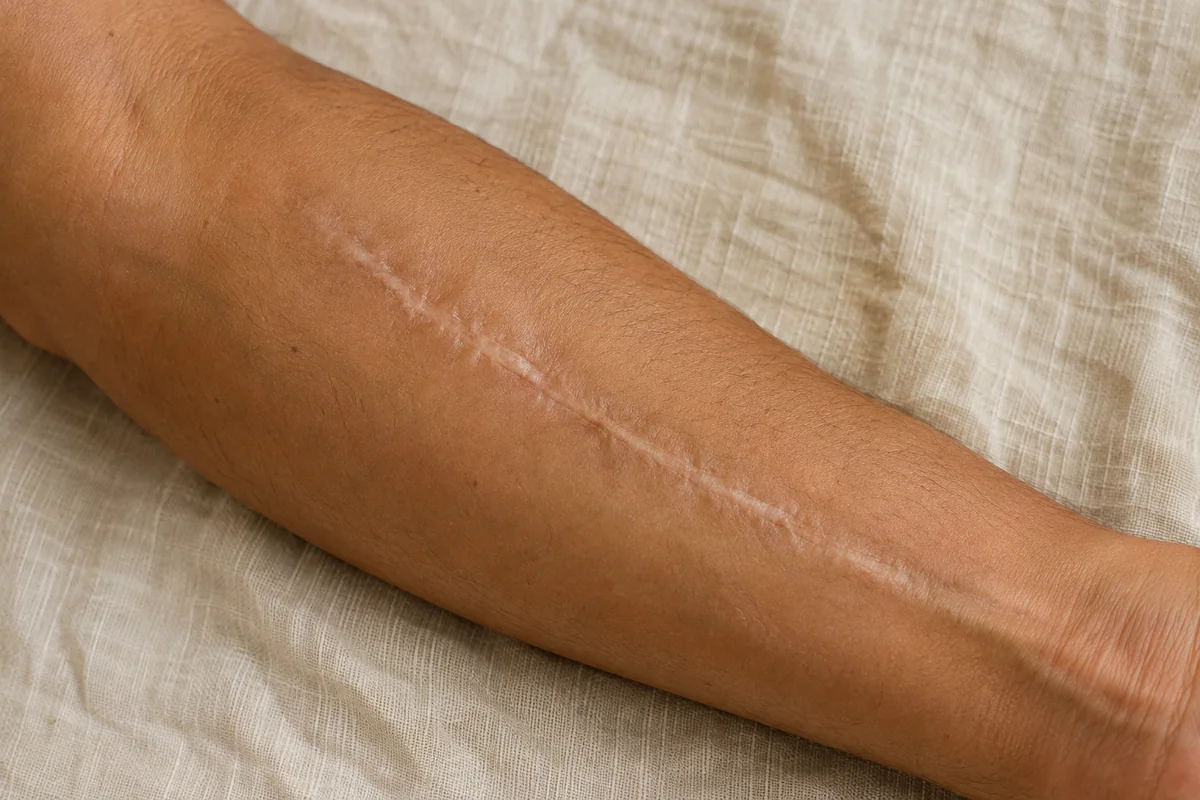
A line, and also a texture
This illustrative view shows how a scar can occupy space in a composition. Its colour or appearance in an image cannot establish its maturity or whether it can be tattooed.
The untattooed and tattooed views on this page are AI creations, not a medical before-and-after.
When can a scar be tattooed?
Wait for complete healing. A closed wound is not necessarily a settled scar: the NHS explains that its appearance can change for two years or longer. This describes maturation, not a universal waiting period that makes tattooing safe.
If the area remains painful, thickened, red or changing, speak to a doctor or dermatologist before booking. A hot, swollen or weeping scar needs medical assessment. A tattoo consultation cannot replace that examination.
Sources: NHS — Scars
Surgery, burns, hypertrophic scars or keloids: what needs extra care?
Surgical scar
Its cause and development matter as well as its age. Explain the operation and any planned care. Do not plan a cover-up over a skin-cancer scar, particularly after melanoma: consult the dermatologist responsible for your follow-up.
Burn scar
Some burns leave tight skin or restrict movement. An extensive burn or skin graft needs specific medical assessment before considering a tattoo project.
Hypertrophic scar
This raised scar stays within the original injury. Do not assume that a solid black fill will hide its height: have the scar assessed first.
Keloid or a history of keloids
A keloid grows beyond the original wound. Tattooing creates another skin injury and can trigger keloids in people prone to them; the AAD recommends avoiding these injuries. Consult a dermatologist before planning a tattoo.
Sources: American Academy of Dermatology — Scars: signs and symptomsAmerican Academy of Dermatology — Keloid scars: self-careDermato-INFO — Tout savoir sur les tatouages
Cover, incorporate or work around: three composition approaches
Create visual coverage
A group of leaves or a flower can become the focal point. Ask which parts would sit on the scar and which would sit around it. More ink does not guarantee coverage or suitability.
Incorporate the line
A path, stem or space between two elements can follow its direction. Sketch the main shapes first rather than trying to match every detail to the mark.
Work around it
An open frame, two offset branches or an asymmetric arrangement can preserve an uninked area. Agree this space with the professional; there is no universal medically safe margin to draw yourself.
Two starting points to develop with your artist
These original Encre Vive drawings are AI-generated. They help you discuss composition; they cannot establish whether an area can be tattooed.
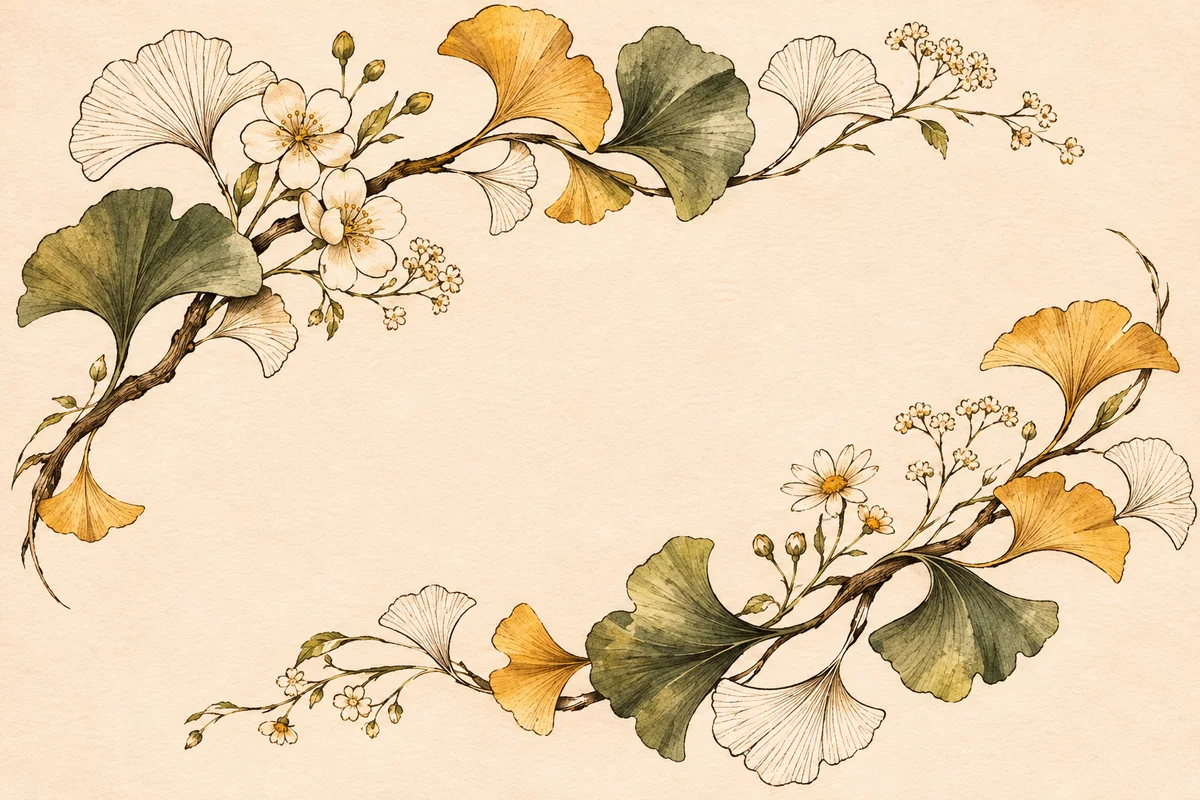
A branch and an open space
Two botanical lines follow a direction while leaving the centre open. Discuss the spacing with your artist.
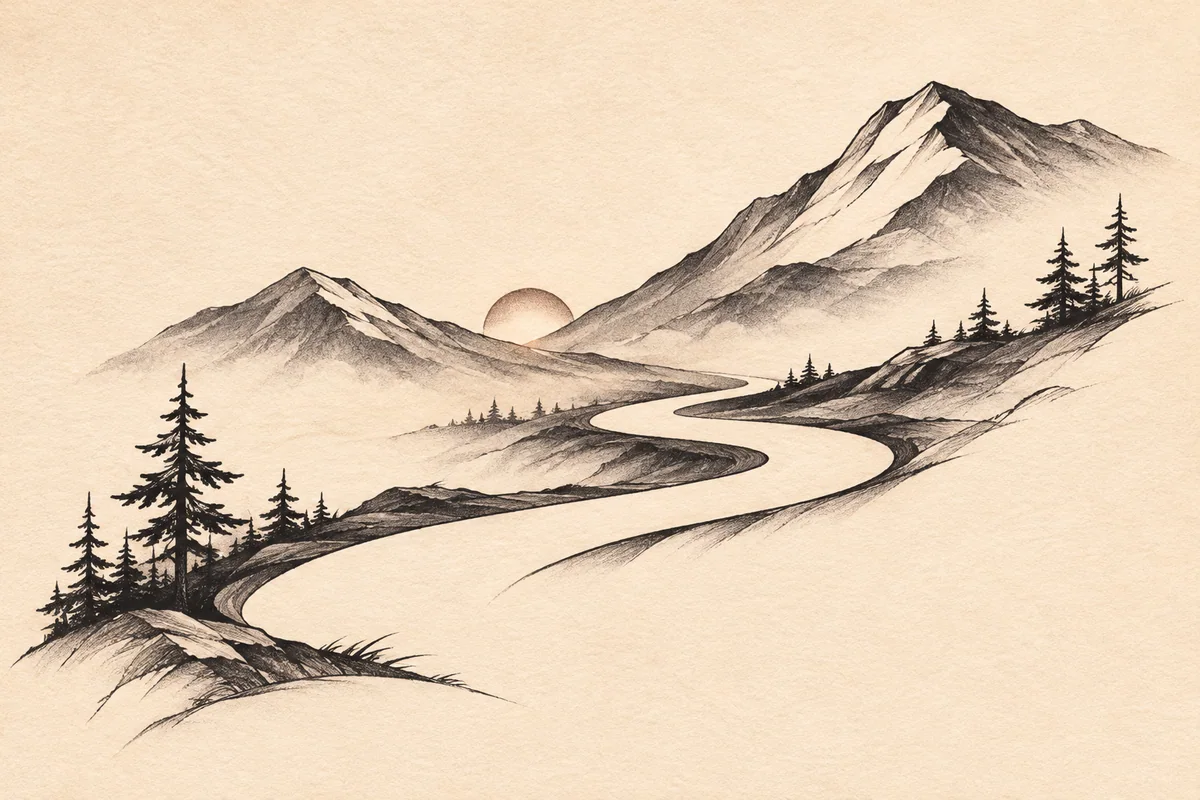
A path through the landscape
The river opens a passage between darker shapes. A starting point for composing around a line, to adapt to your project.
Which motifs and styles could you discuss with an experienced artist?
Botanical branches can be repositioned; a landscape can distribute lighter areas; an ornament can create an open border. Start with a silhouette you like in its own right, then ask for the linework to be adapted.
Compare a simpler version with a more shaded one. Fine lines, solid fills and dotwork are graphic choices, not techniques automatically suited to all scar tissue. Size, spacing and detail still need a consultation.
What should you ask before starting?
- Have you worked on this type of scar? May I see healed examples shared with the clients’ consent?
- Which areas would you tattoo, work around or leave uninked? When would you postpone or decline?
- Do you need advice from my doctor or dermatologist before finalising the design?
- How would you adapt the composition if part of the area cannot be tattooed? What follow-up or touch-ups might be needed?
- What written aftercare guidance will I receive, and who should I contact if a reaction occurs?
Preview a composition on your photo
Encre Vive’s try-on tool lets you upload your design and a photo of your skin, adjust placement and request an AI preview. Compare the artwork’s direction and position before discussing it with your tattoo artist.
The preview may change a scar’s texture or appearance. It predicts neither pigment uptake nor real coverage and cannot check healing. Keep your original photograph for the consultation.
Explore the photo try-on →Sign-in and a first credit purchase are required. Access and preview conditions are explained in the tool. Uploading a photo is optional when preparing a drawing.
Frequently asked questions
Can a C-section scar be tattooed?
A project may be possible, but a C-section scar is not automatically ready at a certain age. Have its healing and stability confirmed, then consult an artist experienced with surgical scars.
Can a tattoo cover a keloid?
This is not an ordinary cover-up. Tattoo trauma can trigger another keloid in someone prone to them. Seek dermatological advice; do not treat a small test area as a guarantee of safety.
Sources: American Academy of Dermatology — Keloid scars: self-care
Does it hurt more than tattooing unscarred skin?
There is no single answer for every scar. Tell the professional about sensitive or painful areas and discuss breaks. Pain that persists before tattooing deserves medical advice.
Sources: NHS — Scars
Explore a design around my scar
Start with a decorative drawing on white. Add your artistic preferences, then adapt the proposal with your artist.
Only describe the motif, colours and composition you want; no medical details are needed.
View and copy the prompt
Botanical tattoo study: lavender and chamomile, elongated composition, readable black outlines and open spaces between stems. Leave a central uninked area to discuss a design around a scar with a tattoo artist. Isolated artwork on white, no body, no scar depicted, no text. Artistic reference to adapt during a consultation.
Continuing replaces your draft with this description, which you can edit in the generator. No generation starts here.
Create my design in the generator