Tattoos over stretch marks: options, limits and ideas
Your project can work with stretch marks rather than try to recreate unmarked skin. Their development, texture and location matter more than a promise of complete coverage.
Read the guidance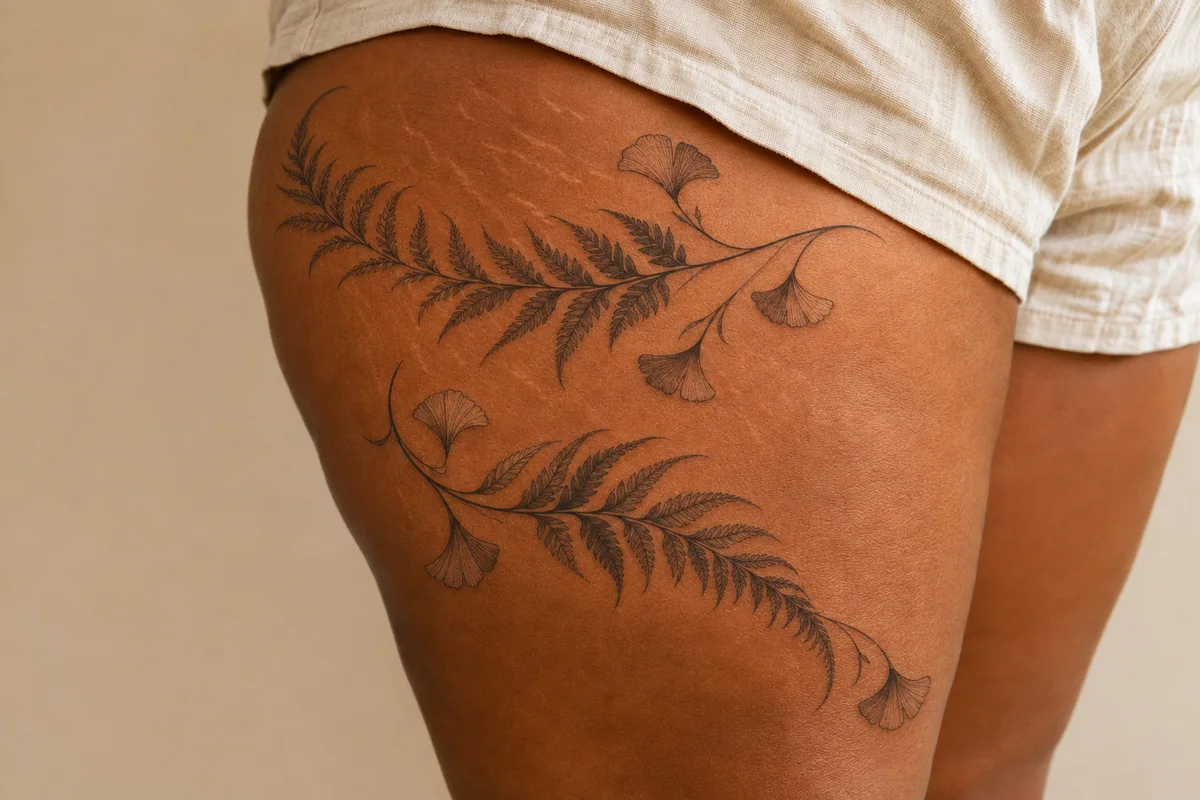
Newer red marks or older white marks: understanding the difference
Stretch marks are scars in the dermis. Early marks may be red, purple or brown depending on skin colour; they fade over time and may become white or silvery. Colour alone does not establish whether skin can be tattooed.
Newer or changing marks
Postpone a project on an irritated or changing area. If in doubt, have the skin assessed rather than setting a date based on a photograph.
Older, pale marks
They may remain slightly indented. Age alone does not guarantee even pigment uptake or suitability: a consultation is still needed.
Sources: American Academy of Dermatology — Stretch marksDermato-INFO — Les vergetures
Design and texture are different things
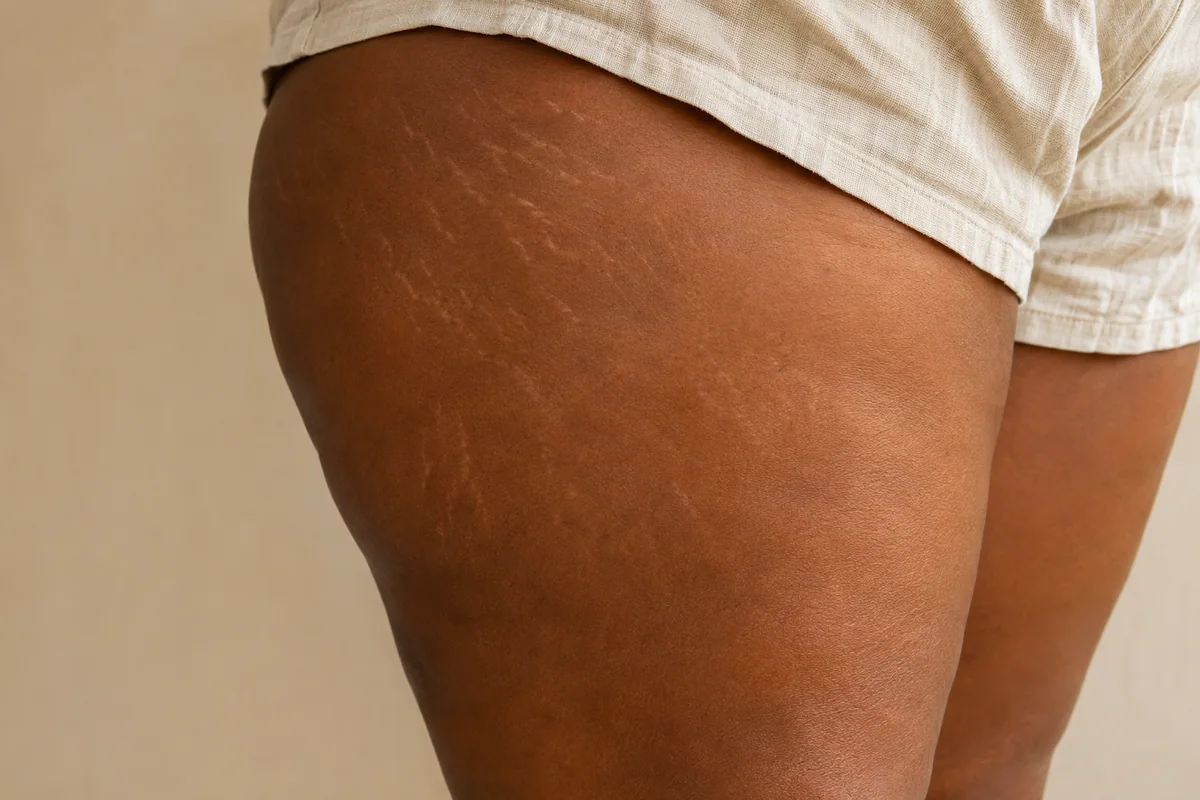
A composition can change what draws the eye. Variations in skin texture may still remain noticeable. This image helps discuss placement, not predict how pigment will settle.
The untattooed and tattooed views on this page are AI creations, not a medical before-and-after.
What a tattoo can change visually, and what it cannot
A motif can add a focal point and change how you see an area. It does not repair the skin’s structure or fill depressions. Texture may remain visible under angled light or when the skin moves.
Separate two expectations before your appointment: “I would like people to notice my design first” and “I want the marks to disappear.” The first is a composition goal to discuss; a tattoo cannot promise the second.
Sources: Dermato-INFO — Les vergetures
Stomach, hips, thighs, buttocks and chest: planning the composition
Stomach and hips
Compare a branch along one side with a wider composition. Look at your sketch standing and sitting, and decide where the artwork should end in relation to your clothes.
Thighs and buttocks
Consider the overall direction of the area, then the design’s silhouette. A fern, wave or group of petals can develop diagonally without trying to follow each mark.
Chest and upper arms
Decide whether you want an everyday visible design or something more discreet. A side arrangement or small group of flowers is one starting point for the chest, without requiring symmetry or a complete fill.
Botanicals, organic compositions and ornaments: which ideas could work?
Botanical designs let you vary stem length and leaf spacing. Abstract compositions give room to explore rhythm and empty space. An ornament can form a border instead of a fill. These are graphic options: no style medically treats stretch marks.
Avoid deciding too early that the artwork must be tiny or dense. Bring a simple drawing and note what matters to you: a particular flower, direction or colour. Your artist can then adjust its size and distribution of detail.
Two starting points to develop with your artist
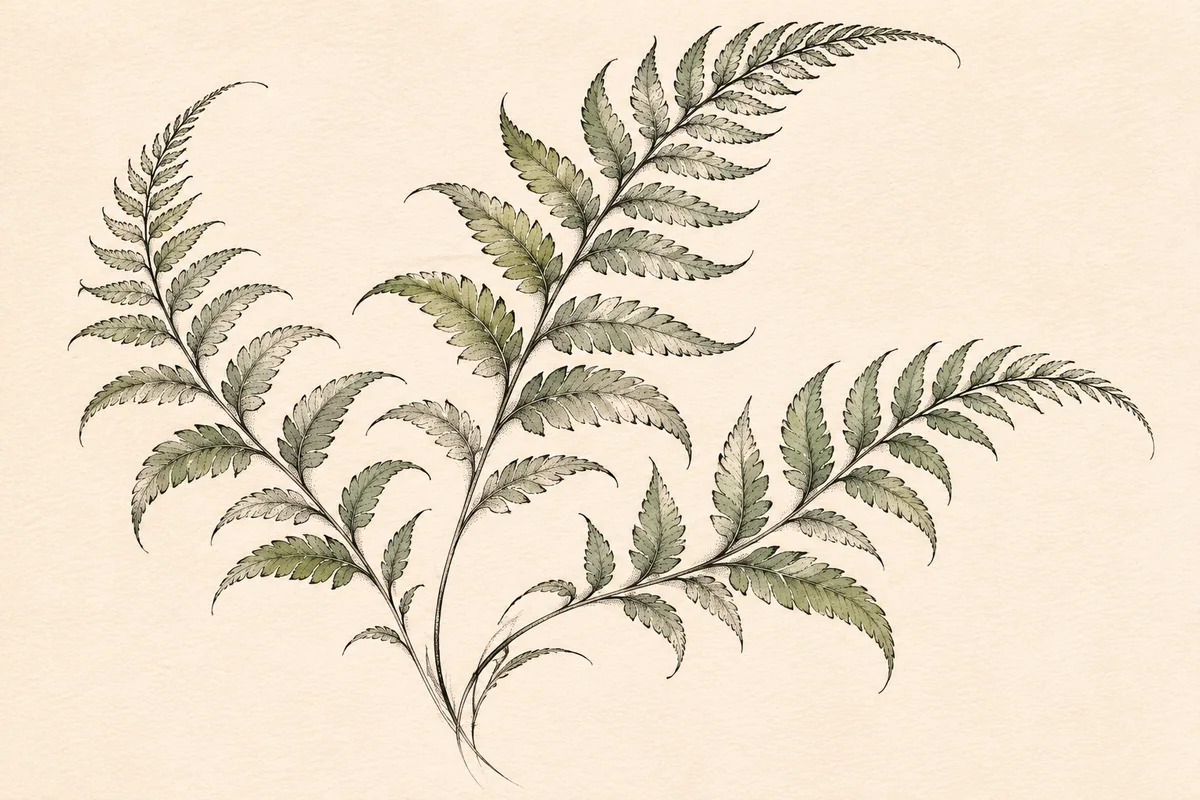
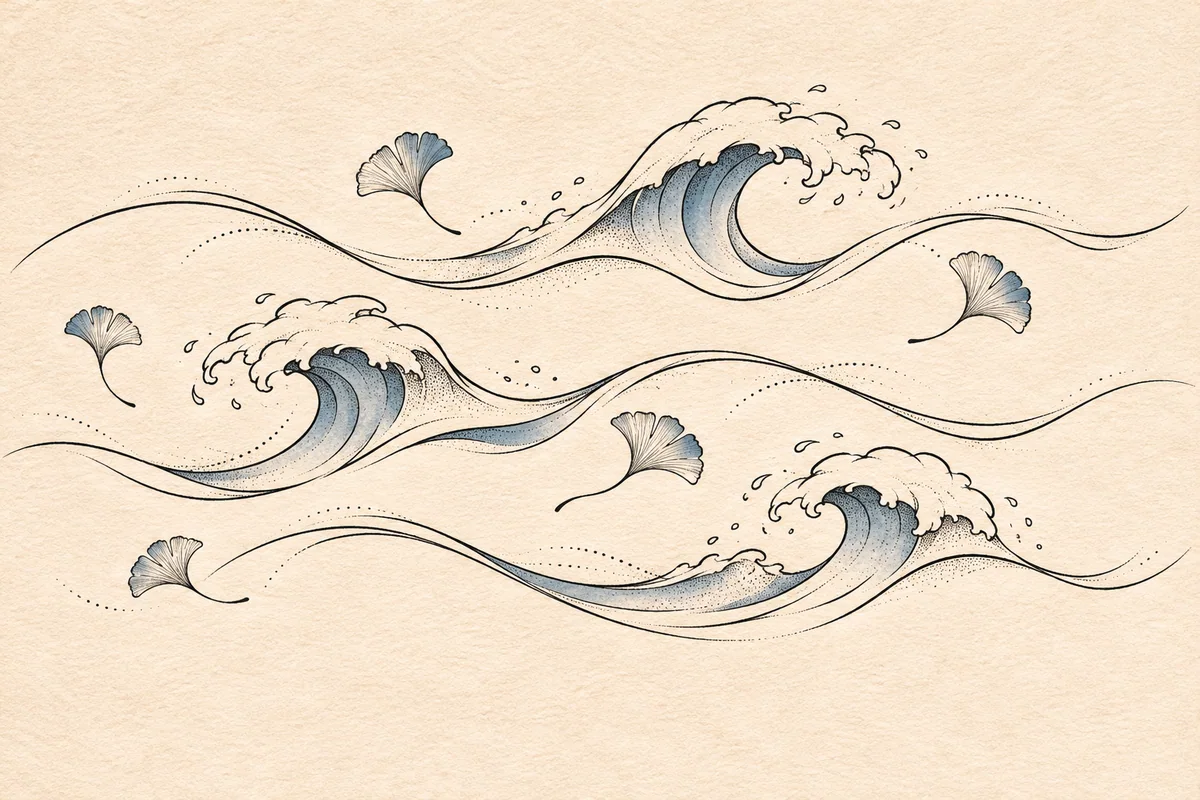
These original Encre Vive drawings are AI-generated. They help you discuss composition; they cannot establish whether an area can be tattooed.
A botanical rhythm
Varied leaves and space between stems create rhythm, without promising to erase skin texture.
Curves with room to breathe
Waves and ginkgo suggest different directions. Their orientation and scale still need to be adapted to the chosen area.
Decorative tattoos or skin-tone camouflage: different aims
| Approach | Aim and limitations |
|---|---|
| Decorative tattoo | Add a recognisable motif: a flower, ornament or abstract image. The artwork becomes a new visible feature of the skin. |
| Pigment camouflage | Implant pigments selected to bring a mark’s colour closer to surrounding skin. This is a different approach, requiring specialist assessment of colour and skin. |
| Cosmetic camouflage | Apply a covering makeup product to the surface. This temporary option does not involve introducing ink into the skin. |
Medical tattooing services describe camouflage for some scars; this does not establish guaranteed effectiveness for all stretch marks. Ask exactly what is offered, the expected result, limitations and follow-up. Encre Vive generates decorative designs, not a selection of skin-tone pigments.
Sources: The Christie NHS — Medical tattooing (PDF)Leeds Teaching Hospitals — Medical tattooingDermNet — Cosmetic camouflage
When should you seek dermatological advice, and how do you choose an artist?
Numerous, widespread or unexplained stretch marks are worth discussing with a doctor. Before tattooing, wait for completely healed, stable skin; seek advice before booking if it is irritated, painful or you are unsure about its condition.
Choose an artist with verifiable experience of stretch marks. Ask for healed examples, the limits they identify in your area and how they would adapt the design if some skin needs to remain uninked. A visual reference cannot replace examining the skin.
Sources: Dermato-INFO — Les vergetures
Frequently asked questions
Can you tattoo over stretch marks that are still red?
Redness can indicate newer marks, but colour alone does not assess the skin. Do not plan a tattoo on an irritated or still-changing area. Seek medical advice if unsure, and an assessment by an experienced artist.
Can a tattoo make stretch marks completely invisible?
Complete concealment cannot be guaranteed. A design changes contrast, but indentations or texture may remain noticeable. Set a composition goal rather than expecting the marks to disappear.
Is skin-tone camouflage a decorative tattoo?
Both can implant pigment, but their aims differ: matching a colour for camouflage, creating a motif for decoration. Camouflage makeup stays on the surface and can be removed.
Sources: Leeds Teaching Hospitals — Medical tattooingDermNet — Cosmetic camouflage
Explore a design that incorporates my stretch marks
Start with a decorative drawing on white. Add your artistic preferences, then adapt the proposal with your artist.
Only describe the motif, colours and composition you want; no medical details are needed.
View and copy the prompt
Decorative tattoo study: diagonal fern, spaced leaves, black lines and light shading, organic composition with open spaces. Reference to discuss with a tattoo artist for an area with stretch marks, without promising concealment. Isolated motif on white, no body, no stretch marks depicted, no text.
Continuing replaces your draft with this description, which you can edit in the generator. No generation starts here.
Create my design in the generator