
Choosing between a rose and a butterfly for an arm tattoo? Start with the outline you want to wear: a flower on a stem creates a line, while open wings fill a central shape. Style, size and placement can then refine your choice.
Rose or butterfly: which subject fits your idea?
A rose can recall a person, garden or memory. You can also choose it simply for its petals. An open flower, a bud and a rose on a long stem create different compositions. Leaves and thorns can become supporting details or disappear for a simpler drawing.
A butterfly can recall a personal change, a moment or an interest in nature. The meaning is yours to choose. Decide whether you want symmetrical wings, a side view or a group in motion. If a specific species matters, gather references showing its shapes and colours.
Compare three starting points
These images are AI-generated simulations, not photographs of completed tattoos. Explore each gallery to compare drawings and prepare your own reference.
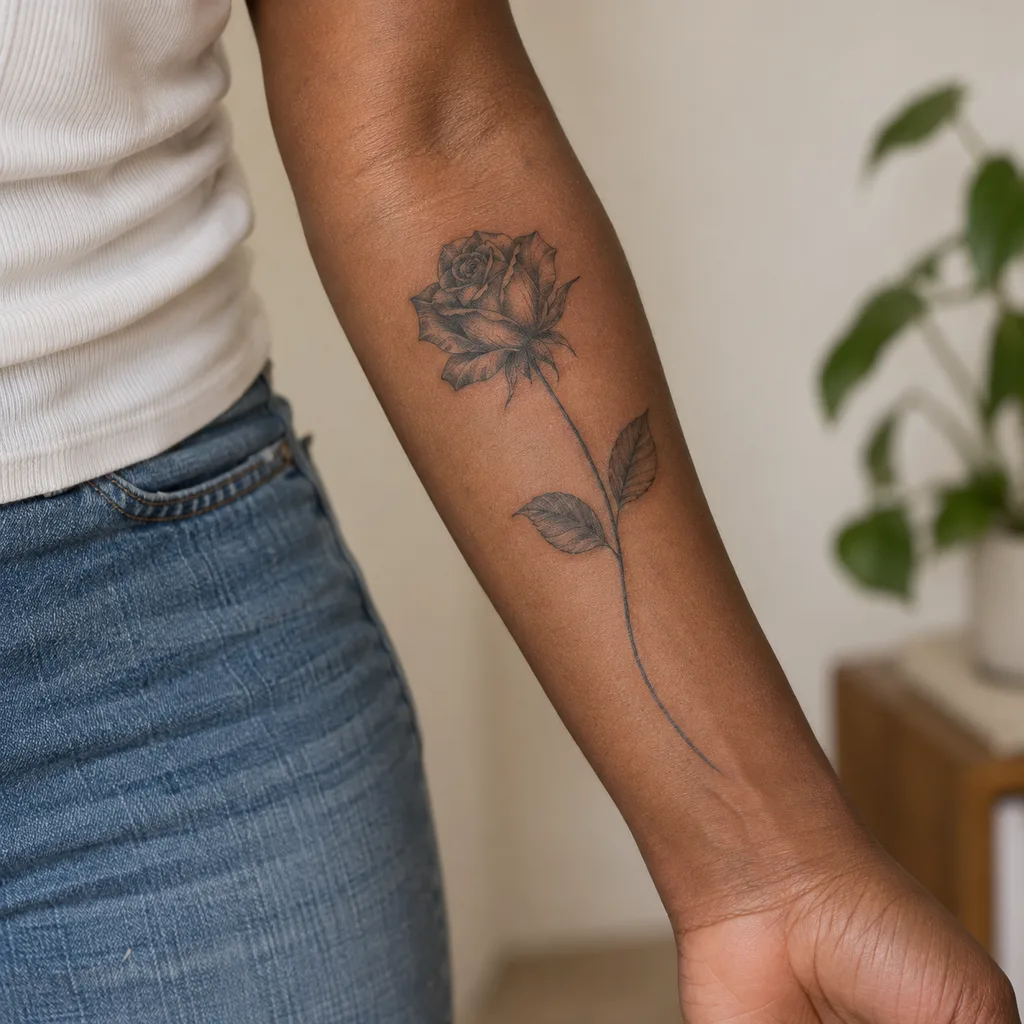
A rose on a stem
A long outline with a flower as the focal point.
Explore the gallery →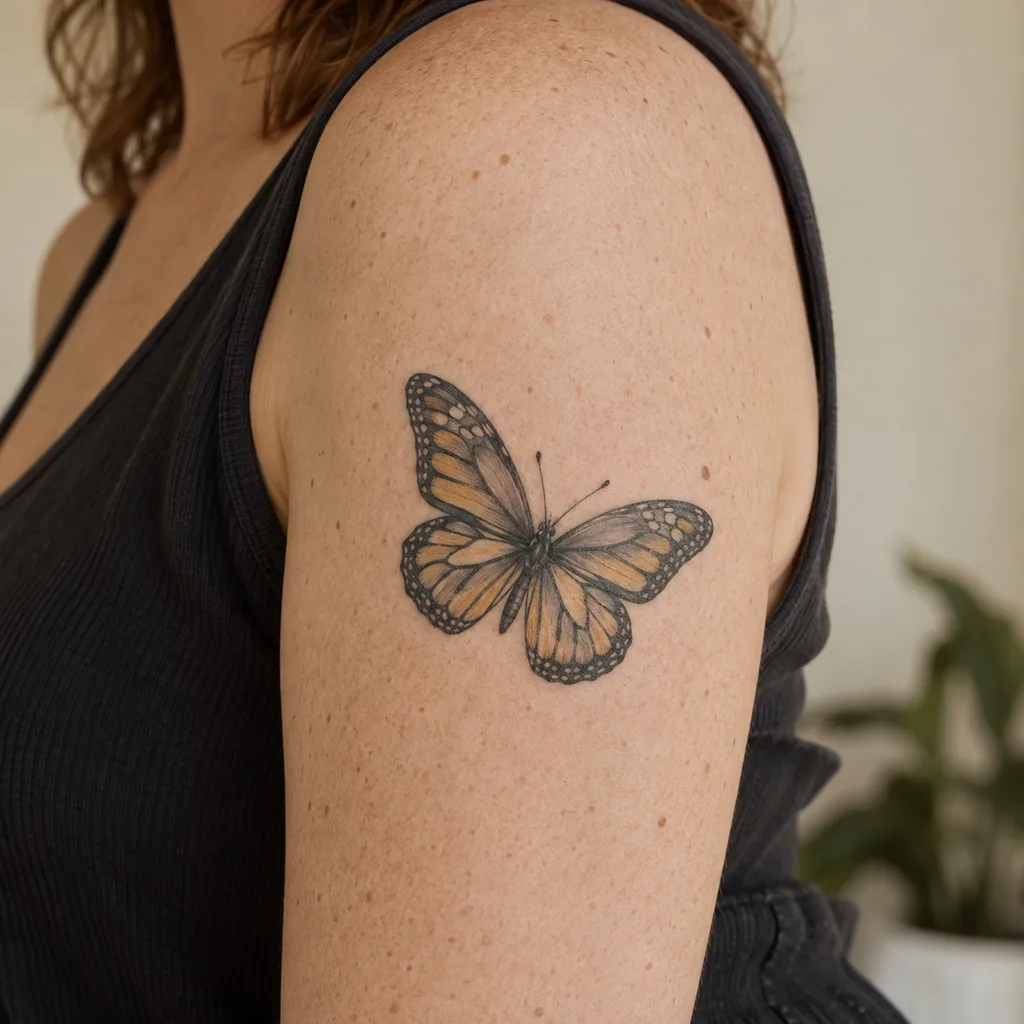
An open-winged butterfly
A centred silhouette to compare from the front and side.
Explore the gallery →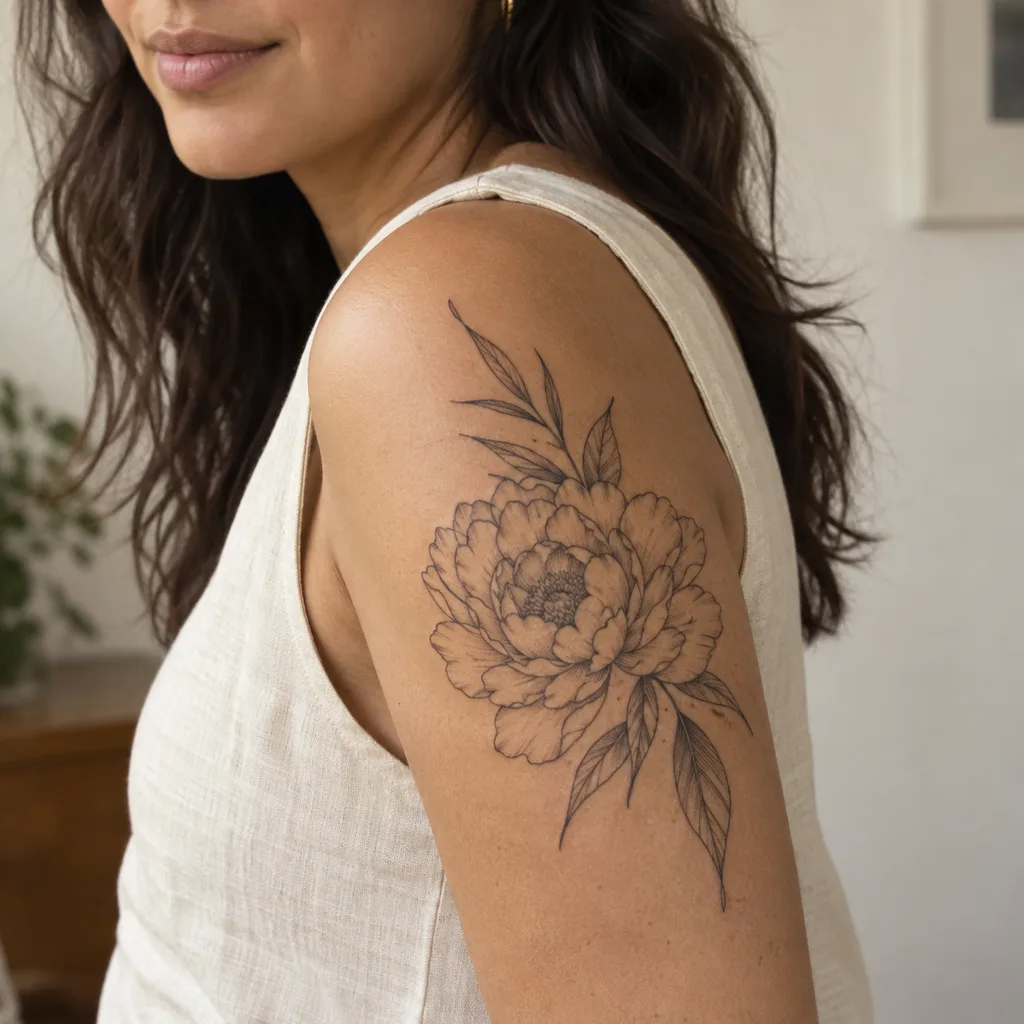
A peony and its leaves
A rounded centre with leaves that extend the movement.
Explore the gallery →Compare the upper arm and forearm
On the upper arm, an open flower or spread wings can form a central motif. Check what remains visible from the front and side: part of the drawing may wrap around the arm. A branch can extend towards the shoulder without filling the entire area.
On the forearm, compare a stem, a single butterfly and a small botanical composition at the same scale. Rotate your hand and relax your arm to assess orientation. The women’s arm gallery and women’s forearm gallery help compare placements; the subjects can suit anyone who likes them.
Choose contrast before small details
Fine line emphasises outlines and open spaces. A bolder black design relies more on silhouette; colour creates additional areas of focus. Keep the subject and dimensions consistent when comparing. A heavily shaded rose and a small outline rose do not need the same amount of detail.
Print references at the intended size. If petals or wing veins become difficult to distinguish, discuss simplifying the drawing or increasing its size with your artist. Their healed work provides another useful reference alongside inspiration images.
Can a rose and butterfly share one composition?
Yes, with one subject as the main focus. The butterfly might rest near a flower or sit slightly apart from it. Leave room to read the wings, petals and stem separately. Compare this layout with a single motif before adding a date or phrase.
Prepare a clear brief for your artist
- Two or three references, with notes on what you like in each.
- The area of the arm, approximate dimensions and desired visibility.
- The main subject, contrast and details to avoid.
- Exact wording for any inscription and photographs of nearby tattoos.
You can personalise a starting rose or explore a butterfly. The result helps communicate your intention; your tattoo artist prepares the final adaptation for your skin.