
Choosing a tattoo starts with what you want to see on your body: a subject, a shape and a level of visibility. A tattoo for a woman can be bold, colourful, large, discreet or somewhere in between. The useful question is which composition fits your taste and the project you want to build.
This guide helps you make those decisions. For a broader visual selection, browse the tattoo ideas for women, then return with two or three references you want to compare.
Start with three preferences, not a finished design
Write down the subject, the visual feeling and the visibility you want. For example: a plant linked to a memory, open black linework, visible when wearing short sleeves. That brief gives an artist something more useful than a long collection of unrelated pictures.
You can also choose a motif simply because you enjoy its appearance. There is no obligation to attach a profound story to it. If it does represent a person or an event, decide which detail carries that meaning: a word, a flower, a date or a particular shape.
Make a second list of things you dislike: dense filling, symmetry, colour, lettering or a crowded background. Naming those limits helps you compare ideas without endlessly adding new elements.
Six visual directions to help you choose
These original Encre Vive drawings are AI-generated references, not completed tattoos. They illustrate different choices of outline, density and composition. Have your preferred direction adapted by your artist.
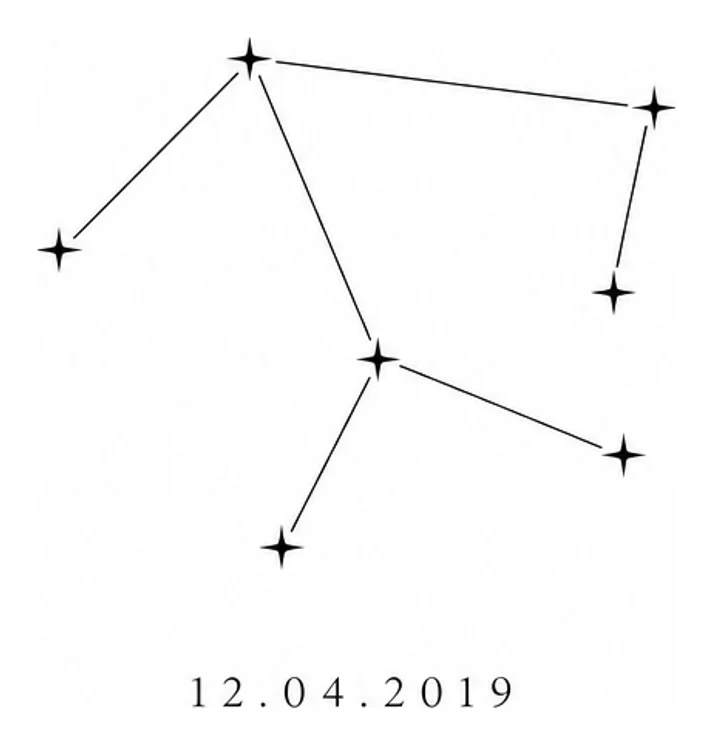
A personal constellation
A few stars and a date organise the memory. Choose your own reference points and check every digit.
Explore related ideas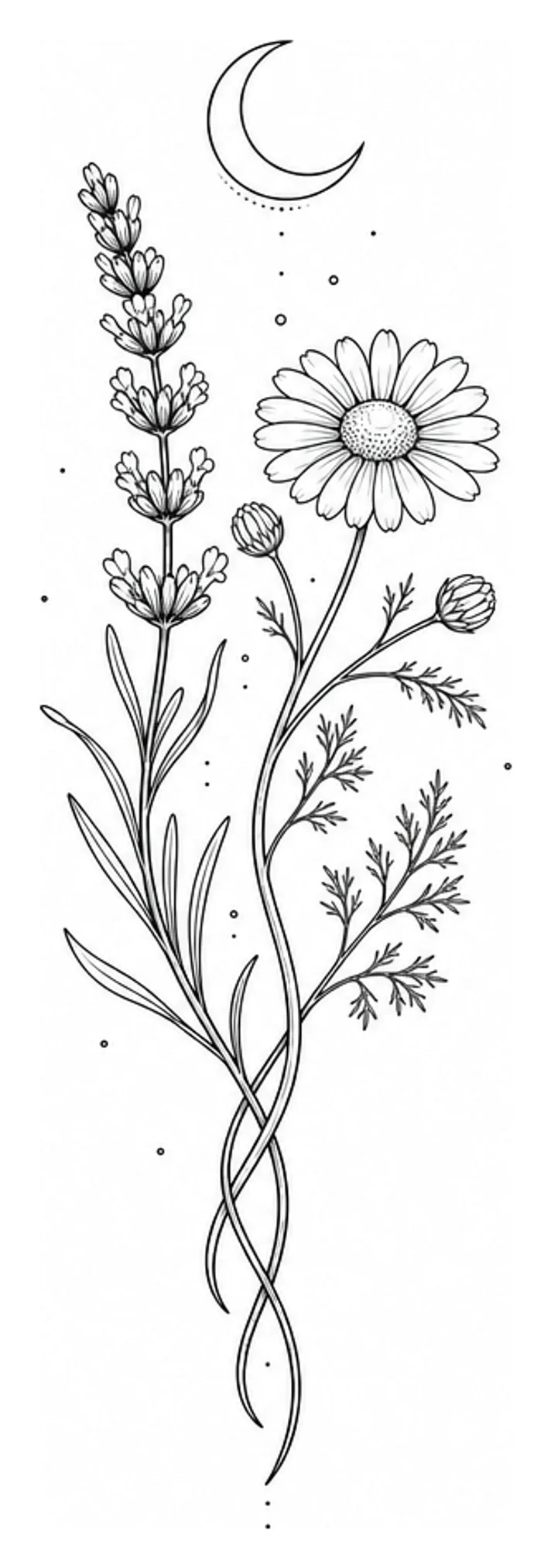
An airy botanical design
Compare the length of the stem and the spaces between flowers instead of adding more tiny details.
Explore related ideas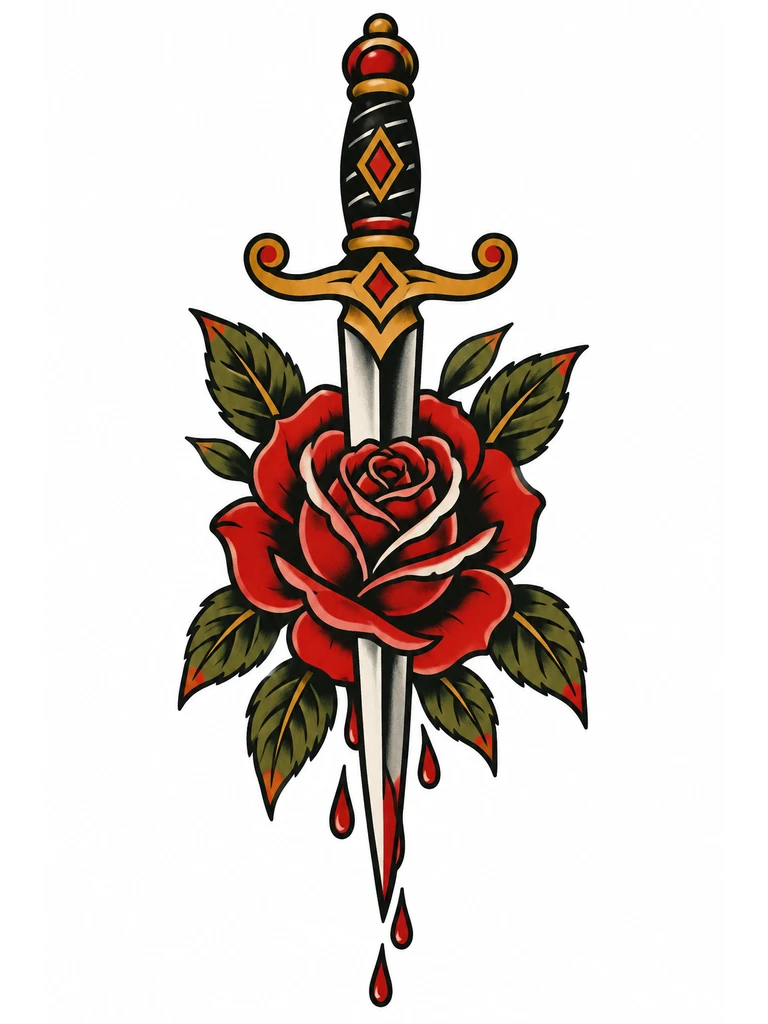
Confident outlines
The rose and dagger offer a way to explore strong contrast and a limited palette.
Explore related ideas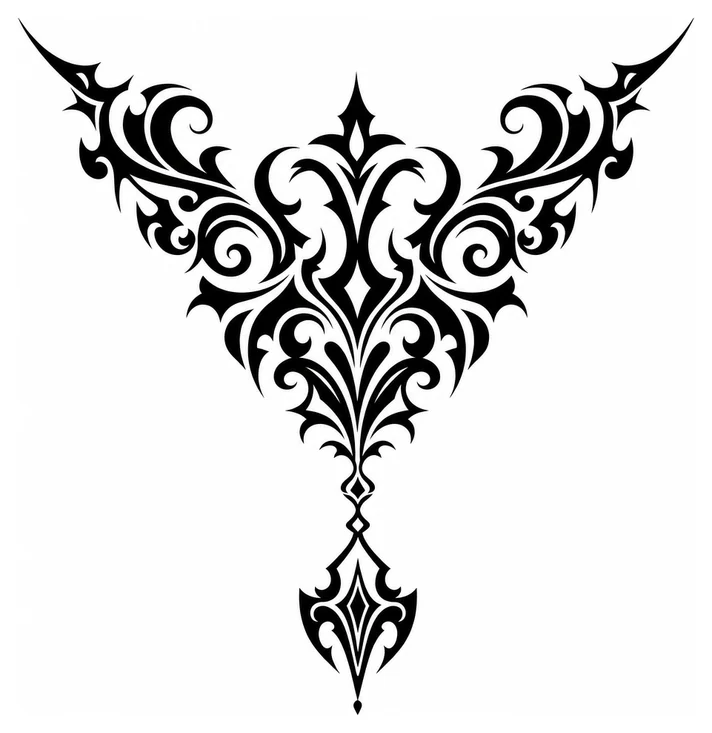
Black shapes and open space
Look at the spaces left white as well as the dark shapes. Have the width adapted to your chosen area.
Explore related ideas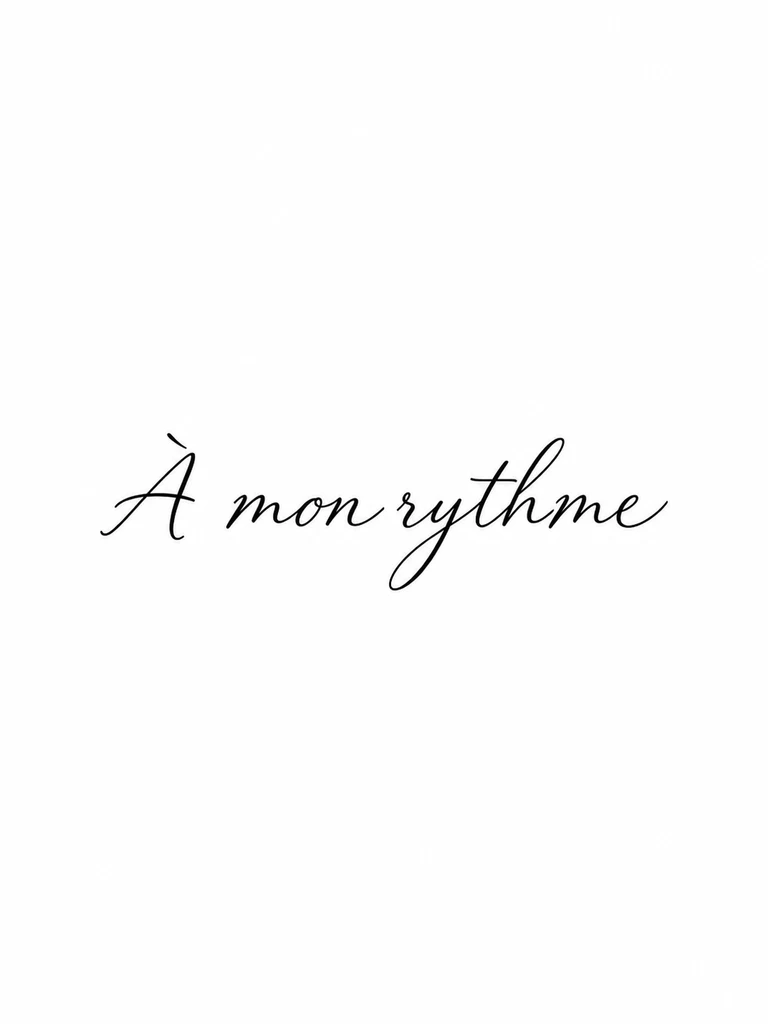
Personal lettering
Prepare your own wording with exact spelling and punctuation. Use the drawing to compare an arrangement.
Explore related ideas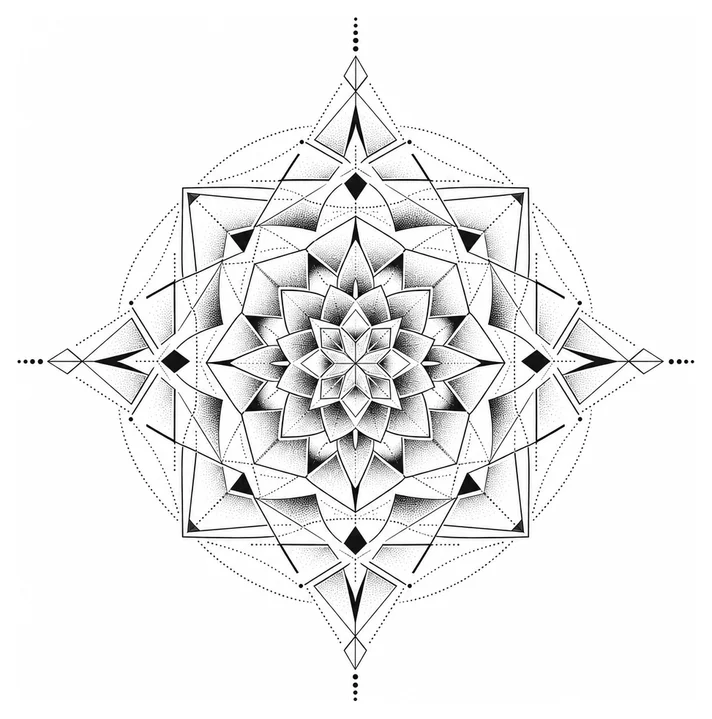
A centred composition
A geometric motif starts with an axis and a size before you decide how much detail to include.
Explore related ideasCompare placement, visibility and composition
Look at the area in a natural posture and in the clothes you usually wear. Consider whether you want to see the design yourself, reveal it occasionally or build a larger composition later. A small tattoo is not automatically a discreet one.
Wrist
A design you see often; check its orientation with your arm relaxed.
Forearm
A vertical composition or spaced motifs; compare inner and outer placement.
Arm and shoulder
A compact or wrapping piece, or the start of a larger collection.
Thigh
Room for a broader composition; compare visibility in the clothes you usually wear.
Back
A central axis or an asymmetric piece; a second view helps you judge the balance.
Ankle
A short shape or a contour-following design; view it standing and from the side.
Use a photo or AR tattoo preview to compare orientation and proportions if helpful. Keep the original design alongside the preview: an AI simulation can modify it. Confirm physical dimensions and the final placement with your tattoo artist.
Choose size and detail together
A flower with a few open contours and a flower with closely layered petals are different drawing problems. Instead of saying “the same image, just smaller”, ask what the artist would simplify or enlarge to keep the feature you care about.
Print the reference at two proposed sizes. Note which elements become difficult to distinguish and whether the main silhouette still appeals to you. This is a way to prepare questions, not a technical validation or a prediction of how the tattoo will age.
For a phrase, check exact spelling and punctuation separately from the visual style. Try shorter wording if the available space is limited. Our lettering examples and name designs show different ways of arranging text.
Choose an artist and prepare the consultation
Look for a portfolio containing the style and scale you have in mind, including healed work when the artist provides it. Ask how they handle custom drawings, references, changes and the first appointment. Choose based on the work and the conversation rather than assuming the artist’s gender determines how well they will understand the project.
If budget is a constraint, say so early and identify what you want to preserve. A quote should relate to a specific design, size and placement. Our tattoo price guide for France explains the information to provide and the costs to clarify.
A brief you can adapt
I would like a botanical composition on my outer forearm, approximately 10–15 cm tall. I like black outlines and open space. The flower matters to me; the extra leaves are optional. I have two references to explain the direction, not to copy. Could you suggest a suitable size and an estimate?
Replace the example measurements with your own starting range. Add the exact text if there is lettering and mention existing tattoos near the area. Leave room for the artist’s drawing choices.
Turn your preferences into a reference
If you struggle to explain the composition, use the Encre Vive tattoo generator to explore a direction. Compare an airy version with a denser version, then save the one that best expresses your preference.
Ask your artist whether they accept AI references. Present the image as a conversation starter, with notes about what you like. For a floral project, the rose and butterfly guide offers a more focused comparison.
Frequently asked questions
How do I choose a first tattoo?
Start with a subject you want to keep, how visible you want the tattoo to be and a size range. Compare a few references, then ask an artist whose work you like to develop the composition. You do not need to arrive with a finished drawing.
Which tattoo styles are suitable for women?
Any style can be considered: fine line, blackwork, traditional, realism, lettering or geometry. Choose according to the outline, contrast and colour you enjoy rather than assuming a tattoo for a woman must be small or delicate.
Where should I place a discreet tattoo?
Discretion depends on your clothes and daily routine. Compare the upper arm, thigh or back with the outfits you normally wear. A small wrist tattoo may be more visible than a larger design covered by clothing.
Should I make a detailed design smaller?
Do not reduce the entire image automatically. Ask the artist which details need more space, which could be removed and what dimensions suit the composition. A simplified drawing can be a better starting point than a miniature version of a dense image.
Can I use an AI image to explain my tattoo idea?
Yes, as a visual reference if your artist accepts that way of working. Explain what you like about the composition and which details are optional. The artist needs to adapt the drawing; an AI image or simulated photo does not guarantee the finished result.